Last Updated: September 27, 2026
Best protein skimmer for 200 gallon system means putting enough air draw and a stable footprint into a big sump to handle a heavy bioload on a system that rarely holds its labeled gallons. This guide sorts the options by need group and price tier, gives the figures that decide fit, and names the honest running costs before you buy.
As an Amazon Associate we earn from qualifying purchases.

Reef Octopus Classic 150INT Protein Skimmer
Included for 'Best Protein Skimmer for 200 Gallon System: How to Pick' as a relevant option in this category; details come from the product listing.
View on Amazon
Reef Octopus Classic 110-INT Needle Wheel Protein Skimmer for Aquarium
Included for 'Best Protein Skimmer for 200 Gallon System: How to Pick' as a relevant option in this category; details come from the product listing.
View on Amazon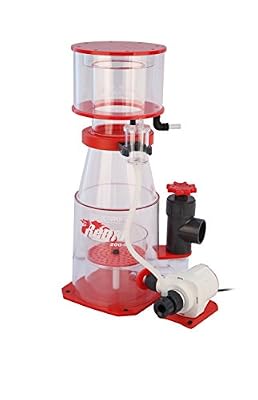
Reef Octopus Regal Internal Protein Skimmer REGAL-200INT
Included for 'Best Protein Skimmer for 200 Gallon System: How to Pick' as a relevant option in this category; details come from the product listing.
View on Amazon
Reef Octopus OCTO Regal 150 SSS Space Saver Protein Skimmer
Included for 'Best Protein Skimmer for 200 Gallon System: How to Pick' as a relevant option in this category; details come from the product listing.
View on AmazonBy David Nguyen
Quick answer: For most people in 2026, the best protein skimmer for 200 gallon system is the Large cone — our #1 rated choice. See the full ranked comparison, alternatives and buying advice below.
Start with real water volume on a 200 gallon system
The best protein skimmer for 200 gallon system is the one whose honest air draw and footprint match your real water volume and heavy load. Pin the numbers before comparing models.
The real volume behind a 200 gallon label
A nominal 200 gallon (757 L) system with rock, sand, and a sump often holds only 160 to 175 gallons (606 to 662 L). Size to that figure, then add margin for the heavier feeding a big system usually carries.
Air draw in liters per hour is the honest performance number. On a heavily fed 200 gallon system, target a skimmer rated for roughly 250 to 350 gallons (946 to 1325 L) rather than exactly 200, since the printed maximum assumes a light load.
The criteria that matter at this scale
Big skimmers demand sump space and a stable depth around 8 to 10 inches (20 to 25 cm). A DC pump adds tunability at a higher price and a failure point; power draw is real on a large pump running around the clock.
Tank size, placement, and fit
Large cones are tall and wide and need a dedicated skimmer chamber plus cabinet height for the body and cup. Measure the sump chamber length, width, and working depth, and the cabinet clearance, before ordering, because a big skimmer that will not fit the sump is unusable.
Options grouped by how the system runs
The best protein skimmer for 200 gallon system depends on how heavy the bioload is and how much you want to tune, so here are picks by need. Confirm current models at purchase.
For a large mixed reef
A large cone rated for a real 250 to 300 gallons (946 to 1136 L) covers a busy 200 gallon mixed reef. It fits steady, moderate export. Drawback: large bodies are heavy and hard to remove for service in a full cabinet.
For an SPS-dominant system
SPS tanks want strong, consistent export, so a large DC skimmer with fine speed control holds levels low. It fits demanding reefers. Drawback: over-skimming can strip nutrients too far, so you may run it below full output.
For a heavy predator or FOWLR
A big body rated toward 350 gallons (1325 L) handles the high bioload of a predator 200 gallon system. It fits heavy feeders. Drawback: high output fills the cup fast, so an auto-waste container is close to mandatory.
For maximum tuning
A premium large DC skimmer with a full controller suits keepers wanting ramps and feed mode on a big system. It fits tinkerers. Drawback: the controller adds cost and a failure point, and premium large units are a significant investment.
For a tighter budget
A large fixed AC cone gives strong export without paying for DC tuning. It fits cost-focused keepers with heavy bioload. Drawback: no speed adjustment means tuning only by water level, so load swings are harder to manage.
Direct comparison and who should wait
The best protein skimmer for 200 gallon system still has cases where a different choice is smarter.
Large DC versus large AC
Large DC gives adjustable air and speed; large AC is cheaper and simpler with fewer electronics. If you will not use the tuning, a correctly sized AC cone does the daily job for less and with one less part to fail.
When to hold off
If your sump chamber cannot take a large body or the cabinet is too short, a big cone cannot fit or work. Oversizing far beyond real water volume also wastes money and can run wet if the load is lighter than feared.
A cheaper or simpler path
Some large systems pair a moderate skimmer with strong biological export and disciplined maintenance rather than the biggest cone available. Sizing to real bioload, not to the largest unit that fits, is the cheaper correct call. On a system this size, a slightly smaller, well-serviced skimmer often beats an oversized one that runs wet.
Long-run reliability and running cost
The best protein skimmer for 200 gallon system runs 24/7 for years and moves a lot of air, so plan for meaningful wear and cost.
What wears on a large body
Large needle-wheel pumps collect film and calcium over 6 to 12 months, cutting air draw noticeably. O-rings harden, DC controllers can fail, and a heavy body is awkward to lift out for the deep cleaning it needs.
Consumables and generic parts
Recurring cost is mostly an occasional impeller or needle wheel and o-rings, plus more power for the larger pump; no proprietary media is involved. In winter, home heating drives evaporation that concentrates the water, so a big skimmer works against a slightly heavier load.
Warranty, safety, and buying season
Check the warranty split between body, pump, and wear parts, and run the pump on a GFCI outlet with a drip loop. Large skimmers are among the most heavily discounted reef items over Black Friday and Cyber Monday in late November and around Prime Day in late June; a sale is smart, but a 200 gallon system still needs 3 to 8 weeks to cycle before livestock. Prices and specs shift, so verify the model at purchase.
Big-system questions answered
These come up most about the best protein skimmer for 200 gallon system.
How big a skimmer does 200 gallons need?
Size to real water volume, roughly 160 to 175 gallons (606 to 662 L), then add heavy-bioload margin, often a skimmer rated around 250 to 350 gallons (946 to 1325 L). Treat any maximum rating as a light-load ceiling, not a target.
Is DC worth it at this scale?
Only if you use the tuning. DC helps hold SPS levels low and manage load swings, but a correctly sized AC cone skims a big tank well for less. Choose based on how hands-on you want to be, not tank size alone.
Do I need an auto-waste container?
On a heavily stocked 200 gallon system the cup fills quickly, so an auto-waste container prevents overflow and is close to essential for high-output setups, especially if you travel or cannot check the skimmer daily.
Can one skimmer handle a heavy predator load?
Yes, if rated well above real water volume, often toward 350 gallons (1325 L). Predator tanks feed heavily, so err high and pair the skimmer with strong mechanical filtration and disciplined maintenance rather than relying on skimming alone. On a big build, the best protein skimmer for 200 gallon system should be rated well above real water volume.
Choosing for a 200 gallon system
The best protein skimmer for 200 gallon system is the one sized to your real water volume of roughly 160 to 175 gallons with heavy-bioload margin that also fits your sump and cabinet. For most large mixed reefs a cone rated around 250 to 300 gallons is the sensible default, while a large fixed AC unit is the budget pick. Measure your sump chamber and cabinet height before ordering, and confirm current specs at purchase since ratings and prices change.
| Option | Key number | Suitable tank | Recurring cost | Who it is for |
|---|---|---|---|---|
| Large cone | Rated ~250 to 300 gal (946 to 1136 L) | Large mixed reef | Needle wheel, o-rings, power | Steady moderate export |
| Large DC + controller | Fine speed control | SPS-dominant system | Pump cleaning, controller | Demanding reefers |
| Oversized body | Rated ~350 gal (1325 L) | Predator and FOWLR | More power, frequent cup | Heavy feeders |
| Large fixed AC | Strong fixed output | Budget large system | Impeller, o-rings, power | Cost-focused heavy loads |
Ready to decide? Our #1 pick for 2026 is the Large cone.
Live price & availability on Amazon.
Related Reviews & Guides
Reef Tank Auto Top Off System: Sizing and Failure Modes
Best IceCap HOB Skimmer for Nano Reef: Sizing and Picks