Last Updated: September 27, 2026
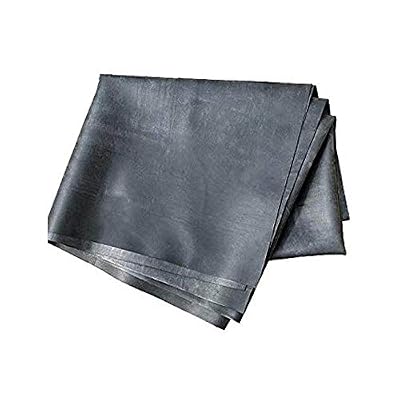
Firestone 45mil EPDM Rubber Pond Liner 15ft.x20ft.
Included for 'Best Pond Liner for Cold Winters: Top Expert Buying Guide' as a relevant option in this category; details come from the product listing.
View on Amazon
VIVOSUN 10 x 13 Feet Pond Liner for Koi Ponds, Aquaculture and Water Garden
Included for 'Best Pond Liner for Cold Winters: Top Expert Buying Guide' because the listing specifies Aquaculture and Water Garden, details this guide uses to compare options.
View on Amazon
UWIOFF Pond Liner, 20 Mil HDPE Pond Liners for Outdoor Ponds, 7 x 10 FT
Included for 'Best Pond Liner for Cold Winters: Top Expert Buying Guide' because the listing specifies 20 Mil HDPE Pond Liners for Outdoor Ponds and 7 x 10 FT, details this guide uses to compare options.
View on Amazon
Adroiteet 10 x 15 FT Pond Liner, 20 Mil HDPE Pond Liners for Outdoor Ponds
Included for 'Best Pond Liner for Cold Winters: Top Expert Buying Guide' because the listing specifies 20 Mil HDPE Pond Liners for Outdoor Ponds, details this guide uses to compare options.
View on AmazonFreeze and thaw movement punishes liner at the waterline, where ice pressure concentrates over and over again. The best pond liner for cold winters publishes an actual temperature range rather than implying durability through warranty length. Four options are set out below, separated by what each of the makers actually documents.
As an Amazon Associate we earn from qualifying purchases.
By David Nguyen
How to Choose a Pond Liner for Cold Weather
Four considerations decide cold-climate performance in the end: whether the manufacturer publishes a numeric temperature range at all, how the material handles ultraviolet exposure at the rim, what installation temperature demands, and whether the pond depth and the edging together protect that liner from ice movement.
Published Temperature Ranges Are Always Product-Specific
EasyPro documents DuraLiner across minus 40 to 175 degrees Fahrenheit, and Anjon publishes an identical range for LifeGuard EPDM, both at 45 mil. Those figures belong to those particular products rather than describing every 45 mil rubber sheet currently on the market, whatever the material name suggests.
Aquascape and PondGard supply pond-grade EPDM at the same thickness without publishing comparable numeric cold limits, which is an absence of documentation rather than evidence of weakness. Where a figure matters to your purchase, request it from the manufacturer before ordering.
Warranty Length Does Not Prove Cold Weather Performance
Long warranty terms are commercial commitments covering material defects, not laboratory evidence of low-temperature flexibility. A 20 year or lifetime term tells you what the manufacturer will replace, which is genuinely useful information about an entirely different question altogether.
Read the two claims separately when comparing candidates. A sheet with a documented minus 40 degree range and a shorter warranty answers the cold question directly, whereas a longer warranty with no published temperature figure leaves that particular question entirely unanswered.
Ultraviolet Exposure Along the Waterline Band
Cold climates rarely test liner in isolation, because the exposed band above the waterline endures ultraviolet radiation through summer and ice pressure through winter. EasyPro describes DuraLiner as ultraviolet and weather resistant, which addresses that combined exposure directly.
Design reduces the burden considerably. Covering the exposed rim with edging stone protects the most vulnerable strip, and maintaining consistent water level through autumn prevents a wide sun-bleached band forming exactly where winter ice will later press hardest against the sheet.
Installation Temperature and Designing for the Ice
Service range and installation comfort differ entirely. Rubber positioned during near-freezing weather resists pleating regardless of its documented cold rating, so schedule installation for a mild afternoon and allow the sheet to relax in direct sunshine for an hour or so beforehand.
Pond design carries the rest of the load through winter. Adequate depth maintains an unfrozen layer beneath surface ice, while gently sloping walls allow ice to lift rather than gripping the liner, which reduces the repeated mechanical stress that eventually damages liner along the edges.
Top Picks
Four pond-grade options separated by documentation rather than marketing language. Published thickness, temperature range where stated and September 2026 pricing where confirmed, alongside the limitation that determines whether each one suits your particular climate and pond design.
| Product | Best For | Key Spec | Watch Out For |
|---|---|---|---|
| LifeGuard EPDM by Anjon | A documented cold range | 45 mil, minus 40 to 175 degrees F, fish and wildlife safe | Extended warranty carries conditions |
| EasyPro DuraLiner | Custom sizes for cold climates | 45 mil, minus 40 to 175 degrees F, UV and weather resistant | Custom orders take longer to arrive |
| PondGard 15×20 | A stocked pond-grade sheet | 45 mil pond-grade EPDM, 300 square feet, 331.99 USD | No numeric cold figure published |
| Aquascape EPDM | The widest availability | 45 mil, fish-safe for pond use, ultraviolet resistance stated | Numeric cold limit left unpublished |
LifeGuard EPDM, Best Documented Cold Weather Rating
Anjon publishes LifeGuard EPDM at 45 mil with a service range of minus 40 to 175 degrees Fahrenheit alongside fish and wildlife safety, which answers both the climate question and the livestock question from a single published specification sheet rather than through guesswork or inference.
Warranty terms deserve attention before purchase, since the extended coverage carries conditions about accompanying underlayment from the same manufacturer. Underlayment belongs beneath any liner in freezing ground regardless, though it does change the total purchase figure noticeably.
EasyPro DuraLiner, Best for Custom Sizes in Cold Climates
DuraLiner shares the published minus 40 to 175 degree Fahrenheit range at 45 mil and adds ultraviolet and weather resistance, which suits the exposed rim band that northern ponds develop. Custom cutting also avoids awkward seams anywhere along an unusual winter-hardy pond design.
Custom orders introduce lead time, so specify well before the ground freezes and installation becomes impractical. Measure carefully too, because a sheet cut to your dimensions offers considerably less forgiveness than a generously oversized stock sheet would otherwise provide on the day.
PondGard 15×20, Best Stocked Pond-Grade Rubber Sheet
At 331.99 USD for a full 300 square feet of 45 mil pond-grade EPDM, this sheet ships immediately and carries clear pond application wording, which matters when a cold-climate project needs material delivered before autumn weather closes the installation window entirely for the season.
The honest limitation is documentation: no numeric low-temperature figure is published for this sheet, so it cannot be ranked against the rated alternatives on that particular axis. Treat the absence as unverified rather than assuming either good or poor cold-weather behaviour from the sheet.
Aquascape EPDM, Best for the Widest Availability
Aquascape supplies 45 mil fish-safe EPDM through a broad dealer network with stated ultraviolet resistance, making it straightforward to source quickly in most regions. Established pond-grade wording removes the livestock question without requiring any additional correspondence with the manufacturer.
As with PondGard above, a numeric cold limit is simply not published, so any comparison against rated products remains incomplete. If a documented figure is central to your decision, contact the manufacturer directly rather than inferring likely cold performance from the material type alone.
Frequently Asked Questions
Four questions dominate cold-climate builds: whether liner can freeze safely, how deep the pond should be, whether installation is possible in winter, and how to protect exposed edges. Direct answers below, together with the exceptions that genuinely matter in colder northern gardens.
Can Pond Liner Freeze Without Any Damage?
Liner tolerates cold considerably better than it tolerates mechanical stress from moving ice. Documented ranges such as minus 40 to 175 degrees Fahrenheit describe material behaviour, while damage usually originates where ice grips the liner and lifts it repeatedly against a rigid edge.
The practical protections are structural rather than material. Gently sloping walls let ice rise freely, and a de-icer or aerator maintaining an open section reduces the ice sheet’s grip considerably, particularly on smaller ponds that freeze across their entire surface area each winter.
How Deep Should a Pond Be in Colder Regions?
Deeper water maintains an unfrozen layer beneath surface ice, and published guidance varies by region and source rather than following one universal standard. Local climate, pond surface area and exposure to wind all influence what depth proves genuinely adequate for your particular site.
Remember that maximum depth enters the liner calculation twice, once for each pond wall. Increasing maximum depth by a foot adds roughly two feet to both required sheet dimensions, so the winter-hardiness decision and the liner sizing decision have to be made together rather than separately.
Can You Install Pond Liner During the Winter?
Technically yes, and practically it is difficult. Cold rubber resists pleating and holds awkward folds, and frozen ground cannot be shaped accurately, so an installation completed in freezing conditions frequently produces creases that then remain permanently in the finished pond.
Where the project schedule genuinely cannot move, warm the sheet indoors beforehand and work quickly during the mildest part of the day. Accepting a spring installation date usually produces a considerably better result than forcing cold, stiff rubber into position against its will in February.
How Do You Protect the Exposed Liner Edge Band?
Cover it. The strip above the waterline endures ultraviolet exposure through summer and ice contact through winter, so edging stone laid over the overlap protects the most vulnerable band while also anchoring the sheet against movement and against soil gradually washing behind it.
Maintaining water level matters alongside physical covering, because a pond allowed to drop through autumn exposes a fresh band of liner at exactly the wrong moment. Topping up before freezing weather arrives keeps that vulnerable strip sitting safely beneath the protected waterline.
Final Thoughts
Ask for a published temperature figure, treat warranty length as a separate question, then protect the exposed rim with edging. The best pond liner for cold winters is LifeGuard EPDM on documentation, with EasyPro DuraLiner where custom dimensions serve the finished design better.
Related Reviews & Guides
Best pH Pen for Aquarium Water: The Careful Expert Guide
Best Pond Pump for a First Pond: Well-Researched Top Picks