Last Updated: October 21, 2026
Koi are heavy waste producers, so an ornamental gallon rating is not a koi rating. The best pond filter system for a koi pond is chosen by the maker’s verified koi or heavy-fish capacity, not the largest number on the box, because a filter labeled for a big volume often supports far fewer gallons once koi are the load.
As an Amazon Associate we earn from qualifying purchases.
By David Nguyen
How to Choose a Koi Pond Filter System
With koi, the deciding number is the heavy-load rating, since koi waste far outweighs ornamental fish. The four below order it: size by koi load rather than the largest gallon number, budget for the pump plus the filter, match pump pressure to the filter’s limits, and use bio-media within the maker’s scope.
Size by Koi Load, Not the Largest Gallon Number
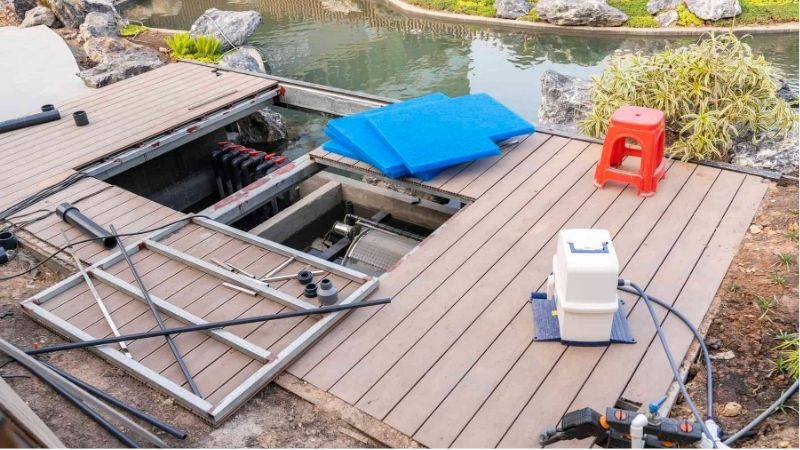
Start with the koi-heavy rating, because it falls well below the light-load figure. The OASE BioPress line shows the gap plainly: the 1000 is rated to only 250 gallons on koi-heavy load, the 1600 to 400 and the 2400 to 600, so the same units cover far smaller koi ponds than their names imply.
So read the koi figure that matches your stocking, not the headline gallons. A filter with a large light-load number can be badly undersized for koi, which is why koi capacity, rather than the model’s nominal volume, is the axis that actually decides the choice for a koi pond, where waste sets the load.
Budget for the Pump Plus the Filter
Plan for a complete system, because a pressure filter does not include a pump. Each OASE BioPress is a filter and UVC that needs a specified AquaMax pump, so the real cost is the bundle: the 1000 pairs near under $400, the 1600 near under $600 and the 2400 near under $700 as of 09/2026, so budget the pair, not the filter alone.
So price the filter and its matching pump together rather than the filter alone. A koi pond’s true entry cost is the paired system, which is why comparing bundle prices, not the standalone filter figure, keeps the budget honest when you size a pressure filter for koi at this scale.
Match Pump Pressure and Filter Limits
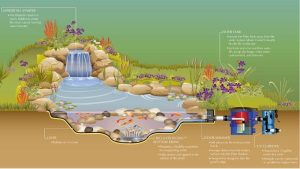
Read the pump and filter as one hydraulic system, because either can bottleneck it. A koi filter still needs a pump that turns the water over and can reach any waterfall, and a maximum flow figure such as the BioPress 2400’s 2,120 gallons per hour is not the delivered flow once head is added.
So confirm both the filter’s koi rating and the pump’s real delivery to your layout. Because a headline maximum flow drops at a raised watercourse, checking the pressure and flow limits together, rather than trusting one number, keeps a koi system from being quietly under-pumped in use.
Use Bio-Media Within the Maker’s Scope
Lean on backwash and biological media to handle koi solids, but stay inside the stated capacity. A pressure filter with backwashing and bio-media manages the heavy waste koi produce, yet that only works within the koi-heavy gallon rating the manufacturer actually publishes for the unit.
So use the media and backwash features as intended rather than as a way to stretch the rating. Good media helps a correctly sized filter cope with koi waste, which is why it supports the maker’s koi capacity instead of excusing a unit that sits below your real koi load, which better media cannot fix.
Top Picks
Because the keyword names no pond volume, none of these is a universal koi winner; each is judged on its verified koi-heavy rating. The table pairs product, best use, key spec and the caveat to keep, and the gallon figures are koi-heavy ratings, so they sit well below the same units’ light-load numbers.
| Product | Best For | Key Spec | Watch Out For |
|---|---|---|---|
| OASE BioPress 2400 + Classic 2700 | Koi ponds up to 600 gal | 600 gal koi; 2,120 gph max; ~under $700 | Bundle price; pump separate |
| OASE BioPress 1600 + Classic 1900 | Koi ponds up to 400 gal | 400 gal koi; 2,000 gph max; ~under $600 | Bundle price; pump separate |
| OASE BioPress 1000 + Classic 1200 | Koi ponds up to 250 gal | 250 gal koi; 1,050 gph; ~under $400 | Smallest koi rating |
| PondMAX PF1200UV | Alternative pressure filter | 600 gal fish, full sun; 1,200 gph; ~under $450 | Not a verified koi rating |
OASE BioPress 2400 + Classic 2700
The BioPress 2400 with an AquaMax Classic 2700 pump is the pick for koi ponds up to 600 gallons: the largest explicit koi-heavy rating here, with a 2,120-gallon-per-hour maximum flow and a 9-watt UVC, at a bundle price around $600 as of 09/2026 for the filter and pump together.
It carries the highest verified koi capacity on this list, which is why it leads for koi. Remember the 600-gallon figure is the koi-heavy rating, well below its light-load number, so size it to a koi pond of roughly 600 gallons rather than to its larger ornamental capacity, the figure koi buyers actually need.
OASE BioPress 1600 + Classic 1900
The BioPress 1600 with a Classic 1900 pump suits koi ponds up to 400 gallons: a mid-tier koi-heavy rating with a 2,000-gallon-per-hour maximum flow and a 9-watt UVC, at a bundle price around $500 as of 09/2026 for the paired filter and pump, a solid mid-size koi choice at that price point.
It sits between the 1000 and the 2400 at a 400-gallon koi rating, about 60 percent more koi capacity than the 1000. Treat the 400-gallon figure as its koi limit rather than its ornamental one, and pair it only with the specified pump so the hydraulics match the filter’s design, as OASE intends for the paired unit.
OASE BioPress 1000 + Classic 1200
The BioPress 1000 with a Classic 1200 pump is the smallest koi option here: a 250-gallon koi-heavy rating with a 1,050-gallon-per-hour flow and a 7-watt UVC, at a bundle price around $400 as of 09/2026 for the filter and its matching pump, the entry point into koi-rated filtration here.
It is the lowest-cost entry, but also the smallest koi capacity, so it fits only a modest koi pond. Read its 250-gallon figure as the koi-heavy limit rather than its light-load number, and step up to the 1600 or 2400 once your koi load clearly exceeds that rating, which happens quickly with koi.
PondMAX PF1200UV
The PondMAX PF1200UV is an alternative pressure filter: rated to 600 gallons with fish in full sun, moving 1,200 gallons per hour with an 11-watt UVC, at a filter price around $425 as of 09/2026 for owners wanting a different pressure-filter platform outside the OASE line, though its rating is not koi-specific.
Its 600-gallon figure is a fish-and-full-sun rating, not a verified koi-specific one, so it is not directly comparable to the OASE koi ratings. Treat it as a general fish pressure filter rather than a koi-rated unit, and confirm its scope against your koi load before relying on it.
Frequently Asked Questions
These answers keep a koi choice tied to verified koi-heavy capacity, since koi waste dwarfs ornamental loads. Each opens with the direct answer and the maker’s figure behind it, so ratings, pumps and plumbing stay grounded in published koi numbers rather than the model’s nominal gallon label.
Is a 2400-Gallon Filter Enough for a 2400-Gallon Koi Pond?
No, because the BioPress 2400’s koi-heavy rating is only 600 gallons, not 2,400. The 2,400-gallon figure is its light-load rating, so for koi the same unit supports roughly a quarter of that volume, which is a common and costly misreading of a pressure filter’s label, and an expensive one.
So plan a koi pond around the 600-gallon koi figure rather than the 2,400 light-load one. A 2,400-gallon koi pond would need far more filtration than this unit provides, which is exactly why koi capacity, not the model number, has to drive the sizing decision here, not the printed volume on the box.
What Is the Largest Explicit Koi Rating Here?
It is 600 gallons, the koi-heavy rating of the BioPress 2400, the strongest unit on this shortlist. No pick here publishes a koi rating above that, so a koi pond larger than roughly 600 gallons falls beyond what these particular filters verify for a koi load, so plan below that ceiling.
So treat 600 gallons as the ceiling this shortlist actually supports for koi. A bigger koi pond needs filtration beyond these units, which is why matching your koi volume to a published koi rating, rather than assuming a large filter covers it, keeps the choice realistic rather than aspirational.
Does a Pressure Filter Include a Pump?
No, an OASE BioPress is a filter and UVC that requires a separate, specified AquaMax pump. So the real cost is the bundle, not the filter alone, which is why the paired prices, from about $400 to under $700, are the honest figures to compare for a koi setup, pump and filter counted together.
So budget for the pump alongside the filter rather than the filter’s sticker by itself. A pressure filter without its pump is not a working system, which is why comparing complete bundles keeps a koi filter’s true entry cost from being understated at checkout, where the pump is easy to forget.
Can These Feed a Waterfall?
Yes, the BioPress units support elevated watercourses, but the delivered flow depends on head. A maximum flow figure is measured at low resistance, so lifting water to a waterfall reduces it, which means the flow at the top is lower than the headline gallons-per-hour number suggests.
So size the pump for the real vertical rise rather than the maximum flow alone. Because delivered flow falls as the water is lifted, confirming the pump can still turn the koi pond over at your waterfall height keeps both the filtration and the feature working as intended, with full flow at the top.
Final Thoughts
The best pond filter system for a koi pond is the one whose verified koi-heavy rating covers your stocking, not a filter labeled for a large volume. The OASE BioPress bundles rate to 250, 400 and 600 koi gallons, while the PondMAX PF1200UV is not koi-rated. The model name is not the koi number, so match koi capacity.
6 Best Fish Tank Stands For 10 Gallon 2026

Quick Picks: Best Aquarium Gravel Vacuum Siphon Cleaners