Last Updated: October 21, 2026
Most pond-filter regret comes from reading the box in the wrong order. The common mistakes when buying a pond filter system cluster around gallon labels, fish load, maximum flow, UV and winter rules, and each one is avoided by following a clear sequence: pond volume, then fish load, then hydraulics, then filtration and maintenance.
As an Amazon Associate we earn from qualifying purchases.
By David Nguyen
How Pond Filter Buying Decisions Actually Work
A sound purchase follows a sequence, so the first mistakes are about skipping or reversing its steps. The four below cover the start of it: buying by nominal gallons before calculating volume, ignoring fish load, treating maximum flow as delivered flow, and assuming UV replaces mechanical and biological filtration.
Mistake: Buying by Nominal Gallons Before Calculating Volume
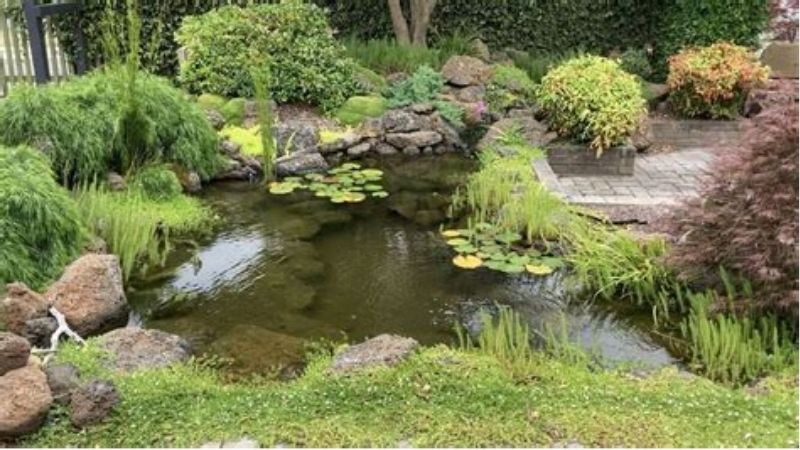
The first mistake is trusting a gallon label before measuring the pond, since capacity ratings assume a known volume. For a rectangular pond, length times width times average depth times 7.5 gives the gallons, so a quick calculation replaces a guess before any filter rating is even compared, which is the whole point.
So calculate the volume first rather than shopping by a rough estimate. Because every rating is meaningless against an unknown pond size, doing the simple measurement early keeps the rest of the decision grounded in your actual gallons rather than a number you assumed at the store.
Mistake: Ignoring Fish Load
The second mistake is overlooking fish load, because ratings fall sharply once fish are added. The OASE BioPress 1000, for instance, is rated to 1,000 gallons on light load but only 500 on medium and 250 on heavy, so the same unit covers very different real ponds by stocking level.
So read the load-specific figure that matches your fish rather than the light-load headline. Because a filter labeled for a volume with no or few fish covers far less when heavily stocked, matching the rating to your actual fish load keeps the system from being quietly overwhelmed by the real waste load.
Mistake: Treating Max GPH as Delivered Flow
The third mistake is reading maximum flow as the flow you get, since it is measured at low resistance. Tetra publishes its pump flow at one foot of head, so a figure like 325 or 550 gallons per hour drops once water is lifted to a waterfall or pushed through real plumbing and head.
So size flow for the delivered figure at your head rather than the headline maximum. Because lift and friction reduce it, quoting a maximum without its head condition is incomplete, which is why the real flow at your installation, not the box number, should guide the pump choice, not the label on the box.
Mistake: Assuming UV Replaces Filtration
The fourth mistake is expecting UV to do the filtration, because a clarifier only targets suspended algae. Integrated UVC clears green water, while mechanical media capture solids and biological media process waste, so relying on UV alone leaves the pond’s real mechanical and biological filtration undone.
So treat UV as a clarifier alongside the other media rather than as a substitute for them. Because it does not remove debris or handle the biological load, a UV lamp complements mechanical and biological filtration, which is why all three roles belong in a healthy pond system, each doing a distinct job.
What the Mistakes Look Like in Practice
The remaining mistakes show up when systems are compared and installed, so a little verified data makes them concrete. The table shows how OASE BioPress ratings fall by load, and the four below cover mismatched load definitions, forgetting the pump, generic turnover sizing, and ignoring access and maintenance.
| Model | Light load | Medium load | Heavy load |
|---|---|---|---|
| OASE BioPress 1000 | 1,000 gal | 500 gal | 250 gal |
| OASE BioPress 1600 | 1,600 gal | 800 gal | 400 gal |
| OASE BioPress 2400 | 2,400 gal | 1,200 gal | 600 gal |
Mistake: Comparing Different Load Definitions
The fifth mistake is comparing systems as if their ratings meant the same thing, when load definitions differ. One brand’s light-load figure and another’s fish-adjusted number describe different conditions, so lining them up as a single metric flatters some units and penalizes others unfairly.
So compare like conditions rather than headline numbers across brands. Because makers define light, medium and heavy load differently, matching each rating to the same real stocking, under the same conditions, is the only fair comparison, which is why raw gallon figures across brands can badly mislead a buyer.
Mistake: Forgetting the Required Pump
The sixth mistake is buying a pressure filter without budgeting its pump, since the filter is only part of the system. An OASE BioPress is a filter and UVC that needs a specified pump, so its real cost is the bundle, not the filter’s standalone shelf price, with the pump counted in.
So price the filter and its required pump together rather than the filter alone. Because a pressure filter without a pump does not work, counting the pump into the budget keeps the true entry cost honest and complete, which is why the bundle figure is the number that actually matters at checkout.
Mistake: Sizing by a Generic Turnover Rule
The seventh mistake is sizing by a blanket turnover rule instead of the maker’s tables and real head. A generic times-per-hour rule ignores how each manufacturer rates its system and how head reduces flow, so it can oversize or undersize a filter for your actual pond and real head.
So size from the manufacturer’s system tables and your measured head rather than a rule of thumb. Because turnover heuristics are secondary at best, letting the maker’s load ratings and your real hydraulics lead the choice keeps the system correctly matched to the pond, not a rule of thumb.
Mistake: Ignoring Access and Maintenance
The eighth mistake is overlooking service access and upkeep, since maintenance is ongoing and shapes ownership. Backwash handles, foam cleaning, and UV bulb and quartz-sleeve parts all affect how easily a filter is maintained, so their availability matters as much as the initial purchase specs do when buying.
So weigh how a filter is serviced and whether parts are available before buying rather than after. Because cleaning and replacement recur every season, a unit that is easy to access and well supported with parts is cheaper to live with over the years, which is why maintenance belongs in the buying decision.
Frequently Asked Questions
These answers keep buying tied to the correct sequence, since most mistakes come from reversing it. Each opens with the direct answer and the maker’s guidance behind it, so sizing, cleaning, UV and winter stay grounded in manufacturer tables and real conditions rather than a single rule of thumb.
Should I Always Buy One Size Larger?
No, because there is no universal percentage; size to the maker’s load table and your installation. Buying a size up can help on a heavily stocked or sunny pond, but it is not an automatic rule, so the manufacturer’s rating for your fish load and real head should decide it instead.
So size from the load table and conditions rather than a blanket upsize. Because the right margin depends on stocking, sun and head, following the maker’s system sizing keeps the filter correctly matched, which is why one-size-larger is guidance for some cases, not a universal rule.
Can I Clean Filter Media Every Time It Looks Dirty?
Not the biological media, because over-cleaning can disrupt the beneficial bacteria. OASE warns that cleaning too aggressively can set back the colony that processes waste, so the biological stage should be rinsed gently and only as the manual advises rather than whenever it looks dirty.
So follow the manual for biological media rather than cleaning on appearance alone. Because the bacteria take time to re-establish, treating the biological stage differently from the mechanical foam protects the pond’s biology, which is why over-cleaning is itself a common maintenance mistake.
Do I Need UV?
Only if you are fighting green or suspended algae, because UV does not solve every algae problem. A UVC clarifier clears the floating single-cell algae that cause green water, but it does not address attached or string algae, so its usefulness depends on the type of algae you actually have already.
So add UV when green water is the issue rather than as a default. Because it targets suspended algae specifically, a clarifier is worth it for that problem but not a cure-all, which is why diagnosing the algae type decides whether UV belongs in your system at all, whether green water or string algae.
Can I Leave Any Pond Filter Running Through Winter?
No, because winter rules differ by system and many should not run through freezing. The ClearSolution says not to operate it during freezing and to drain and store it, while frost-protected OASE pumps still have separate component rules, so continuous winter running is the exception, not the rule.
So check each system’s winter instruction rather than assuming it copes with cold. Because a frost-proof pump does not protect the filter body or plumbing, following the maker’s freezing guidance for each component, often shutdown and storage, is what prevents an expensive freeze failure over the winter outdoors.
Final Thoughts
Avoiding the common mistakes when buying a pond filter system comes down to a sequence: calculate the pond volume, classify the fish load, verify the head and flow, then check filtration, maintenance and winter rules before price. Read load-specific ratings, not gallon labels, and treat UV as a clarifier.
8 Best Automatic Fish Feeders for Vacationers – Amazon Picks
6 Best Aquarium Auto Top Off Systems 2026