Last Updated: October 21, 2026
Solar filtration is off-grid, but sunlight sets its limits. The best solar powered pond filter system is chosen by verified panel watts, maximum flow and battery status against your pond size, not the biggest number, because direct-solar units run on sunlight and most are not a 24-hour life-support filter for a heavily stocked pond.
As an Amazon Associate we earn from qualifying purchases.
By David Nguyen
How to Choose a Solar Pond Filter System
A solar filter is chosen for how it handles sunlight, not just its flow, since the sun drives its output. The four below order it: check direct-sun versus battery operation, use maximum flow only as a sunlit ceiling, match lift to any waterfall, and avoid relying on intermittent solar as sole life support.
Check Direct-Sun Versus Battery-Supported Operation
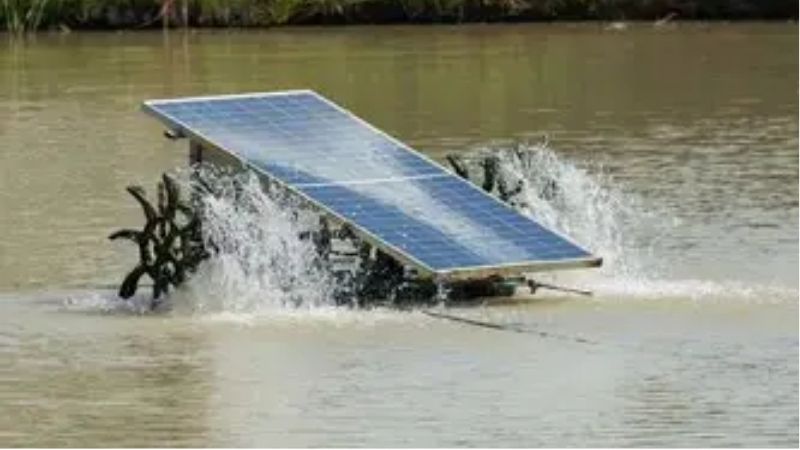
Start by checking whether a unit runs on direct sun or has a battery, because that decides when it works. Most of these are direct-solar and run only while the sun shines, while the SPF130 carries a 3,600-milliamp-hour battery that supports low-sun periods but is not designed for all-night running.
So read the operation type before assuming continuous filtration, since battery backup is not the same as overnight. Because a direct-solar pump stops in shade or darkness, and even the battery model is a daytime buffer, matching the operation to your needs matters more than the flow figure on the box.
Use Maximum Flow as a Sunlight-Dependent Ceiling
Treat the maximum flow as a best-case ceiling under full sun, not a steady rate. Figures like 480, 580 or 680 gallons per hour across the SPF326 family are peak numbers, so shade, lift, debris and maintenance all reduce the flow the pump actually delivers over the course of a sunny day.
So plan around less than the maximum rather than the headline figure, since real output varies with the sun. Because clouds and a dirty intake cut the flow, reading the rating as a sunlit ceiling rather than a guaranteed rate keeps expectations realistic for a sunlight-driven solar pond.
Match Lift to Any Waterfall or Fountain
Match the pump’s lift to your fountain or waterfall height, because head reduces real flow. The SPF326 family lists maximum lifts around 13.8 to 16.4 feet, but that is a maximum specification measured at low flow, not the delivered flow at that height, which is far lower in practice at the top.
So size the lift for your actual rise rather than the headline figure, and expect less flow the higher it goes. Because delivered flow falls as the water is raised, confirming the pump can still reach your feature with useful flow matters more than the maximum lift number alone here, at real height.
Avoid Relying on Solar as Sole Life Support
Do not lean on intermittent solar as the only critical filtration for a heavily stocked pond, because sunlight is not constant. A direct-solar unit pauses without sun, so a pond that needs continuous filtration and aeration for a heavy fish load is not safely served by solar power alone here.
So use solar for circulation and supplemental filtration unless a system is designed and verified for continuous operation. Because the manufacturer itself warns compact solar units may not replace continuous filtration, a heavily stocked pond needs mains or battery architecture rather than solar as sole support.
Top Picks
Each pick below is judged on verified panel watts, flow and battery status against pond scope, since sunlight limits all of them. The table pairs product, best use, spec and caveat, and the flow and lift figures are sunlit maxima, not guaranteed continuous output, so higher panel watts do not scale flow one-to-one.
| Product | Best For | Key Spec | Watch Out For |
|---|---|---|---|
| POPOSOAP SPF326 70W (P3703) | Best overall direct-solar mid-size | 70 W panel; 680 gph; 16.4 ft lift; ~under $150 | Sunlight-dependent; no battery |
| POPOSOAP SPF326 55W (P3553) | Best value direct-solar | 55 W panel; 580 gph; 14.7 ft lift; ~under $150 | Sunlight-dependent; no battery |
| POPOSOAP SPF326 40W (P3403) | Best lower-cost solar filter | 40 W panel; 480 gph; 13.8 ft lift; ~under $150 | Sunlight-dependent; no battery |
| POPOSOAP SPF130 8W (P3081D) | Tiny-pond / low-sun buffer | 8 W; 80 gph; 3,600 mAh; 40-160 gal; ~under $50 | Not designed for all-night use |
POPOSOAP SPF326 70W (P3703)
The POPOSOAP SPF326 70-watt model, P3703, is the best overall direct-solar mid-size pick: a 70-watt panel driving up to 680 gallons per hour with a 16.4-foot maximum lift, priced around $150 as of 09/2026 for a mid-size pond in a sunny spot, leading the SPF326 family on flow and lift.
It offers the most flow and lift of the SPF326 family, which is why it leads as a direct-solar mid-size choice rather than a universal pond winner. Read its 680-gallon-per-hour and 16.4-foot figures as sunlit maxima, and site it where it gets strong, unshaded sun through the whole day.
POPOSOAP SPF326 55W (P3553)
The POPOSOAP SPF326 55-watt model, P3553, is the best value direct-solar pick: a 55-watt panel driving up to 580 gallons per hour with a 14.7-foot maximum lift, priced around $150 as of 09/2026, close in price to the 40-watt unit but with more capability than the cheaper model.
It sits between the 40- and 70-watt models on flow for only a small step up in price, which is its value. Read its figures as sunlit ceilings rather than steady rates, and choose it when you want more than the 40-watt unit without paying for the top model, the value mid-range pick.
POPOSOAP SPF326 40W (P3403)
The POPOSOAP SPF326 40-watt model, P3403, is the best lower-cost solar filter: a 40-watt panel driving up to 480 gallons per hour with a 13.8-foot maximum lift, priced around $125 as of 09/2026 as the most affordable of the SPF326 direct-solar family, the budget entry into the range here.
It is the budget entry into direct-solar filtration, with the lowest flow and lift of the three, so it suits a smaller sunny pond. Read its 480-gallon-per-hour figure as a full-sun ceiling, and step up to the 55- or 70-watt model if your pond or feature needs more flow than this.
POPOSOAP SPF130 8W (P3081D)
The POPOSOAP SPF130 8-watt battery model, P3081D, is the best tiny-pond or low-sun buffer: an 8-watt panel with an 80-gallon-per-hour flow and a 3,600-milliamp-hour battery, rated for 40 to 160 gallons, priced around $50 as of 09/2026 for a very small pond of 40 to 160 gallons.
Its battery supports operation through brief low-sun spells, but the maker states it is not designed for all-night running, so it is a daytime buffer rather than continuous filtration. Treat it as a small-pond circulator, and do not read its battery as overnight life support for fish.
Frequently Asked Questions
These answers keep a solar choice tied to panel watts, flow and battery status, since sunlight limits every unit. Each opens with the direct answer and the maker’s wording behind it, so operation, capacity and flow stay grounded in real solar behavior rather than a headline number or a promise of 24-hour running.
Do Solar Pond Filters Run at Night?
Direct-solar models do not, because they run only while the sun shines. Without sunlight a direct-solar pump stops, and even the SPF130’s battery is a daytime and low-sun buffer that the maker says is not designed for all-night operation, so overnight filtration is not the norm with these direct-solar units.
So plan for daytime filtration rather than continuous running with these units. Because a direct-solar pump pauses after dark and the battery model is only a short buffer, a pond needing round-the-clock filtration requires mains or a purpose-built battery system rather than these solar filters.
Can the 70W Model Handle a Koi Pond?
Be cautious, because its pond figures are general marketing, not a verified koi rating. The 70-watt model lists a broad 340-to-1,360-gallon range, but that is not a standardized koi-load capacity, and koi need continuous, heavy filtration that a sunlight-dependent unit cannot guarantee.
So do not treat the listed gallon range as koi capacity for this solar unit. Because koi demand steady, high filtration and solar output varies with the sun, a direct-solar filter is not a safe koi solution, which is why its broad listed range should not be read as a standardized koi rating at all.
Does Higher Panel Wattage Mean Proportionally More Flow?
No, because the pumps and systems differ, so watts and flow do not scale together. Moving from 40 to 55 watts raises the panel about 37.5 percent while the maximum flow rises only about 20.8 percent, so a bigger panel does not translate into proportionally more water through the pump.
So compare flow figures directly rather than inferring them from panel wattage. Because each model pairs a different pump with its panel, the flow rating is the number to read, which is why higher watts alone do not promise a matching increase in gallons per hour of delivered flow.
Can Solar Replace Mains Filtration?
Not for a heavily stocked pond, because the manufacturer itself warns compact solar filter-fountains may not replace continuous filtration and aeration. A direct-solar unit pauses without sun, so it cannot guarantee the round-the-clock filtration that a heavy fish load depends on daily.
So frame solar as off-grid circulation and supplemental filtration rather than a full replacement. Because continuous life support for many fish needs constant operation, a mains or verified battery system remains necessary where solar’s sunlight limits would otherwise put the fish at real risk overnight.
Final Thoughts
The best solar powered pond filter system is chosen by verified panel watts, flow and battery status against your pond, not the biggest number, since solar is not guaranteed 24-hour filtration. The SPF326 70-watt leads as a direct-solar pick, and the SPF130 is a daytime buffer. Read flow and lift as sunlit ceilings.
Best Energy Efficient Aquarium Overflow Box: Smart Picks

Aquarium Fish Food Types: Complete Guide & Best Picks