Last Updated: September 28, 2026
A waterfall already aerates the surface, so the best pond aerator for a waterfall is the one that adds subsurface circulation the splash cannot reach, mixing deep and remote water rather than duplicating the oxygen the falls already put into the top layer of the pond.
As an Amazon Associate we earn from qualifying purchases.
By David Nguyen
How to Choose a Pond Aerator for a Waterfall Pond
A waterfall and a diffuser do different jobs. The falls oxygenate the surface near the stream, while a diffuser moves deep and remote water the splash never touches. The goal is not to replace the waterfall but to fill its blind spots, so size the aerator to the zones the falls leave still.
What the Waterfall Already Does
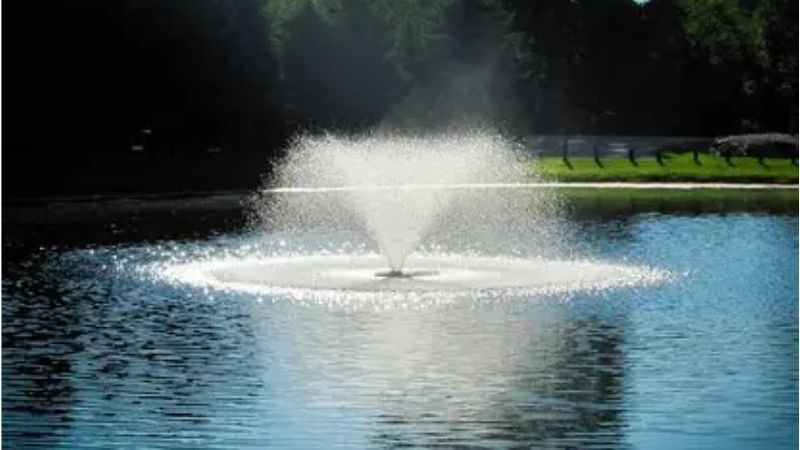
A waterfall is genuine aeration, not decoration. Falling, splashing water exchanges gas efficiently at the surface, so the area near the stream usually holds oxygen well. The honest starting point is to credit the falls, then find where their effect fades, not assume the pond needs a full second aerator.
The limit is reach. Surface turbulence near the falls does little for the far end of a large pond or for deep water below the mixing zone, especially at night when the falls alone carry the load. Map where circulation weakens, and let that map, not a blanket rule, decide how much diffuser you add.
Where a Diffuser Adds Value
A diffuser earns its place in the zones a waterfall misses: the deep bottom, dead corners and the far side of a long pond. Bottom diffusion lifts low-oxygen water and prevents stagnant layers the surface splash cannot stir, which matters most in summer heat when demand peaks and the falls fall short.
Place the diffuser to complement, not fight, the falls. Putting it in the deep, still zone rather than under the stream avoids duplicating surface work and targets the real gap. Size it to that specific zone, since a modest, well-placed diffuser beats a large one dumped anywhere.
When You May Not Need One
Not every waterfall pond needs a diffuser. A small, shallow pond with a strong waterfall and light stocking may already circulate fully, and adding air there just churns sediment. Do not claim a waterfall provides no oxygen; assess the actual still zones and stocking before deciding a diffuser is required.
The test is whether deep or remote water stagnates. If a far corner stays warm and still, or the bottom goes low on oxygen on a hot night, a diffuser helps. If circulation already reaches everywhere, the falls are enough. Match the decision to your pond, not to a rule that every pond must have both.
Sizing the Subsurface Aerator
When a diffuser is warranted, size it to the supplemental zone and its depth, not to the whole pond as if the falls did nothing. Pressure still rises with depth, so read delivered airflow at the diffuser’s depth. A pump that reaches the deep, still layer is worth more here than raw rated volume.
Keep runtime and placement in mind together. The diffuser often needs to run hardest at night and in summer, when the falls alone leave the deep water short. A modest pump matched to the still zone, on short airline, supplements the waterfall efficiently without over-churning the surface the falls handle.
Top Picks
These four suit the supplemental role from compact deep-zone diffusion to two-zone coverage and quiet duty. Ratings are manufacturer-stated and comparable only at matched depth, so pick by the still zone and depth your waterfall leaves behind, not a volume figure that ignores what the falls aerate.
| Product | Best For | Key Spec | Watch Out For |
|---|---|---|---|
| Atlantic TAKIT0400 | Small deep-zone supplement | 4.5W; rated ~1,000 gal | One diffuser; place in still zone |
| Aquascape 2-Outlet | Far end plus deep bottom | 6W; rated ~2,000 gal | Do not duplicate the falls |
| Atlantic TAKIT0800 | Deep water below the falls | Dual-outlet kit | Confirm depth reach |
| HIBLOW HP-40 | Quiet continuous duty | 32 dBA at 1m (mfr) | Match pressure to deep zone |
Atlantic TAKIT0400 — Deep-Zone Supplement
For a pond where the waterfall handles the surface and only the deep zone needs help, the TAKIT0400 is an efficient supplement: a 4.5W pump rated to about 1,000 gallons feeding a single bottom diffuser. Placed in the still deep water rather than under the falls, it fills the gap near 39 kWh a year.
Its single outlet suits one clear dead zone, not a sprawling layout. If the pond has several still areas, one diffuser will not reach them all, and the shallow rating limits depth. Confirm it reaches your deep zone before relying on it for the missing circulation.
Aquascape 2-Outlet — Far End Plus Bottom
When a waterfall leaves both a far end and a deep bottom still, the Aquascape 2-Outlet covers two zones from one 6W pump. That lets you target the specific gaps the falls miss without a second unit, useful on a longer pond where surface aeration concentrates near the stream and fades downstream.
Resist pointing a diffuser under the falls, which just duplicates surface work. Place both stones in still water and compare delivered air per stone, not headline volume. Two zones only help if the pump holds pressure for both at their depths, so keep airline short and confirm the reach.
Atlantic TAKIT0800 — Deep Below the Falls
For deeper ponds where the still layer sits well below the waterfall’s mixing zone, the TAKIT0800 dual-outlet kit brings headroom so the diffuser is not pinned at the pump’s ceiling. That reserve keeps delivered air healthy at depth, exactly where the falls’ surface turbulence does the least good.
Size it to the deep supplemental zone and confirm the curve reaches that depth, rather than sizing for the whole pond as if the falls contributed nothing. A larger rating measured shallow is no promise of air deep. For deep waterfall ponds it is the secure choice; for shallow ones the falls may suffice.
HIBLOW HP-40 — Quiet Duty
Because a supplemental diffuser often runs continuously through summer nights, the HIBLOW HP-40 at 32 dBA at one meter suits a waterfall pond near seating where the falls provide daytime ambiance and the pump must stay unobtrusive. Linear-piston duty favors sustained pressure and rebuildable parts.
Confirm its pressure rating reaches your deep still zone, since even a strong linear pump fades past its window. A comparable airflow-at-depth figure against the Atlantic kits is not listed here, so rank it on quiet continuous duty and longevity, and verify it holds air where the falls leave water still.
Frequently Asked Questions
Waterfall-pond owners ask whether they even need a diffuser, where to place it, if it should run when the falls do, and whether the two together over-aerate. Each answer gives the practical call, then the condition that changes it for your pond’s depth, layout and stocking.
Do I need a diffuser if I have a waterfall?
Not always. A waterfall aerates the surface near the stream, so a small, well-circulated pond with light stocking may not need more. The question is whether deep or remote water stagnates. If a far corner or the bottom goes still and low on oxygen, a diffuser fills that gap.
Assess before adding. Check whether the deep layer holds oxygen on a hot night and whether the far end circulates. If both do, the falls are enough; if not, a modest diffuser in the still zone helps. Avoid the assumption that every waterfall pond must also run a bottom aerator.
Where should the diffuser go relative to the falls?
In the still water the falls do not reach, usually the deep bottom or the far end, not under the stream. Placing it beneath the falls duplicates surface aeration and wastes the diffuser’s real strength, lifting deep, low-oxygen water the splash cannot stir. Target the gap, not the strong zone.
On a long pond, that often means the end opposite the waterfall. Confirm the pump reaches that depth and keep airline short so pressure is not lost on the way. Good placement lets a small supplemental diffuser do more than a large one dropped near the already well-aerated falls.
Should the aerator run when the waterfall runs?
Often the diffuser matters most when the falls are least effective, at night and in summer heat, when surface mixing alone leaves the deep water short. Many owners run the diffuser continuously and rely on the falls for daytime surface exchange, so the two cover different times as well as zones.
If you throttle the waterfall at night for noise, the diffuser becomes the primary aeration, another reason to size it to the deeper zone. Match runtime to when stagnation actually occurs in your pond rather than simply mirroring the waterfall’s fixed schedule.
Can a waterfall and diffuser over-aerate?
Over-oxygenation is unlikely, but over-churning is possible if a large diffuser sits where the falls already mix water. The result is disturbed sediment and a rolling surface rather than benefit. Size the diffuser to the still zone and keep it out of the waterfall’s turbulence to avoid that overlap.
If you see stirred substrate or a constantly agitated surface, the diffuser is too strong or poorly placed. Throttle outlets, move it to the still deep water, or size down. The aim is complete circulation, letting the falls handle the surface and the diffuser handle the depths they miss.
Final Thoughts
For a waterfall pond, add a diffuser only where the falls leave water still, size it to that deep or remote zone and confirm depth reach. The best pond aerator for a waterfall supplements surface splash with subsurface circulation, filling the blind spots at night and in summer without duplicating the falls’ oxygen.
Best Pond Liner for Cold Winters: Top Expert Buying Guide

Best Pond Aerator for Winter: Top Essential Picks Compared