Last Updated: October 4, 2026
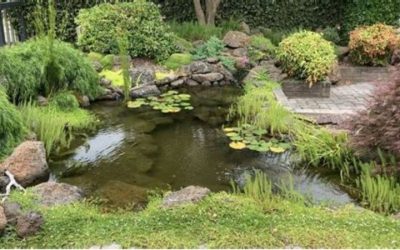
A small backyard pond rewards a compact, right-sized pump far more than a powerful one, because excess flow just churns the water and adds to the bill. The best pond pump for a small backyard pond is the model whose delivered flow at 5 ft matches your volume, fits a tight space, and keeps 24/7 wattage low.
As an Amazon Associate we earn from qualifying purchases.
By David Nguyen
How to Choose a Pond Pump
Small ponds punish oversizing, so the goal is enough delivered flow at your head to turn the water over about once an hour, in a body small enough for a compact basin, at a wattage you can run all season. Volume, head, footprint, and continuous power are the four numbers that decide the fit.
Size by Volume, Not Labels
Match delivered flow to gallons, ignoring pond-size labels that are not comparable to GPH. A 300-gallon backyard pond wants roughly 300 GPH at your head, met by the Ultra 550 at 5 ft, while a 500-gallon pond points to the Ultra 800’s 500 GPH; the label on a box is not a substitute for that math.
A pond-size rating and a GPH rating measure different things, so never read one as the other. Turnover of about once per hour is the practical starting point, adjusted up for fish or a small fall, which keeps a compact pond healthy without the over-circulation a larger pump would force on it.
Respect the Head
Even a small pond has lift, and it eats into flow. The Ultra 550 gives 300 GPH at 5 ft, but a taller lip or a longer run drops that further, so measure vertical rise plus fitting friction before choosing. Reading flow at your real head keeps a compact filter fed instead of quietly starved.
Because small ponds often run modest heads, the efficient Ultra models shine here, but a low, short loop can let a smaller pump do the job. The mistake is assuming a 5-ft rating holds at 8 ft; it does not, and on a tight pond that shortfall is the difference between clear water and a struggling filter.
Mind the Footprint
Compact ponds have little room to hide a pump, so physical size matters. The Ultra 550 and Ultra 800 share a small 6 by 3.35 by 4-inch body that tucks into a tight basin, while the AquaJet 600’s 12 by 12 by 6-inch fountain cage needs far more space and changes how you lay out a small pond.
Footprint also affects maintenance access. A pump wedged into a cramped basin is harder to clean, and a bulky cage can crowd plants or liner folds, so in a genuinely small backyard pond the slim Ultra bodies are easier to place, service, and conceal than a large fountain housing.
Budget for 24/7 Power
Running cost, not sticker price, decides value on a pump that runs all season. Continuous, the 33W Ultra 550 draws about 289 kWh a year, the 58W Ultra 800 near 508 kWh, and the 92W Ultra 1100 roughly 806 kWh, so the smallest pump that meets turnover is usually the cheapest to own.
Watch the flow-to-watt trade as you size up. The Ultra 800 moves 66.7% more water than the Ultra 550 but uses about 75.8% more wattage, so stepping up costs proportionally more to run. On a small pond, pay for the extra flow only when your volume or head genuinely calls for it.
Top Picks
These four suit small backyard ponds, from a very compact circulator to a fountain kit, spanning tight footprints and low wattage. The right pond pump for a small backyard pond depends on your gallons, your head, how much room you have to place it, and how much you want to spend running it.
| Product | Best For | Key Spec | Watch Out For |
|---|---|---|---|
| Aquascape Ultra 800 | Best for a typical small pond | 500 GPH @5 ft; 58W; 6-in body | Little spare flow for features |
| Aquascape Ultra 550 | Best value for very small ponds | 300 GPH @5 ft; 33W; 6-in body | Limited flow for waterfalls |
| Aquascape Ultra 1100 | Best for headroom | 800 GPH @5 ft; 92W | Larger body and higher watts |
| Aquascape AquaJet 600 | Best fountain option | 300 GPH @5 ft; 33W; fountain heads | Bulky 12-in cage; higher price |
Aquascape Ultra 800: Best for a Typical Small Pond
No pump is universally best without your volume and head, but for a common small pond near 500 gallons at low head, the Ultra 800 fits cleanly: 500 GPH at 5 ft on 58W for about $150, in a slim 6-inch body that hides easily and lands on roughly one turnover per hour.
Its weakness is spare flow. Sitting near turnover, it has little margin for a fall, and it draws more than the smaller Ultra 550, near 508 kWh a year run continuously. For a pond nearer 300 gallons the 550 saves watts; for one pushing 500 gallons the 800 is the tidier, better-matched choice.
Aquascape Ultra 550: Best Value for Very Small Ponds
For the smallest backyard ponds, the Ultra 550 delivers 300 GPH at 5 ft on just 33W for around $125, in the same compact 6-inch body. Run continuously it draws only about 289 kWh a year, making it the low-cost, low-footprint pick for a pond near 300 gallons with modest head.
Its ceiling is flow. At 300 GPH it cannot feed a waterfall or a heavily stocked pond, and pushing it past its range drops output as head rises. Confirm your gallons and lift first; if 300 GPH at 5 ft covers turnover, it is the efficient small-pond choice, but size up the moment you add a real feature.
Aquascape Ultra 1100: Best for Headroom
When a small pond includes a waterfall or may grow, the Ultra 1100 delivers 800 GPH at 5 ft for about $225 in a slightly larger 7.5-inch body. That margin covers a spillway or future stocking, so a compact pond with ambitions is not immediately outgrowing its pump.
The cost is watts and size. It pulls 92W, near 806 kWh a year continuous, and its bigger body needs a little more room than the 550 or 800. On a genuinely small, feature-free pond it is more pump than the water needs, so reserve it for compact ponds that carry a real fall or filter load.
Aquascape AquaJet 600: Best Fountain Option
For a small pond built around a visible spray, the AquaJet 600 bundles fountain heads and delivers 300 GPH at 5 ft on 33W for about $300. It brings a display and circulation together, with a low continuous draw of roughly 289 kWh a year if run through the season.
Its downsides are footprint and price. The 12 by 12 by 6-inch cage is far bulkier than the slim Ultra bodies and harder to place in a tight basin, and the kit costs more than a bare pump of the same flow. Choose it when the fountain is the point of the pond, not just for circulation.
Frequently Asked Questions
Small-pond buyers keep circling the same worries, and each answer points back to matching flow to a modest volume rather than reaching for power. These cover sizing a 300-gallon pond, whether 800 GPH is too much, the season’s energy cost, and why a pump cage may or may not matter.
What Pump Size Fits a 300 Gallon Pond?
Aim for about 300 GPH delivered at your head, roughly one turnover per hour, which the Ultra 550 meets at 5 ft. That keeps a compact pond circulating through a small filter without the over-flow a larger pump would force, and it holds wattage low across a full running season.
Nudge the target up for fish or a small fall, since both add circulation demand. A lightly planted 300-gallon pond can sit right at one turnover, but a few koi or a spillway push the real need higher, so read your own stocking and features rather than trusting a single tidy figure.
Is 800 GPH Too Big for a Small Pond?
Often, yes. On a 300-gallon pond, 800 GPH delivered is well past one turnover per hour and mostly churns the water while drawing more power, so the Ultra 1100’s output is overkill unless you run a waterfall or a demanding filter loop that consumes the extra flow.
It becomes appropriate when a small pond carries a real feature. A spillway or a UV loop can absorb 800 GPH usefully, and a little headroom protects flow as a filter clogs. The rule is to buy the extra capacity for a reason, not as a default, so a compact pond is not over-pumped by habit.
How Much Does a Small Pond Pump Cost to Run?
It depends on wattage and runtime. Run continuously, the 33W Ultra 550 uses about 289 kWh a year, the 58W Ultra 800 near 508 kWh, and the 92W Ultra 1100 roughly 806 kWh; multiply by your local rate to see the real seasonal cost of keeping the pond circulating day and night.
Because small ponds rarely need much flow, the cheapest to own is usually the smallest pump that clears turnover at your head. Stepping up flow costs proportionally more wattage, so on a compact pond the running-cost saving from right-sizing often outweighs a slightly lower purchase price on a bigger unit.
Do I Need a Pump With a Cage?
Only in some setups. A fountain-style cage like the AquaJet 600’s protects the intake and supports spray heads, which helps in an open basin that collects leaves and debris, but it adds bulk that a tight pond may not have room for and can complicate cleaning and placement in a cramped space.
A submersible circulation pump with a simple pre-filter is usually easier in a small pond, keeping the footprint slim and access straightforward. Choose a cage when you want a fountain display or extra intake protection, and skip it when circulation and a compact placement matter more than the spray.
Final Thoughts
The best pond pump for a small backyard pond is the compact model whose delivered flow at your head lands near one turnover per hour, fits your basin, and keeps 24/7 wattage low, not the biggest pump you can fit. Match gallons to flow at your lift, mind the footprint, and right-size the watts.
Related Reviews & Guides

Best Rodi Water Filter System For Aquariums: Top Expert
Activated Carbon in Aquarium Filter: When It Actually Helps