Last Updated: September 27, 2026

Lifeguard 15 ft. x 20 ft. EPDM Pond Liner – 45-Mil Rubber
Included for 'Best Pond Liner for a Koi Pond: Top Expert Buying Guide' because the listing specifies 45-Mil Rubber, details this guide uses to compare options.
View on Amazon
DGSL 20 Mil HDPE Pond Liner, 7 x 10 FT Flexible Water Garden Liner
Included for 'Best Pond Liner for a Koi Pond: Top Expert Buying Guide' because the listing specifies 7 x 10 FT Flexible Water Garden Liner, details this guide uses to compare options.
View on Amazon
Odowalker 2 Pcs Black Pond Liners, 20 Mil HDPE Fish Koi Pond Liner, 4x7 FT
Included for 'Best Pond Liner for a Koi Pond: Top Expert Buying Guide' because the listing specifies 20 Mil HDPE Fish Koi Pond Liner and 4x7 FT, details this guide uses to compare options.
View on Amazon
VIVOSUN 10 x 13 Feet Pond Liner for Koi Ponds, Aquaculture and Water Garden
Included for 'Best Pond Liner for a Koi Pond: Top Expert Buying Guide' because the listing specifies Aquaculture and Water Garden, details this guide uses to compare options.
View on AmazonKoi ponds punish shortcuts in both depth and materials, and a liner is the one part you cannot swap out later. The best pond liner for a koi pond carries explicit fish-safe wording from the maker and enough sheet to cover deeper walls. Four pond-grade options are compared below, all sized from geometry.
As an Amazon Associate we earn from qualifying purchases.
By David Nguyen
How to Choose a Koi Pond Liner
Four checks separate a koi-appropriate liner from a generic sheet: explicit fish or pond wording from the manufacturer, thickness suited to deeper installations, dimensions calculated from footprint and depth, and warranty terms that reflect genuine pond service rather than roofing use.
Insist on Explicit Fish-Safe Wording From the Maker
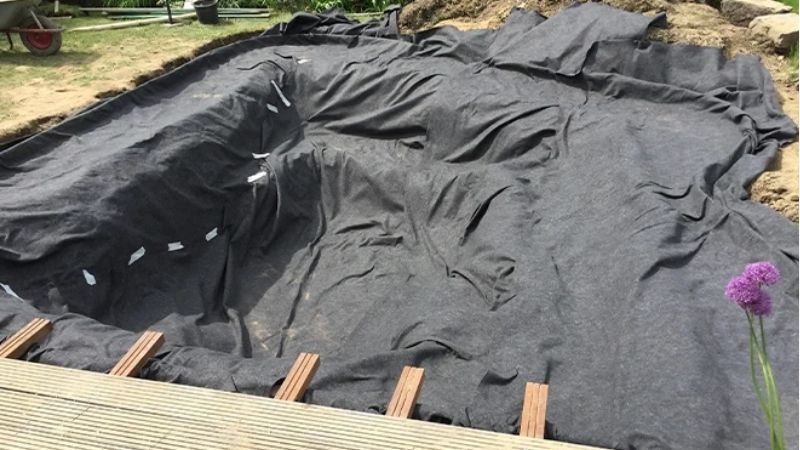
Pond-grade EPDM and roofing EPDM are different products despite sharing a material name. PondGard publishes its 45 mil sheet as fish-safe pond-grade material, and Aquascape states fish safety for its 45 mil EPDM, whereas roofing membrane carries no such assurance anywhere on its documentation.
Additives differ because the applications differ, and roofing sheet may contain treatments never intended for aquatic life. Where a listing omits fish or pond wording entirely, treat that silence as a definite answer and request written confirmation before any koi enter the water.
Depth Guidance Comes From Sources, Not Law
Published depth recommendations for koi vary between keepers, retailers and associations, and they reflect experience rather than a single regulatory standard. Deeper water offers more thermal stability through summer heat and winter cold, which is the practical argument behind most guidance.
Whatever depth you choose, it enters the liner calculation twice. Adding twice the maximum depth plus one foot to both footprint dimensions produces the sheet requirement, so a deeper koi pond consumes considerably more material than its surface area alone would ever suggest to you.
Size It From the Footprint and the Depth
Koi-gallon labels describe stocking capacity, not sheet dimensions. A pond measuring 10 by 14 feet at 3 feet deep requires approximately 17 by 21 feet of liner under the standard formula, which moves past a 15 by 20 foot sheet and into a considerably larger and more expensive size.
Run that arithmetic before comparing any prices, because the size step frequently costs more than any material upgrade does. PondGard illustrates this directly, listing a 15 by 20 foot sheet at 331.99 USD alongside a 20 by 20 foot sheet at 368.00 USD under September 2026 pricing.
Thickness, Warranty and Long-Term Pond Service
Koi disturb substrate, grow substantially and occupy ponds for decades, so replacement is genuinely disruptive. Pond-grade 45 mil EPDM dominates serious koi installations, while smartpond publishes 20 mil HDPE as koi-safe at considerably lower cost for more modest backyard builds.
Warranty terms indicate intended service rather than guaranteeing outcomes, and Aquascape publishes a 20 year warranty on its EPDM for pond use. Read what each document actually covers, since material defects and puncture damage are treated very differently by every manufacturer.
Top Picks
Four liners suited to koi installations, from an inexpensive koi-safe HDPE sheet to larger pond-grade rubber. Published thickness, fish-safety wording and September 2026 pricing throughout, with the constraint that decides whether each suits your particular pond depth and footprint.
| Product | Best For | Key Spec | Watch Out For |
|---|---|---|---|
| PondGard 15×20 | Standard koi builds | 45 mil pond-grade EPDM, fish-safe wording, 331.99 USD | Heavy to position without help |
| PondGard 20×20 | Wider koi footprints | 45 mil EPDM, 400 square feet, 368.00 USD | Highest price in this group |
| Aquascape EPDM | Longest warranty coverage | 45 mil, fish-safe for pond use, 20 year warranty | Sizes and prices vary by retailer |
| smartpond HDPE 10×13 | Budget koi-safe option | 20 mil HDPE, published koi-safe, 69.99 USD | Small sheet and thinner material |
PondGard 15×20, Best Overall Koi Liner
At 331.99 USD this 45 mil pond-grade EPDM sheet carries explicit fish-safe wording and covers 300 square feet, which suits a koi pond around 10 by 15 feet at 2 feet deep once overlap is included. Pond-grade rubber conforms to planting shelves and undercut walls without any visible creasing.
Weight is the practical drawback, since rubber of this area requires at least two people and careful handling across the excavation edge. Verify your own formula result before ordering, because deeper koi geometry frequently pushes that requirement beyond these particular sheet dimensions.
PondGard 20×20, Best for Wider Footprints
The 20 by 20 foot sheet at 368.00 USD delivers a full 400 square feet of identical 45 mil pond-grade rubber for roughly 36 USD more than the smaller size, which is modest against the cost of discovering that your finished sheet stops short of the rim once the excavation is already dug.
That extra area produces significant offcut on narrower ponds, and the price naturally sits highest in this comparison. Handling difficulty scales with the sheet, so plan the installation sequence deliberately rather than dragging four hundred square feet of rubber across sharp stone.
Aquascape EPDM, Best Warranty Coverage
Aquascape publishes its 45 mil EPDM as fish-safe with a 20 year warranty for pond use, which pairs long stated coverage with unambiguous application wording. For a koi installation expected to outlast several generations of equipment, that published documentation genuinely matters.
Available dimensions and pricing vary between retailers, so confirm the exact sheet size before ordering rather than assuming parity with other brands. As with every warranty here, the document addresses material defects rather than punctures caused during installation or by roots.
smartpond HDPE 10×13, Best Budget Koi-Safe
At 69.99 USD, smartpond publishes this 20 mil HDPE sheet as koi-safe, which makes it the least expensive explicitly koi-appropriate option here. For a small quarantine pond, a grow-out basin or a modest starter koi project, it removes the material safety question very inexpensively.
The constraints here are area and thickness together, since 130 square feet suits only compact geometry and 20 mil demands thorough clearing plus underlayment beneath. A full-depth koi pond holding substantial fish belongs on thicker pond-grade rubber rather than this thinner sheet.
Frequently Asked Questions
Four questions recur on koi builds: whether roofing rubber is ever acceptable, how deep the pond should be, what thickness koi actually require, and whether underlayment is optional. Direct answers below, followed by the exceptions that change each recommendation in real installations.
Can You Use Roofing EPDM in a Koi Pond?
No, not unless the manufacturer explicitly states pond or fish safety for that specific product range. Roofing membrane is formulated purely for weatherproofing buildings, and treatments appropriate there have never been assessed for continuous immersion alongside valuable koi livestock at all.
The price difference tempts many builders, and the risk is wholly disproportionate to the saving on a pond holding mature koi. Pond-grade sheets such as PondGard publish explicit fish-safe wording precisely because that assurance is the product difference you are actually paying for.
How Deep Should a Koi Pond Be?
Published guidance varies by source rather than following a universal standard, though deeper water consistently offers better thermal stability across summer heat and winter cold. Regional climate, pond surface area and shading all influence what depth proves sensible for your site.
Whatever figure you settle on, decide it before ordering liner. Depth enters the sizing formula on both walls, so increasing maximum depth by a single foot adds roughly two feet to each required sheet dimension, frequently changing which standard size you must ultimately purchase.
What Liner Thickness Do Koi Actually Need?
Pond-grade 45 mil EPDM is the common choice for full-depth koi ponds, chosen for elasticity and long service rather than raw puncture numbers. smartpond publishes 20 mil HDPE as koi-safe, which suits smaller and shallower installations at a considerably lower cost per square foot.
Thickness alone does not determine lifespan, since preparation, underlayment and root pressure all contribute. A carefully installed thinner sheet over proper underlayment can outlast thicker rubber laid hurriedly across uncleared gravel, which is the failure mode worth avoiding.
Does a Koi Pond Really Need Underlayment?
Yes, and arguably more than any other pond type, because draining an established koi pond to reach a puncture means relocating valuable fish. Underlayment distributes pressure from stones and roots across the whole sheet rather than concentrating everything at one vulnerable point.
Protection above the liner deserves attention too, since rock edging and any bottom stonework can abrade rubber under weight. Additional underlayment beneath heavy decorative stone costs very little compared with the disruption of relining a fully stocked pond several seasons later.
Final Thoughts
Confirm fish-safe wording, settle your depth, then calculate the sheet from footprint rather than stocking labels. The best pond liner for a koi pond is PondGard 45 mil for most builds, with the 20 by 20 sheet where footprint grows and Aquascape EPDM for published warranty length.
Related Reviews & Guides


Best Artificial Aquarium Night Light for Bedroom: Guide

Quick Picks: Best Aquarium Gravel Vacuums and Siphons at…