Last Updated: October 4, 2026
Value is not the lowest price; it is the least you can spend to meet your pond’s operating point reliably. The best pond pump for the money is the one with the best delivered flow per dollar and per watt at your real head, provided you actually use the flow you are paying for.
As an Amazon Associate we earn from qualifying purchases.
By David Nguyen
Quick answer: For most people in 2026, the best pond pump for the money is the Aquascape EcoWave 3000 — our #1 rated choice. See the full ranked comparison, alternatives and buying advice below.
How to Choose a Pond Pump
Judging value means comparing what each pump delivers, not just what it costs. Weigh delivered GPH per purchase dollar at your head, then GPH per watt for running cost, right-size so you do not pay for unused flow, and insist on a published flow curve and warranty before calling anything a bargain.
Compare Price to Delivered Flow
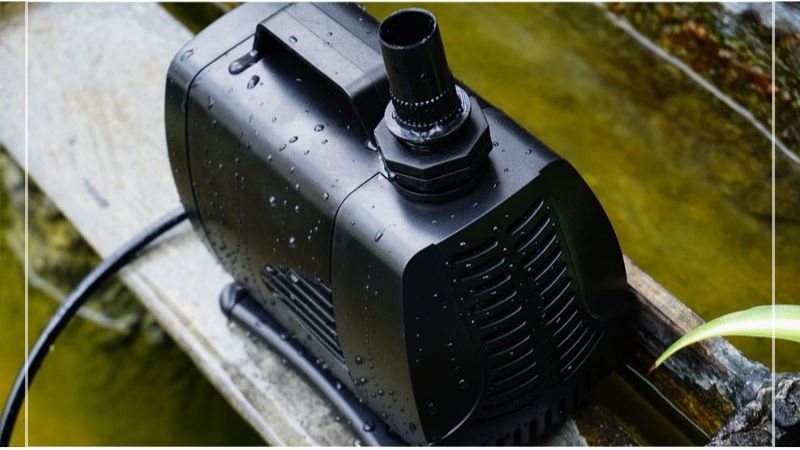
Value starts with flow per dollar at your head. At 5 ft the EcoWave 3000 delivers about 4.90 GPH per purchase dollar, the Ultra 1100 about 3.48, the Ultra 800 about 3.13, and the EcoWave 2000 about 3.07, so the 3000 leads on upfront value where its full 1,470 GPH is actually used.
Those ratios only hold if the flow fits your pond. Buying the highest GPH-per-dollar pump and then throttling it wastes the very value you paid for, so read the number against your turnover target. Unused flow is not a bargain, no matter how good it looks on a price-per-gallon basis.
Weigh GPH per Watt
Running cost decides value over a season, so check flow per watt. At 5 ft the EcoWave 3000 returns about 16.33 GPH per watt and the EcoWave 2000 about 13.23, well ahead of the Ultra 800’s 8.62 and Ultra 1100’s 8.70, meaning the EcoWave pumps move far more water for each watt on the bill.
Because pumps run continuously in season, that gap compounds. A pump with a slightly higher sticker but much better GPH per watt can be cheaper to own within a year, so weigh purchase price and efficiency together rather than judging value on the price tag alone.
Right-Size the Flow
The cheapest pump that meets your operating point is the real value, not the biggest one on sale. If your pond needs 500 GPH at head, paying more for 1,470 GPH you will throttle is poor value, so size to your turnover target first and only then compare the value ratios among pumps that fit.
Right-sizing also caps running cost. An oversized pump wastes watts every hour moving water the pond does not need moved, quietly erasing any purchase-price saving, so match delivered flow at your head to the job and let the value metrics decide between the pumps that clear that bar.
Require a Curve and Warranty
Value is only real if the numbers are, so demand a published flow-at-head curve. A pump advertised on max GPH with no curve cannot be sized or compared on GPH per dollar, which is why the Aquascape flow-at-5-ft figures underpin these value ratios and an unrated bargain does not qualify.
Warranty and parts round out the picture. A slightly cheaper pump that fails early or lacks replacement parts costs more over time, so factor coverage and part availability into value. The best-for-the-money pump is the one whose delivered flow, efficiency, and support all hold up, not just its price.
Top Picks
These four are ranked on delivered value at 5 ft rather than sticker price, because the best pond pump for the money is the cheapest that meets your operating point reliably. Read each pick against your own turnover target, since value ratios only count when you actually use the flow.
| Product | Best For | Key Spec | Watch Out For |
|---|---|---|---|
| Aquascape EcoWave 3000 | Best Overall | 1,470 GPH @5 ft; 90W; 4.90 GPH/$ | Value only if flow is used |
| Aquascape Ultra 800 | Best for low entry cost | 500 GPH @5 ft; 58W | Least efficient at 8.62 GPH/W |
| Aquascape Ultra 1100 | Best for balanced value | 800 GPH @5 ft; 92W | Higher running cost per flow |
| Aquascape EcoWave 2000 | Best efficient step-up | 860 GPH @5 ft; 65W; 13.23 GPH/W | Weakest on upfront price |
Aquascape EcoWave 3000: Best Overall
The EcoWave 3000 leads on value at the 5-ft comparison axis, delivering 1,470 GPH for about $300 at roughly 4.90 GPH per dollar and 16.33 GPH per watt on 90W. For a pond that can use that flow, no other pump here returns as much delivered water for each dollar spent and each watt drawn.
That crown is conditional: it only holds if you use the 1,470 GPH. On a small pond you would throttle it, wasting the value, and it draws more total watts than the smaller pumps. Match it to a mid-size pond near its output at moderate head, and its value lead becomes real rather than theoretical.
Aquascape Ultra 800: Best for Low Entry Cost
When the upfront budget is tight, the Ultra 800 is the cheapest way in at about $150, delivering 500 GPH at 5 ft on 58W. Its 3.13 GPH per dollar trails the EcoWave 3000, but a smaller pond that only needs 500 GPH pays less to meet its target and skips flow it would never use.
Its weak point is efficiency. At 8.62 GPH per watt it is the least efficient here, so over a full season its lower price is partly offset on the electric bill. For a small, low-head pond it is honest value; step up to an EcoWave if running cost matters more than the initial outlay.
Aquascape Ultra 1100: Best for Balanced Value
The Ultra 1100 balances price and capacity at about $225, delivering 800 GPH at 5 ft for roughly 3.48 GPH per dollar, the second-best upfront value here. It suits a pond that wants more than 500 GPH without the EcoWave 3000’s size, giving headroom for a small waterfall at a moderate price.
Efficiency is its catch. At 8.70 GPH per watt on 92W it is close to the Ultra 800, so its running cost is higher than the EcoWave pumps for the flow it moves. It is best value when you need around 800 GPH and want moderate outlay, not when season-long energy is your main concern.
Aquascape EcoWave 2000: Best Efficient Step-Up
For value measured on the meter, the EcoWave 2000 delivers 860 GPH at 5 ft on 65W for about $275, at 13.23 GPH per watt, far more efficient than the Ultra pumps. On a pond that runs all season, its lower running cost can recover the higher sticker within a year of continuous use.
Its upfront value is the trade. At 3.07 GPH per dollar it is the weakest here on purchase price, so its case rests on efficiency over time, not day-one cost. Choose it when you value a low electric bill and steady 860 GPH at low head over the lowest possible price at the register.
Frequently Asked Questions
Value questions come down to separating cheap from worthwhile, and every answer points back to delivered flow at your head. These cover the difference between cheapest and best value, why flow per watt matters, how two close pumps compare, and why max GPH is the wrong value yardstick.
Is the Cheapest Pump the Best Value?
Rarely. The cheapest pump is best value only if it meets your operating point; if it under-delivers at your head, you pay again to replace it. Value is the least you can spend to hit your turnover reliably, so the Ultra 800 wins on a small pond but not on one that needs more flow.
Efficiency changes the math over time. A slightly pricier pump with much better GPH per watt, like the EcoWave 2000 at 13.23, can cost less to own within a year of continuous running, so the true bargain accounts for the season-long electric bill, not just the price paid at checkout on day one.
Why Does Flow per Watt Matter?
Because pumps run continuously, watts are a recurring cost. At 5 ft the EcoWave 3000’s 16.33 GPH per watt moves nearly twice the water per watt of the Ultra 800’s 8.62, so for the same flow it draws far less power, and that gap adds up every hour across a full season.
Flow per dollar covers the purchase; flow per watt covers ownership. A pump can look cheap upfront yet cost more over a year if it is inefficient, so weigh both metrics at your head, and let the balance, not one number alone, decide which pump is genuinely the best for the money.
EcoWave 3000 or Ultra 1100 for Value?
It depends on how much flow you use. The EcoWave 3000 leads both value ratios at 5 ft, 4.90 GPH per dollar and 16.33 per watt, so if your pond can use its 1,470 GPH it is the better buy. The Ultra 1100’s 800 GPH suits a pond that needs less, where the 3000’s extra flow would be wasted.
Match the pump to the pond, not the ratio to your ego. On a mid-size pond near 1,470 GPH the 3000 is clearly better value; on a smaller pond the Ultra 1100 meets the target for less total outlay, and paying for unused flow would erase the 3000’s paper advantage entirely.
Is Max GPH a Good Value Measure?
No. Max GPH is a zero-head figure, so pricing a pump on it compares numbers you will never see at your filter. Value has to be measured on delivered flow at your head, which is why these ratios use the 5-ft figures rather than the peak claim printed on the box.
A high max with no published curve is a red flag for value shoppers. Without a flow-at-head figure you cannot compute real GPH per dollar, so a bold peak number can hide poor delivered value. Insist on the curve, then judge value on what actually reaches your pond.
Final Thoughts
The best pond pump for the money is the cheapest one that meets your operating point reliably, judged on delivered GPH per dollar and per watt at your head, not on the lowest sticker or the biggest max claim. Right-size to your turnover, weigh efficiency over the season, and demand a real curve.
Ready to decide? Our #1 pick for 2026 is the Aquascape EcoWave 3000.
Live price & availability on Amazon.
Related Reviews & Guides

Aquarium Filter Floss and Polish Pad
How to Choose an Auto Top Off System: Smart Buying Guide