Last Updated: September 27, 2026

Lifeguard 15 ft. x 20 ft. EPDM Pond Liner – 45-Mil Rubber
Included for 'What Pond Liner Thickness Do You Need: Best Expert Shortlist' because the listing specifies 45-Mil Rubber, details this guide uses to compare options.
View on Amazon
Firestone 5 x 10 PondGard 45 Mil EPDM Pond Liner Fish Safe
Included for 'What Pond Liner Thickness Do You Need: Best Expert Shortlist' as a relevant option in this category; details come from the product listing.
View on Amazon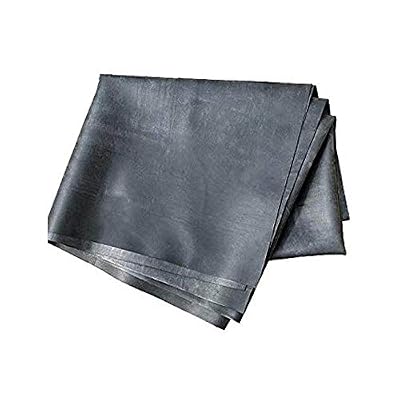
Firestone 45mil EPDM Rubber Pond Liner 15ft.x20ft.
Included for 'What Pond Liner Thickness Do You Need: Best Expert Shortlist' as a relevant option in this category; details come from the product listing.
View on Amazon
VEVOR 20 x 25 ft Pond Liner, 45 Mil Thickness, Durable EPDM Material, Black
Included for 'What Pond Liner Thickness Do You Need: Best Expert Shortlist' because the listing specifies 45 Mil Thickness and Durable EPDM Material, details this guide uses to compare options.
View on AmazonMil describes physical thickness and nothing else, which is why the same number means different things across materials. Asking what pond liner thickness do you need only produces a useful answer once the material and application are fixed. The table below compares published figures.
As an Amazon Associate we earn from qualifying purchases.
By David Nguyen
How Pond Liner Thickness Actually Works
Four points explain this whole category: mil measures physical thickness alone, identical figures across different materials are not comparable, published options cluster by material class, and no reliable path runs from pond volume through to a required thickness figure for any material.
| Input | Result | Note | Exception |
|---|---|---|---|
| Reinforced PVC | 14.5 mil, smartpond | Fish-safe pond use | Needs careful clearing |
| HDPE pond liner | 20 mil, smartpond | Stiffer, holds its shape | Harder on tight curves |
| EPDM pond and waterfall | 45 mil, Aquascape | Pond-grade standard | Heavier to position |
| EPDM thickness options | 45 or 60 mil, EasyPro | Thicker version exists | Weight and price rise |
| RPE large reservoir | 36 or 45 mil, Pond Guy | Reinforced, lighter sheet | Different material class |
Mil Is Physical Thickness Only
One mil equals a thousandth of an inch, so 45 mil describes a sheet roughly three times thicker than 14.5 mil in purely dimensional terms alone. The figure says nothing about elasticity, ultraviolet resistance, puncture behaviour or how the material ages once submerged in pond water.
That matters because buyers frequently treat mil as a quality score. A published thickness belongs alongside the material name, the intended application and the manufacturer’s wording, and reading it in isolation produces comparisons that cannot really support a purchasing decision.
Equal Mil Across Materials Is Not Comparable
Reinforced polyethylene at 45 mil and EPDM rubber at 45 mil behave entirely differently once installed in a pond. Rubber stretches around sculpted shapes and tolerates temperature movement, while reinforced sheeting resists puncture through its internal scrim rather than through sheer bulk alone.
No published ratio converts one material into another in service years, so thickness comparisons only really hold within a single material class. Comparing 20 mil HDPE against 45 mil EPDM as though the two numbers were interchangeable misrepresents both products and both applications.
How to Read the Options Table
Each row in the table pairs a material class with the thicknesses that manufacturers actually publish for pond use. smartpond supplies reinforced PVC at 14.5 mil and HDPE at 20 mil, Aquascape supplies EPDM at 45 mil, and EasyPro offers DuraLiner in both 45 and 60 mil versions for pond use.
The Pond Guy separately lists reinforced polyethylene at 36 and 45 mil for large reservoir work, which sits in an entirely separate material category again. Read across the row rather than down the column, since the note and the exception both qualify the figure sitting beside them in that row.
Why Gallons Cannot Set Thickness
Volume tells you nothing about what sits underneath the sheet. A shallow thousand gallon pond over cleared sand imposes less on liner than a small pond dug into shale, so any chart mapping gallons directly onto a required mil figure has quietly skipped the variable that actually matters here.
Ground conditions, root pressure, fish behaviour and installation care determine outcomes far more than volume does. Use the material and application to select thickness, then let the pond size influence sheet dimensions rather than dictating the number of mils printed on the packaging.
Adjust Thickness for Your Situation
Four separate variables move the answer within any single material class: precisely what still remains in the excavation base, what lives in the pond, who is handling the sheet, and what the remaining budget allows once underlayment has been included in that very same purchase order.
Adjust for Ground Conditions
Ground still containing gravel, shale or tree roots after clearing rewards thicker material, because concentrated point pressure always defeats thin sheets first. On that sort of base, a 45 mil rubber sheet buys genuine margin that a 14.5 mil PVC liner simply cannot provide there.
Preparation changes the calculation considerably more than any thickness upgrade does. Clearing thoroughly and laying underlayment beneath it lets a mid-range thickness perform perfectly reliably, whereas thick material dropped onto uncleared stone fails at exactly the same contact points eventually anyway.
Adjust for Fish and Wildlife
Large fish disturb the substrate and sit against the liner base for years at a time, which argues firmly for pond-grade rubber at 45 mil on any koi installation. The material must also carry explicit fish-safe wording, since published thickness alone says nothing whatsoever about chemical suitability.
Smaller freshwater stocking places considerably lighter demands on the sheet, and reinforced PVC at 14.5 mil with published fish-safe wording serves a great many garden ponds. Match the thickness to the physical disturbance you actually expect rather than to the value of the fish alone.
Adjust for Handling and Installation
Thicker sheets weigh considerably more, and that weight decides whether an installation happens alone or needs assistance. A 60 mil EPDM option delivers extra margin while making the sheet considerably harder to carry, unroll and then pleat into planting shelves without any help.
Cold weather compounds this problem, since stiffer material resists folding at low temperatures whatever its published rating. Where you happen to be working alone on a sculpted pond, a thinner rubber sheet frequently produces a better installed result than a thicker sheet fought stubbornly into place.
Adjust for Budget
When money is limited, buy the correct dimensions and proper underlayment first, before upgrading thickness at all. A correctly sized 20 mil sheet over purpose-made protection outperforms a 45 mil sheet that finishes short at the rim or else sits directly on uncleared, stony ground.
Thickness upgrades also carry ongoing consequences, since a heavier sheet costs more to ship and will often require help to install. Price the complete installation rather than the liner alone before deciding whether those additional mils really represent the best use of that money.
Frequently Asked Questions
Four questions follow directly from that table: whether 45 mil is compulsory, whether thin liner ever suffices, whether 60 mil is worth the premium, and how underlayment changes the answer. Direct answers below, together with the exceptions that are genuinely worth knowing about first.
Is 45 Mil Always the Right Choice?
No, although 45 mil is the common standard for pond-grade EPDM, because rubber at that thickness balances conformability with durability. Aquascape publishes 45 mil for pond and waterfall use, which reflects that particular application rather than any sort of universal pond requirement.
Other materials reach pond suitability at entirely different published figures, with smartpond publishing both 20 mil HDPE and 14.5 mil reinforced PVC for pond use. Treating 45 mil as compulsory rules out several products that suit a great many gardens perfectly well at a considerably lower cost.
Can a Thin Liner Work in a Real Pond?
Yes, given genuinely proper preparation underneath. Reinforced PVC at 14.5 mil carries fish-safe wording and performs quite reliably over a cleared base with underlayment beneath it, particularly on smaller ponds where both water pressure and physical disturbance remain fairly modest.
It fails only where the base was never properly cleared, or where tree roots arrive later. Thin sheets leave almost no margin at all for a single missed stone, so the preparation standard has to be noticeably higher than it would be beneath thicker rubber laid on that same excavation.
Is 60 Mil Worth the Extra Cost?
Sometimes, on genuinely demanding sites. EasyPro offers DuraLiner in both 45 and 60 mil, and the thicker option makes sense wherever heavy rock work, large fish or difficult ground place unusual mechanical demands on the sheet across several decades of continuous pond service outdoors.
For a typical garden pond the extra mass adds handling difficulty and cost without any proportional benefit. Spend that price difference on better underlayment and a properly sized sheet instead before reaching for the extra thickness that you may never actually need on that pond.
Does Underlayment Let You Drop a Grade?
It genuinely reduces the very risk that thickness exists to cover, since underlayment distributes point loads across the sheet rather than letting a single stone concentrate them. That makes a mid-range thickness perfectly viable on ground where bare liner alone would clearly be unwise.
It does not, however, license using landscaping sheeting in a fish pond, because protection addresses mechanical risk rather than material suitability. Keep the fish-safe wording requirement separate from the thickness decision, because the two of them answer completely different questions.
Final Thoughts
Fix the material and the intended application first, then read the published figure sitting beside them. What pond liner thickness do you need depends on ground conditions, livestock and handling, with 14.5 to 20 mil serving many gardens well and 45 mil standard for pond-grade rubber.
Related Reviews & Guides



Best Internal Filter for Small Aquarium: Smart Easy Picks
Best Pond Liner for a Waterfall: Top Expert Buying Guide