Last Updated: October 4, 2026
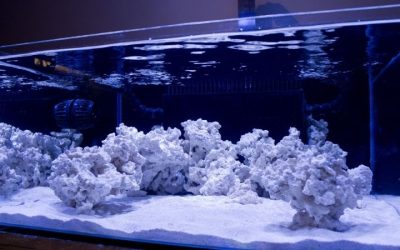
Wild live rock brings pests and collection concerns, which is why so many reefers switch. The best live rock alternative for reef tanks is reef-safe, porous calcium carbonate that supports aquascaping and biofiltration, chosen by its biological starting state rather than the loose label of live rock.
As an Amazon Associate we earn from qualifying purchases.
By David Nguyen
What Makes a Good Live Rock Alternative
These products are not all live rock in the same biological sense, so compare them on what they actually offer. The things that matter are reef-safe material, porosity for biology and aquascaping, the starting biological state, and how they handle hitchhiker risk and curing. These four frame the choice.
Reef-Safe Calcium Carbonate
The base material should be marine-safe calcium carbonate, not a random porous rock. CaribSea LifeRock is 97% calcium carbonate as a clean base rock (CaribSea, 2026), and MarcoRocks Reef Saver is land-sourced ancient reef rock with no additives, both purpose-made for reef and marine use.
Calcium carbonate is the right chemistry because it is inert in salt water and familiar to reef systems. Avoid substituting generic landscaping stone, which can leach unknowns. Every pick here is marketed specifically for marine use, which is the baseline safety check before anything else about a rock matters.
Porosity and Voids
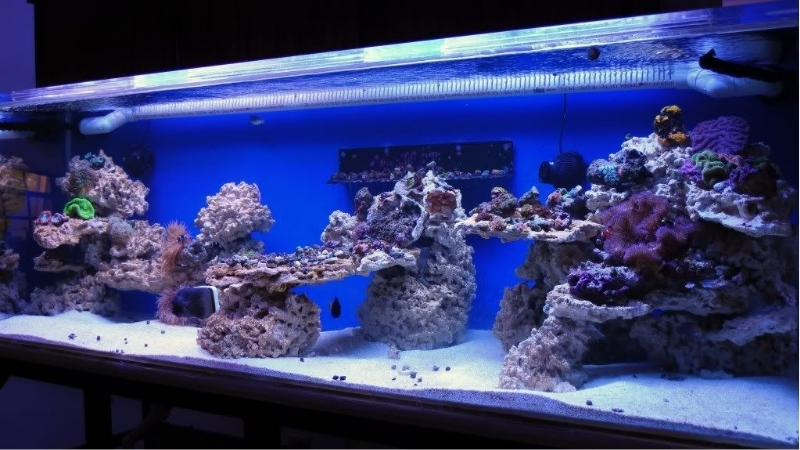
Porous rock gives bacteria surface area and makes aquascaping easier. CaribSea describes LifeRock as roughly 50% void space (CaribSea, 2026), which means a lighter rock with more internal structure for water flow and biological colonization than a dense, solid stone would provide.
More voids also mean you can build open, natural structures with less weight and better flow through the aquascape. Keep in mind that porosity only becomes biofiltration once microorganisms colonize it; the rock itself does not process ammonia without that biology, no matter how porous the stone looks on day one.
Seeded, Cultured or Dry
The biggest real difference is biological starting state, and these three are not equivalent. LifeRock is infused with bacteria via CaribSea’s AragAlive approach, Real Reef Rock is greenhouse cultured, and MarcoRocks Reef Saver is dry and unseeded (CaribSea, 2026; Real Reef, 2026; MarcoRocks, 2026).
Because the starting states differ, you cannot compare them one to one as if all are live rock. Seeded and cultured rock can shorten the path to a mature-looking system, while dry rock starts blank and relies on your tank to colonize it. Pick the state that matches your patience and budget.
Hitchhiker Risk and Curing
A major reason to leave wild rock is pests, and alternatives reduce but do not eliminate that risk. Dry rock like Reef Saver starts with essentially no life, which is the lowest-risk starting point, but no rock is guaranteed pest-free once it enters a system with other livestock and additions.
CaribSea states LifeRock does not require curing (CaribSea, 2026), which saves the die-off and ammonia spike wild rock can bring. Dry rock avoids that too but still needs the tank to cycle. Treat any new addition with sensible quarantine habits rather than assuming a starting state removes all risk.
Best Live Rock Alternatives for Reef Tanks
These three cover a ready-to-start seeded rock, a budget dry foundation and a cultured-style pre-colored option. They are separated by biological starting state and price per pound, which is not the same as biological performance. Confirm current pricing and the form you want before buying.
| Product | Best For | Key Spec | Watch Out For |
|---|---|---|---|
| CaribSea LifeRock | Best overall, ready to start | 97% CaCO3; ~50% void; no curing | Priciest per pound |
| MarcoRocks Reef Saver | Best value dry foundation | CaCO3; dry, unseeded | Starts blank; must colonize |
| Real Reef Rock | Cultured pre-colored look | Greenhouse cultured; marine only | Reef/fish-only, not freshwater |
CaribSea LifeRock
LifeRock earns the top slot on data and convenience: 97% calcium carbonate, roughly 50% void space, infused with bacteria, and no curing required per CaribSea (CaribSea, 2026). That combination gives a clean, porous, ready-to-start rock, with the Original 20 lb around $125 and 40 lb about $200 at BRS as of 09/2026.
The bacterial treatment and skip-the-curing claim make setup smoother than wild rock, though it does not instantly cycle a tank. At roughly $5–under $10 per pound it is the priciest here. For reefers who want the most turnkey alternative with a clean spec sheet, it is the overall pick.
MarcoRocks Reef Saver
Reef Saver is the value foundation, land-sourced ancient reef calcium carbonate with no additives, sold dry and unseeded (MarcoRocks, 2026). At about $40 for 10 lb and under $100 for 50 lb as of 09/2026, it runs from roughly $3.79 down to $1.90 per pound, far below the seeded options.
Dry rock is the lowest-pest starting point and the cheapest way to build a large aquascape, which is its main appeal. The trade-off is time: it starts biologically blank and relies on your tank to colonize it, so expect a longer path to a mature look and cycle properly before stocking.
Real Reef Rock
Real Reef Rock is the cultured-style, pre-colored option, made from natural calcium-based ingredients and greenhouse cultured for reef and fish-only use, not freshwater (Real Reef, 2026). At around $100 on sale or under $150 list for 20 lb as of 09/2026, it sits near LifeRock on price per pound.
Its appeal is a rock that already looks established, with color and structure out of the box. Because it is purpose-made for marine systems, keep it to reef or fish-only tanks. For keepers who want the aged, colored look without wild collection, it is the pre-colored pick.
Frequently Asked Questions
Reefers ask the same things about these rocks: whether they cycle a tank instantly, whether dry rock is truly pest-free, whether it colors up over time, how much to buy, and whether forms can be mixed. Short answers first, then the caveats.
Do live rock alternatives cycle a tank instantly?
No. Even seeded rock like LifeRock, which ships with bacteria and needs no curing, does not instantly cycle an aquarium. The tank still has to establish its nitrogen cycle before it is safe to stock, and porous rock only becomes biofiltration once microorganisms have colonized it.
Treat seeded or cultured rock as a head start rather than a shortcut, and test parameters through the cycle. Dry rock starts blank and takes longer to mature, so plan for a cycling period whichever form you choose rather than stocking on a marketing claim.
Is dry rock guaranteed pest-free?
Dry rock starts with essentially no life, which is the lowest-risk option, but no rock is guaranteed pest-free once it is in a running system. Pests usually arrive later on corals, frags and other additions, so the starting state reduces initial risk without removing it entirely.
Keep sensible quarantine habits for new livestock and dips for new corals regardless of your rock. That, more than the rock’s starting state, is what keeps a reef free of hitchhikers over the long run, since most introductions happen after the rock is already established.
Will dry rock get coralline algae over time?
Yes, given time and the right conditions. Dry and unseeded rock colors up as coralline algae spreads from other surfaces once the tank is stable and calcium and alkalinity are in range. It simply starts blank rather than pre-colored, so the color develops over weeks and months.
Adding a piece of coralline-covered rock or a cultured rock can speed seeding, and stable parameters do the rest. If you want instant color, a cultured or pre-colored option like Real Reef gets you there sooner, at a higher price than plain dry rock.
How much rock do I need?
It depends on the aquascape you want rather than a fixed rule. Open, modern structures use less rock than a solid wall, and porous rock like LifeRock at roughly 50% void space builds bigger shapes for less weight. Estimate from your tank size and the look you are after.
Buying a little extra lets you refine the aquascape without running short mid-build. Because price per pound varies widely here, from under $2 for bulk dry rock to around $6 for seeded, the form you choose affects the budget as much as the quantity does.
Can I mix dry and seeded rock?
Yes, and it is a common, cost-effective approach. Using mostly dry rock for the bulk of the aquascape with a smaller amount of seeded or cultured rock lets the live pieces seed the dry ones over time, balancing budget against a faster path to a mature system.
Just cycle the tank properly and give colonization time, since the dry rock still starts blank. Mixing keeps costs down while borrowing some of the head start seeded rock provides, which is why many reefers combine the two rather than paying for an all-seeded build.
Final Thoughts
The best live rock alternative for reef tanks is the reef-safe, porous rock whose biological starting state matches your patience and budget, chosen with realistic expectations about pests and cycling. LifeRock is the ready-to-start pick, Reef Saver is the value dry foundation, and Real Reef offers a cultured pre-colored look. Match the starting state to your plan, and cycle properly before stocking.
As an Amazon Associate we earn from qualifying purchases at no extra cost to you. Prices and availability are accurate as of the date shown and are subject to change.
How to Size a Protein Skimmer for Your Tank Step by Step
Best IceCap HOB Skimmer for Nano Reef: Sizing and Picks