Last Updated: September 25, 2026
Best kessil ap9x setup for mixed reef is really a coverage question: how many bars, at what height, to spread even PAR over your footprint. This guide sorts the setups by need group, gives the light numbers that decide fit, and flags the honest trade-offs before you build your lighting around the AP9x.
As an Amazon Associate we earn from qualifying purchases.
As an Amazon Associate we earn from qualifying purchases at no extra cost to you. Prices and availability are accurate as of the date shown and are subject to change.

Kessil AP9X LED Aquarium Light
Selected for "Best Kessil AP9x Setup for Mixed Reef: How to Plan Coverage": this listing is lighting (Kessil AP9X LED Aquarium Light), matching the equipment this article covers.
View on Amazon
Kessil AP9X LED Aquarium Light & Reefractometer Bundle (2 Items)
Selected for "Best Kessil AP9x Setup for Mixed Reef: How to Plan Coverage": this listing is lighting (Kessil AP9X LED Aquarium Light & Reefractometer Bundle (2 Items)), matching the equipment this article covers.
View on Amazon
Kessil AP9X Light with AP9X Mounting Arm & Extended Slide Bar Bundle (3 Items)
Selected for "Best Kessil AP9x Setup for Mixed Reef: How to Plan Coverage": this listing is lighting (Kessil AP9X Light with AP9X Mounting Arm & Extended Slide Bar Bundle (), matching the equipment this article covers.
View on Amazon
Kessil AP9X LED Aquarium Light & Milwaukee Instruments Lux Light Meter MW700 Bundle (3 Items)
Selected for "Best Kessil AP9x Setup for Mixed Reef: How to Plan Coverage": this listing is lighting (Kessil AP9X LED Aquarium Light & Milwaukee Instruments Lux Light Meter), matching the equipment this article covers.
View on AmazonBy David Nguyen
Quick answer: For most people in 2026, the best kessil ap9x setup for mixed reef is the Two bars — our #1 rated choice. See the full ranked comparison, alternatives and buying advice below.
How many AP9x your reef really needs
The best kessil ap9x setup for mixed reef is the one that spreads even PAR across the whole tank, so start with coverage and PAR at depth, not the number of watts. Set the numbers first.
The decision number: PAR at depth and coverage
PAR at the coral in micromoles at your sand depth is the figure that matters, with coverage footprint in inches and centimeters close behind. One AP9x covers a set length, so a long mixed reef over 4 feet (122 cm) usually needs two or more bars for even light.
Spectrum is the second number: the AP9x runs a full spectrum with the dense Kessil shimmer and tunable blue. Match coverage to your tank length and width first, then set PAR to your mixed corals rather than running the bars wide open.
Criteria beyond raw output
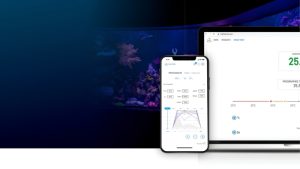
Weigh how many units cover your footprint, mount height, and control. Mount height trades coverage for intensity, and the AP9x pairs with a controller or app for ramps. On a mixed reef you balance PAR for both LPS and SPS zones.
Tank size, placement, and fit
Coverage and mount height decide how many bars and how high to hang them. Measure your tank length, width, and depth, plus your mount height, before ordering, because a single bar that under-covers a long reef leaves dim zones no schedule can fix.
Setups grouped by reef footprint
The best kessil ap9x setup for mixed reef depends on your tank size and coral mix, so here are setups by need. Confirm current PAR and coverage charts at purchase.
For a standard 4 foot mixed reef
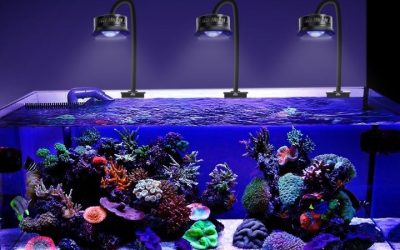
Two AP9x bars spread even PAR across a 4 foot (122 cm) footprint for mixed corals. It fits typical reefs. Drawback: two bars double the cost and the mounting and control setup you manage.
For a smaller mixed reef
A single AP9x can cover a shorter mixed reef with strong, even light. It fits compact tanks. Drawback: on anything longer than the bar’s spread, one unit leaves the ends dim, so measure before assuming one is enough.
For an SPS-leaning mixed reef
Mounted for higher PAR, the AP9x drives the SPS zones of a mixed reef while still covering LPS below. It fits SPS-heavy mixes. Drawback: pushing PAR for SPS can over-light softies nearby, so plan coral placement by light demand.
For a deep mixed reef
A closer or higher-output arrangement pushes PAR to the bottom of a deep tank over 24 inches (61 cm). It fits deep builds. Drawback: deep penetration needs more intensity, so you may need extra bars or a lower mount than a shallow tank.
For a tidy, controlled install
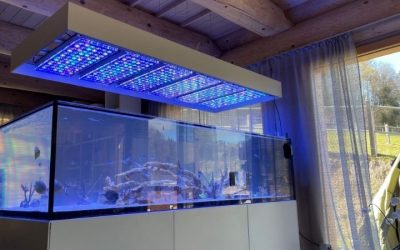
A rail or rigid mount with the controller keeps a multi-bar AP9x setup clean and programmable. It fits display-focused keepers. Drawback: rails and controllers add cost on top of the bars themselves.
Head-to-head and when the AP9x is too much
Choosing the best kessil ap9x setup for mixed reef also means knowing when a bar array is overkill.
AP9x bars versus puck-style lights
AP9x bars spread even light along a length; puck lights concentrate coverage in circles that can leave gaps on a long tank. For an even, shimmer-rich mixed reef the bars suit well; for a small square tank, a puck may cover it more simply.
When it is more light than you need
On a small or soft-coral-dominant tank, an AP9x array delivers more PAR and cost than the corals use. A single smaller Kessil or a gentler light suits low-light mixes better and for less.
A cheaper or simpler route
If your mixed reef is modest, one AP9x or a smaller Kessil can cover it for less than a two-bar array. Match the number of bars to your footprint and coral demand rather than buying the biggest array by default.
Plan coverage on paper first: map your footprint against one bar’s rated spread at your intended mount height, then check the PAR at the corners, not just under the center. It is far cheaper to work out that a 4 foot reef needs two bars now than to add a second later once the corals at the ends have stalled.
Living with an AP9x array long term
The best kessil ap9x setup for mixed reef runs daily for years, so plan for LED wear, control, and cost.
Where the bars wear
LED PAR declines slowly over years, drivers can fail, and humidity can corrode contacts and rail fittings. With multiple bars, a single failing unit shows as a dim stripe. A gradual coral response is your cue to check output with a meter.
Running cost and coral acclimation
Multiple bars draw more wattage 24/7, so factor them into your yearly bill; there is no consumable media. Ramp a new setup up over 2 to 4 weeks rather than full intensity day one, so mixed corals acclimate; blasting new SPS bleaches them, and no schedule is an instant fix.
Warranty, safety, and buying season
Check the fixture and controller warranty, and keep leads on a drip loop with a GFCI. Reef bars are discounted hardest over Black Friday and Cyber Monday in late November and around Prime Day in late June, which helps when buying two; corals still need weeks to acclimate. Prices and specs shift, so verify current PAR data at purchase.
AP9x setup questions, answered
These come up most about the best kessil ap9x setup for mixed reef.
How many AP9x do I need?
Measure your tank length and width against one bar’s coverage. A 4 foot (122 cm) reef usually needs two for even PAR, while a shorter tank may run on one. Plan coverage before output, since gaps grow patchy corals.
How high should I mount them?
Higher spreads light and evens coverage but lowers PAR at the sand; lower raises PAR but narrows spread. Start higher, measure PAR at depth, and adjust while ramping over 2 to 4 weeks so corals acclimate.
Can it run SPS and LPS together?
Yes, on a mixed reef, by placing SPS in the higher-PAR zones and LPS or softies lower or to the edges. Set overall PAR to the SPS and use placement, not just intensity, to keep lower-light corals comfortable.
Do I need the controller?
For ramps and syncing multiple bars, it helps a lot. You can run simpler schedules without it, but a controller makes acclimation ramps and dawn-dusk cycles easy across a multi-bar array. Either way, the best kessil ap9x setup for mixed reef is the one that covers your footprint evenly.
Planning your AP9x setup
The best kessil ap9x setup for mixed reef is the number of bars, at the right height, that spread even PAR across your footprint for your coral mix. For a standard 4 foot reef two bars is the sensible default, while a shorter tank may run on one and a deep or SPS-heavy tank may want more intensity. Measure your footprint and depth and plan coverage before ordering, ramp over weeks, and confirm current PAR data at purchase since specs and prices change.
| Setup | Key number | Suitable tank | Recurring cost | Who it is for |
|---|---|---|---|---|
| Two bars | Even PAR over 4 ft (122 cm) | Standard mixed reef | Modest power | Typical reefs |
| Single bar | Covers a shorter footprint | Smaller mixed reef | Modest power | Compact tanks |
| Higher-PAR arrangement | SPS-level intensity | SPS-leaning mix | Modest power | SPS-heavy mixes |
| Rail plus controller | Clean, programmable | Display reef | Modest power | Display-focused keepers |
Ready to decide? Our #1 pick for 2026 is the Two bars.
Live price & availability on Amazon.
Related Reviews & Guides

Saltwater Aquarium Setup for Beginners: How It All Works
6 Best Starter Saltwater Aquarium Kits 2026