Last Updated: October 4, 2026
A kalkwasser stirrer only works well when its output, powder capacity, and mixing method match your tank and cabinet. Choosing the best kalkwasser stirrer for reef tanks means matching kalk demand, powder capacity, clearance, and each maker’s specific mixing cycle.
As an Amazon Associate we earn from qualifying purchases.
By David Nguyen
Quick answer: For most people in 2026, the best kalkwasser stirrer for reef tanks is the Avast K1 — our #1 rated choice. See the full ranked comparison, alternatives and buying advice below.
How to Choose a Kalkwasser Stirrer
Match a stirrer to four things: how much kalkwasser your tank consumes, how much powder it holds, whether it fits your cabinet, and the exact mixing routine its maker specifies. Those routines differ by brand and should not be swapped.
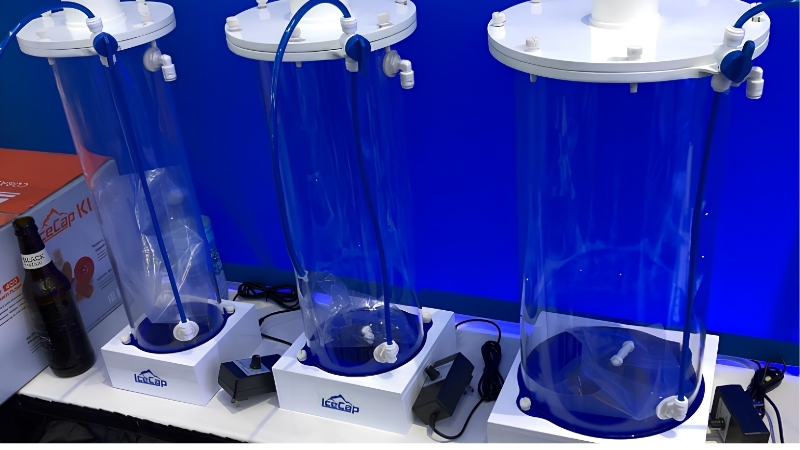
Kalk Demand
Size the stirrer to your daily top-off, since kalkwasser is usually dosed through the ATO. The Avast K1 lists a 200-gallon rating and about 2.5 gallons per day of output; the Reef Octopus KS-100 targets an 80 to 132-gallon range.
Demand tracks evaporation and coral uptake, not just tank volume, so a bright, warm SPS system needs more than a lightly stocked tank of the same size. Match the model’s range to your measured evaporation rather than the display gallons alone.
Powder Capacity
Powder capacity sets how often you refill. The Reef Octopus KS-100 holds about 90 to 120 g of kalk, the KS-150 about 120 to 150 g, and the KS-250 about 150 to 180 g, so larger units stretch the interval between top-ups.
More powder is convenient but does not increase output on its own; output still depends on the mixing method and daily draw. Choose capacity to suit how often you want to open the reactor, not as a proxy for strength. Kalk powder itself is a modest recurring cost, but it is the consumable that keeps a stirrer running, so factor 12-month powder use into the total, not just the purchase price.
Cabinet Clearance
These are tall units, so measure your stand’s interior height first. The Avast K1 is about 5.5 x 5.5 x 21in, while the Reef Octopus KS-100 stands roughly 27.6in high, which can exceed a low cabinet opening.
Leave room above the lid to add powder and to lift the unit for service. A stirrer that technically fits but cannot be opened in place becomes a chore, so plan clearance for refills, not just the footprint. Because the unit combines water, powder, and a motor in one vessel, plug its pump through a GFCI outlet and look for UL or ETL-listed components, since safety certification is a selection criterion, not an afterthought.
The Exact Mixing Cycle
Follow each maker’s mixing instructions exactly, because they differ. The Avast K1 is designed for gentle continuous 24/7 mixing, while Reef Octopus specifies short timed stirring and explicitly warns against continuous stirring on its units.
Do not carry Avast’s 24/7 approach over to a Reef Octopus reactor; that is one manufacturer’s method, not a universal rule. Set the stirring routine to the model you own, since the wrong cycle can waste powder or over-saturate the mix.
Top Picks
These four reactors cover common tank sizes and two mixing philosophies. Prices are retailer snapshots as of 09/2026 and shift during major sales, when pricier reef automation typically drops most. Match the unit to your evaporation and cabinet height.
| Product | Best For | Key Spec | Watch Out For |
|---|---|---|---|
| Avast K1 | Best overall, gentle 24/7 | 200 gal; 2.5 gal/day; 5.5 x 5.5 x 21in; ~under $300 | Use its own 24/7 method, not other brands’ |
| Reef Octopus KS-100 | Best for 80 to 132 gal | 80 to 132 gal; 90 to 120g kalk; 27.6in high; ~under $400 | Short timed stirring only, no continuous |
| Reef Octopus KS-150 | Best for 132 to 211 gal | 132 to 211 gal; 120 to 150g; ~under $600 | Tall; check cabinet clearance |
| Reef Octopus KS-250 | Best for 211 to 317 gal | 211 to 317 gal; 150 to 180g; ~under $800 | Large footprint and price |
Avast K1
The Avast K1 is the best overall pick for many reefs up to its 200-gallon rating, delivering about 2.5 gallons per day at roughly $300 as of 09/2026, which is about 23.6% below the KS-100’s price. It is designed for gentle continuous mixing.
Its output is stated as gallons per day, which is not directly comparable to a Reef Octopus feed-pump GPH figure, so compare units on tank rating and method instead. At 21in tall it still needs clearance, and its 24/7 routine is specific to Avast. Its gentle continuous action suits high-demand SPS tanks that draw kalkwasser around the clock, though even then the ATO rate, not the stirrer, sets how fast it doses.
Reef Octopus KS-100
The Reef Octopus KS-100 suits 80 to 132-gallon tanks at about $400, holding roughly 90 to 120 g of kalk. It uses short timed stirring and warns against running continuously, so program its cycle rather than leaving it on.
At about 27.6in tall it can be too tall for low cabinets, so confirm clearance before buying. Its per-brand mixing method is the point to respect: the routine that suits an Avast does not apply to this reactor.
Reef Octopus KS-150
The Reef Octopus KS-150 covers 132 to 211-gallon systems at about $500, with roughly 120 to 150 g of powder capacity for longer intervals between refills. It follows the same short timed-stirring method as the rest of the KS line.
As tanks grow, evaporation and demand rise, so this mid unit fits reefs that outpace the KS-100. Budget for its height and footprint, and keep its stirring schedule set to the maker’s specification. Kalkwasser also becomes less practical past a certain demand, where a calcium reactor often takes over on very large or SPS-heavy systems.
Reef Octopus KS-250
The Reef Octopus KS-250 handles 211 to 317-gallon tanks at about $800, with roughly 150 to 180 g of capacity. It is the pick for large reefs that consume enough kalkwasser to justify the size and cost.
This is a large, expensive reactor, so it earns its place only on systems with real demand. Like the smaller KS units, it uses timed stirring, not continuous, and needs generous cabinet clearance for service. On a tank this size, annual kalk powder use adds up, so a larger powder capacity mainly saves refill trips rather than lowering the running cost.
Frequently Asked Questions
Common questions cover whether to stir continuously, how to size a reactor, whether to run it through the ATO, and how much service room to leave. The mixing answer depends entirely on which brand you own.
Should a Kalkwasser Stirrer Run Continuously?
It depends on the maker. The Avast K1 is built for gentle 24/7 mixing, while Reef Octopus specifies short timed stirring and warns against running continuously. Follow the routine for the model you own.
Using the wrong method can over-saturate or waste powder, so never copy one brand’s schedule to another. Set the cycle from your unit’s own instructions instead.
How Do You Size a Kalkwasser Stirrer?
Size to your daily top-off volume and tank rating, since kalkwasser doses through evaporation replacement. The KS-100 covers 80 to 132 gallons, while the Avast K1 is rated to 200 gallons.
Because demand tracks evaporation and coral uptake, a bright SPS tank may need a larger unit than its gallons suggest. Match the range to measured top-off, not display volume alone.
Can You Dose Kalkwasser Through an ATO?
Yes, kalkwasser is commonly delivered through the auto top-off, replacing evaporated water with saturated limewater. That ties output to evaporation, which is why the 200-gallon-rated Avast K1 lists about 2.5 gallons per day.
Keep the top-off rate sensible so pH does not spike from too fast an addition. A slow, steady top-off suits kalkwasser better than large infrequent additions. Pricier reef reactors like these often drop most during Prime Day and Black Friday, so timing a purchase around those windows can ease the cost of a larger unit.
How Much Clearance Does a Stirrer Need?
Enough to add powder and lift the unit, not just to slot it in. The KS-100 stands about 27.6in tall and the Avast K1 about 21in, so measure your cabinet opening before buying.
Plan overhead room for the lid and stirring shaft. A reactor you cannot open in place turns routine refills into a full teardown.
Final Thoughts
The best kalkwasser stirrer for reef tanks is the one whose rating, powder capacity, and maker-specified mixing method fit your system. The Avast K1 suits many reefs at about $300 as of 09/2026 with gentle 24/7 mixing, while the Reef Octopus KS line scales to larger tanks using timed stirring. Never transfer one brand’s cycle to another.
As an Amazon Associate we earn from qualifying purchases at no extra cost to you. Prices and availability are accurate as of the date shown and are subject to change.
Ready to decide? Our #1 pick for 2026 is the Avast K1.
Live price & availability on Amazon.
Related Reviews & Guides

Best Mounting Options for Reef LED Light: Secure Top Picks
Protein Skimmer Setup and Tuning Guide: Best Expert Picks