Last Updated: September 25, 2026
Best fish for nano aquarium choices are decided by adult size and shoal count, not by how small the fish looks in the shop. A 5 gallon (19 L) tank holds one betta; a 10 gallon (38 L) holds a shoal of eight to ten fish under 1 in (2.5 cm). Group size is what rules most candidates out, not the fish itself.
As an Amazon Associate we earn from qualifying purchases.
As an Amazon Associate we earn from qualifying purchases at no extra cost to you. Prices and availability are accurate as of the date shown and are subject to change.
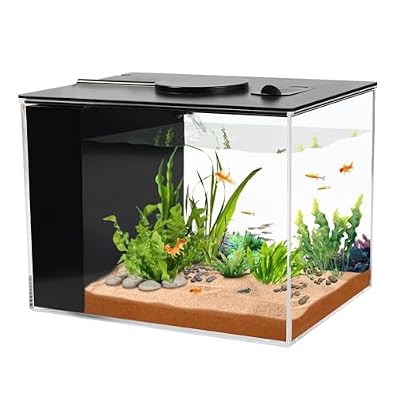
AQUANEAT Fish Tank, 1 Gallon Betta Fish Tank, Small Aquarium Kit with LED Light and Water Filter Pump
Selected for "Best Fish for Nano Aquarium: Options Compared by Numbers": this listing is filtration (AQUANEAT Fish Tank, 1 Gallon Betta Fish Tank, Small Aquarium Kit with ), matching the equipment this article covers.
View on Amazon
NICREW 2.5 Gallon Nano Nature Aquarium Kit Betta Fish Tank, Complete, Black
Selected for "Best Fish for Nano Aquarium: Options Compared by Numbers": this listing is tanks (NICREW 2.5 Gallon Nano Nature Aquarium Kit Betta Fish Tank, Complete, ), matching the equipment this article covers.
View on Amazon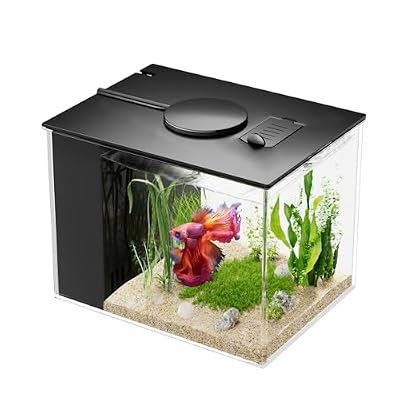
Vehipa Betta Fish Tank 1 Gal (3.7L), Acrylic Nano Aquarium Kit Black
Selected for "Best Fish for Nano Aquarium: Options Compared by Numbers": this listing is tanks (Vehipa Betta Fish Tank 1 Gal (3.7L), Acrylic Nano Aquarium Kit Black), matching the equipment this article covers.
View on Amazon
NICREW 2.5 Gallon Nano Nature Aquarium Kit Betta Fish Tank, Basic, Black
Selected for "Best Fish for Nano Aquarium: Options Compared by Numbers": this listing is tanks (NICREW 2.5 Gallon Nano Nature Aquarium Kit Betta Fish Tank, Basic, Bla), matching the equipment this article covers.
View on AmazonBy David Nguyen
Quick answer: For most people in 2026, the best fish for nano aquarium is the Betta — our #1 rated choice. See the full ranked comparison, alternatives and buying advice below.
Adult Size and Group Count Decide Everything
Choosing the best fish for nano aquarium use is a sizing exercise with a welfare floor underneath it. Four numbers decide every candidate, and a species failing any one of them does not become suitable because the tank is heavily planted or lightly stocked.

The Deciding Numbers: Adult Size, Shoal Count and Minimum Tank
Adult size first, measured at maturity rather than at purchase. Anything reaching past 2 in (5 cm) is outside nano territory regardless of how it is marketed, and many fish sold at 1 in (2.5 cm) reach three times that within a year.
Shoal count second. Species that live in groups need six to ten individuals to behave normally, so a 1 in (2.5 cm) shoaling fish needs 10 gallons (38 L) for the group rather than for the fish. That multiplication is what rules most candidates out.
Two More Criteria With Numbers Attached
Temperature and water chemistry come third. Most nano species sit at 72-79 °F (22-26 °C), which means a 25-50 W heater at 5 gallons (19 L) or 50 W at 10 gallons, sized to hold a steady figure rather than to raise the temperature.
Flow tolerance is the criterion people skip. Bettas and other long-finned fish struggle against current, so a filter delivering 4-6 times turnover per hour needs its outflow diffused rather than throttled below the turnover the tank actually requires.
Tank Size, Placement and Fit
Measure the lid and every cable entry before ordering fish, since most nano species jump and a gap of a centimetre is enough. Chili rasbora and pygmy corydoras are both regularly lost this way in tanks that were otherwise well prepared.
Footprint matters more than volume for bottom dwellers. A 10 gallon at 20 x 10 in (51 x 25 cm) gives a group of pygmy corydoras usable floor area, while a taller tank of the same nominal volume gives them almost none of the floor they actually use.
The Options by Tank Size and Behaviour
Four species cover most workable nano builds. Each is matched below to a tank size and a temperament, because the best fish for nano aquarium duty depends on whether you want a single centrepiece, a shoal, a bottom group or something that breeds readily.
Betta: For a 5 Gallon Single-Fish Tank
Main numbers: 2.5-3 in (6-7.6 cm) including fins, kept alone, 5 gallons (19 L) minimum, 78-80 °F (26-27 °C), gentle flow. This is the only common species that works properly at 5 gallons, and it needs a heater rather than tolerating room temperature.
It suits keepers wanting one visible fish with personality in a small planted tank. It does not suit anyone wanting a community, and long-finned varieties are poor swimmers, so a filter outflow that suits a rasbora will keep a betta pinned in a corner.
Chili Rasbora: For a 10 Gallon Soft-Water Shoal
Main numbers: under 0.8 in (2 cm), shoal of 8-12, 10 gallons (38 L), 76-82 °F (24-28 °C), soft slightly acidic water. Colour and shoaling behaviour both improve markedly in a group above ten, which is the main argument for the larger count.
It suits a heavily planted, dimly lit tank where a tight shoal looks its best. It does not suit hard alkaline tap water, and the fish are small enough that a new keeper often struggles to see whether they are feeding properly in the first weeks.
Pygmy Corydoras: For Bottom Activity in 10 Gallons
Main numbers: 1-1.4 in (2.5-3.5 cm), group of 8 or more, 10 gallons (38 L) with a sand substrate, 72-79 °F (22-26 °C). They occupy the lower half of the tank rather than the floor alone, which makes them more visible than full-sized corydoras.
They suit tanks with fine sand and open floor area, paired with a small shoal above them. They do not suit gravel, which damages their barbels, and they do not suit a 5 gallon tank at any count, regardless of how small their adult size happens to be.
Endler’s Livebearer: For Hard Water and Fast Breeding
Main numbers: 1-1.4 in (2.5-3.5 cm), males smaller than females, 10 gallons (38 L), 72-78 °F (22-26 °C), and a preference for the hard alkaline water that suits few other nano species. Males only avoids the population problem entirely.
They suit keepers on hard tap water who want colour without adjusting chemistry. They do not suit anyone unprepared for breeding, since a mixed group produces fry continuously and a 10 gallon tank reaches its bioload limit within a few months.
| Option | Adult size | Group size | Minimum tank | Best for |
|---|---|---|---|---|
| Betta | 2.5-3 in (6-7.6 cm) | One, alone | 5 gallons (19 L) | Single centrepiece, gentle flow |
| Chili rasbora | Under 0.8 in (2 cm) | 8-12 | 10 gallons (38 L) | Soft water, planted shoal tank |
| Pygmy corydoras | 1-1.4 in (2.5-3.5 cm) | 8 or more | 10 gallons (38 L) | Bottom activity over sand |
| Endler’s livebearer | 1-1.4 in (2.5-3.5 cm) | 4-6, males only | 10 gallons (38 L) | Hard water, colour, easy feeding |
| Common “nano” mistakes | 2-4 in (5-10 cm) adult | 6 or more | 20 gallons (76 L) or more | Not suited to nano tanks |
Head to Head, and What Not to Stock
Two of these get compared constantly, and there is a much longer list of species sold as nano fish that are nothing of the sort. Working out the best fish for nano aquarium use is as much an exercise in exclusion as it is in selection.
Betta Versus a Small Shoal
A betta wins at 5 gallons (19 L) because nothing else works properly at that volume, and it wins on visibility, since a single 3 in (7.6 cm) fish is far easier to watch than ten fish each under 1 in (2.5 cm).
A shoal wins at 10 gallons (38 L) on behaviour, since shoaling fish display interactions a single fish cannot. The deciding factor is usually tank size rather than preference, which is why the 5 to 10 gallon step matters more than most people expect.
Species Sold as Nano Fish That Are Not
Neon tetras reach 1.5 in (3.8 cm) and need 20 gallons (76 L) for a proper shoal. Guppies, platies and most danios reach 2 in (5 cm) or more. Common plecos and goldfish appear in nano tank marketing and belong nowhere near one.
The test is adult size multiplied by group size, checked against footprint. A species passing on size but needing a shoal of eight is still excluded at 5 gallons (19 L), and that second half of the calculation is the one usually skipped.
The Cheaper and Kinder Alternative
A shrimp colony is the strongest option for anyone with a tank under 10 gallons (38 L) who wants movement and interest. Neocaridina cost less to establish than most fish, need no heater in a stable room, and reproduce without further purchases.
Snails such as nerites fill a similar role at even lower cost. Neither option removes the need for cycling or weekly water changes, but both suit a small volume far better than a fish that will spend its life at the edge of its minimum.
Equipment, Running Costs and 12 Months In
Fish themselves are not the recurring expense here; the tank around them is. This section covers the equipment each choice among the best fish for nano aquarium builds actually needs, what fails over the first year, and what the running total comes to.
What Each Choice Needs in Equipment
All four options need a heater sized at 3-5 W per gallon, a filter delivering 4-6 times turnover with the outflow diffused, a liquid test kit and a dechlorinator. Pygmy corydoras additionally need fine sand rather than gravel to protect their barbels.
None of them need a large light. A low-output fixture suits both the fish and the low-light plants that make a nano tank stable, and a strong light without CO2 or heavy planting produces algae rather than a better-looking tank.
What Fails Over the First Year
Small heaters fail in both directions and a 5 gallon (19 L) tank responds within hours, while accuracy drifts 2-4 °F (1-2 °C) across a year. Verify against an independent thermometer rather than trusting the dial, particularly through a cold winter.
Filter intakes draw air once evaporation drops the water line, stalling the pump and killing the colony inside within a day. In a nano tank that single failure, caused by a missed top-up, accounts for a large share of sudden losses.
The 12-Month Running Cost
Recurring spend is dechlorinator, filter media, food, test reagents and continuous electricity for a heater and filter. Kits running proprietary cartridges cost noticeably more across a year and discard the bacterial colony each time the cartridge is swapped.
Livestock is not an Amazon purchase, so budget it separately through a local shop where you can see the fish before buying. Equipment discounts cluster in late June and late November, though a sale never shortens the three to eight weeks of cycling required first.
Best Fish for Nano Aquarium Questions
These arrive once the tank is cycling but before anything is bought. Every answer about the best fish for nano aquarium use stays with adult size, group count and minimum tank, since those three figures decide almost every case put to them.
Can I keep a shoal in a 5 gallon?
No. A shoaling species needs six to ten individuals to behave normally, and that group needs 10 gallons (38 L) even when each fish stays under 1 in (2.5 cm). At 5 gallons (19 L) the honest options remain one betta or a colony of invertebrates.
Do nano fish need a heater?
Yes, for stability rather than warmth. A small tank tracks the room, so a room swinging 6 °F (3 °C) across a day moves the tank the same amount. A 25-50 W heater at 5 gallons (19 L) holds a steady figure instead of following the room up and down.
Can I mix two nano species?
At 10 gallons (38 L), a small shoal plus a bottom group works if the total stays modest and nitrate holds under 20 ppm before the weekly change. At 5 gallons (19 L), mixing two species is not realistic in any combination worth attempting.
What about a single fish of a shoaling species?
It is a poor outcome. Shoaling fish kept alone hide, feed less and colour poorly, which reads as a calm fish and is not. Where the tank only supports a single fish, choose a species that lives alone naturally rather than isolating a shoaling one.
See More:
Conclusion
The best fish for nano aquarium use at 5 gallons (19 L) is a single betta with a 25-50 W heater and diffused flow. At 10 gallons (38 L) the field opens to a shoal of eight to twelve chili rasbora, eight or more pygmy corydoras, or a group of male Endler’s.
On a smaller budget, or in a tank under 5 gallons, a Neocaridina colony is the better answer and costs less to establish. In every case, check adult size multiplied by group size against the footprint before buying rather than after.
Ready to decide? Our #1 pick for 2026 is the Betta.
Live price & availability on Amazon.
Related Reviews & Guides


Best Kettle Corn Machines in 2026: Top Picks for Every Budget
Best Automatic Feeder With Portion Control: 4 Precise Picks