Last Updated: September 25, 2026
Best filter for betta tank decisions come down to one number most listings bury: real flow at the outlet. A betta with long finnage tires in current that a tetra would ignore, so the filter that suits this fish is chosen by how gently it moves water, not by how much it moves. Flow delivery is the whole question.
As an Amazon Associate we earn from qualifying purchases.
As an Amazon Associate we earn from qualifying purchases at no extra cost to you. Prices and availability are accurate as of the date shown and are subject to change.

Tetra Whisper 27 GPH Internal Power Filter For Aquariums
Selected for "Best Filter for Betta Tank: Flow, GPH and the Right Type": this listing is filtration (Tetra Whisper 27 GPH Internal Power Filter For Aquariums), matching the equipment this article covers.
View on Amazon
HiTauing 8 Pack EF-S Filter Cartridges for EF-S Element and BF5 BETTAFLO
Selected for "Best Filter for Betta Tank: Flow, GPH and the Right Type": this listing is filtration (HiTauing 8 Pack EF-S Filter Cartridges for EF-S Element and BF5 BETTAF), matching the equipment this article covers.
View on Amazon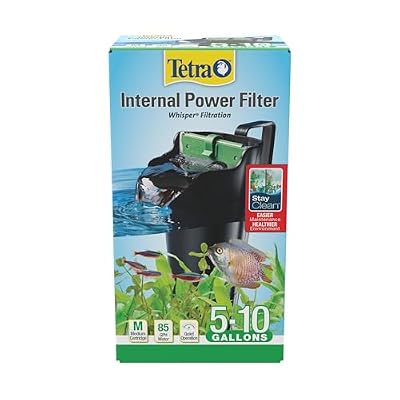
Tetra Whisper 85 GPH Internal Power Filter For Aquariums
Selected for "Best Filter for Betta Tank: Flow, GPH and the Right Type": this listing is filtration (Tetra Whisper 85 GPH Internal Power Filter For Aquariums), matching the equipment this article covers.
View on Amazon
NICREW Slim Aquarium Filter for up to 5 Gallon Fish Tank, 42 GPH, 3W
Selected for "Best Filter for Betta Tank: Flow, GPH and the Right Type": this listing is filtration (NICREW Slim Aquarium Filter for up to 5 Gallon Fish Tank, 42 GPH, 3W), matching the equipment this article covers.
View on AmazonBy David Nguyen
Quick answer: For most people in 2026, the best filter for betta tank is the Air-driven sponge filter — our #1 rated choice. See the full ranked comparison, alternatives and buying advice below.
Flow, Turnover and How to Judge a Filter
Choosing the best filter for betta tank use means reading three numbers together: rated GPH, real turnover after head loss, and how the outflow is delivered. A gentle 40 GPH sponge and a 40 GPH hang-on unit produce completely different conditions for the fish living underneath them.
The Deciding Numbers: GPH, Turnover, Media and Noise
Rated GPH is measured with no media and no head height, and real output typically drops 30-50 percent once cartridges and tubing are in place. A unit rated 100 GPH may deliver 50-70 GPH in service, which matters when you are sizing for a 5-gallon (19 L) tank. Halve the box figure as a rough start.
Turnover is GPH divided by real water volume. The general baseline is 4-6 times per hour, but bettas do better nearer 3-5 times with the outflow dispersed, because the goal is water movement through media rather than current across the swimming space. Movement through media is the goal.
Two more numbers matter in a bedroom-sized tank. Media volume decides how much bacterial colony the filter supports, and noise sits between roughly 35 and 50 decibels depending on type, with air pumps producing a constant hum that carries further than a submerged motor does. Consider the room, not just the tank.
Flow Delivery, Baffles and Finnage
How a filter delivers its output matters more than the number on the box. A waterfall outflow concentrates current into a narrow band, while a sponge filter releases it as slow upward circulation, and the same volume of water per hour feels entirely different to the fish. Delivery matters more than volume.
Watch the fish rather than the specification. A betta holding station against current, resting on the substrate near the far corner, or with fins pinned back is working harder than it should. Baffling with a sponge over the outflow or a cut bottle solves most of this cheaply. Watch the fish for a day afterwards.
Tank Size, Placement and Fit
Match the filter to real water volume, not the rating on the box. A 5-gallon (19 L) tank holds roughly 4-4.5 gallons (15-17 L) after substrate and hardscape, so a filter rated for 10 gallons will need its flow reduced or dispersed to suit that space. Oversized units can be tamed.
Hang-on units need clearance behind the tank, typically 4-6 in (10-15 cm), and canisters need cabinet depth. Measure the real numbers before you order: the gap behind the tank against the filter body, and the socket position so every cord can form a drip loop below it. Both take a minute to check.
Five Filter Types Matched to Real Betta Tanks
These five cover almost every betta setup from 5 to 20 gallons (19-76 L). Each is tied to a situation rather than ranked, because the unit that suits a bare quarantine tank is the wrong answer for a planted 20-gallon (76 L) community tank. Which one counts as the best filter for betta tank use depends on the situation.
| Option | Key number | Tank it suits | Recurring cost | Who it fits |
|---|---|---|---|---|
| Air-driven sponge filter | Gentle diffuse flow, large media volume | 5-20 gal (19-76 L) | Air pump power, occasional sponge | Most betta keepers, breeders, fry |
| Adjustable internal filter | Flow dial, 40-100 GPH rated | 5-10 gal (19-38 L) | Cartridge or sponge every few months | Keepers wanting one tidy unit |
| Baffled hang-on-back | 100-150 GPH rated, needs baffling | 10-20 gal (38-76 L) | Cartridges, unless converted to media | Planted or lightly stocked community |
| Nano canister | Adjustable output, sealed media chamber | 10-20 gal (38-76 L) | Media replacement, seals | Quiet rooms, larger planted tanks |
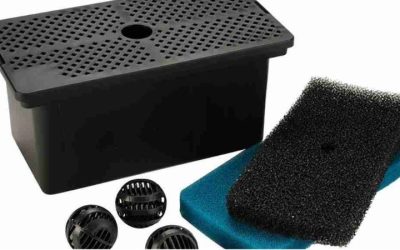
| Air-driven box filter | Very low flow, refillable media | 5-10 gal (19-38 L) | Air pump power, loose media | Hospital and quarantine tanks |
Air-Driven Sponge Filter for Most Betta Tanks
A sponge filter run from an air pump produces slow, diffuse circulation with no directed current at all, which is exactly what long finnage needs. The sponge itself carries a large bacterial colony, and there is nothing inside for a curious fish to be drawn into. Fry and shrimp are safe around it.
The trade is appearance and pump noise. The unit sits visibly in the tank, and an air pump hums continuously at roughly 40-50 decibels, which carries in a quiet bedroom. Sitting the pump on a folded towel rather than a hard shelf reduces the transmitted vibration noticeably. Placement fixes most pump noise.
Adjustable Internal Filter for Small Tidy Setups
A submerged internal unit with a flow dial keeps everything inside the tank and runs quieter than an air pump, typically under 40 decibels. Turning the dial down to its lowest setting usually brings a 5-gallon (19 L) tank into a comfortable range for a betta. Set it before adding the fish.
The limitation is media volume. These units hold small cartridges, so the bacterial colony is smaller than a sponge filter’s, and cartridge replacement discards that colony unless you keep the old sponge. Rinse and reuse media rather than following the replacement schedule on the box.
Baffled Hang-on-Back for Larger Planted Tanks
A hang-on unit gives good mechanical filtration and easy media access, which suits a 20-gallon (76 L) planted tank with a betta and tankmates. Most models run 100-150 GPH rated, which is far too much unbaffled but manageable once the outflow is spread. Media access is the real advantage.
Baffling is not optional here. A sponge pushed onto the outflow lip, or a plastic bottle cut and clipped in place, spreads the waterfall along the glass instead of down into the swimming space. Without it, the fish spends its day fighting the current. Baffling costs almost nothing to do.
Nano Canister for Quiet Rooms and Bigger Layouts
A small canister keeps all equipment out of the tank and out of sight, runs quietly at around 35-40 decibels, and holds enough media for a heavily planted 20-gallon (76 L) setup. Output is easily dispersed with a spray bar aimed along the back glass. Everything stays out of sight.
The drawbacks are cost and maintenance access. Canisters need cabinet space below the tank, priming after every clean, and seals that perish over several years. For a single betta in a 5-gallon (19 L) tank this is considerably more equipment than the job requires. Reserve it for larger layouts.
Air-Driven Box Filter for Hospital and Quarantine Tanks
A box filter run from an air line moves very little water and holds loose media you can swap freely, which suits a bare-bottomed hospital tank where you may be dosing medication and changing water daily. It is simple, cheap and easy to sterilise between uses. Cheap enough to keep one spare.
It is not a display filter. The box sits prominently in the tank, media needs regular repacking, and flow is too low to serve a stocked community tank. Treat it as a temporary tool that lives in a cupboard between the occasions when you actually need it. Every keeper should own one of them.
Head-to-Head and Who Should Not Buy
Most people comparing the best filter for betta tank options are really deciding between a sponge and something tidier. This section covers that comparison honestly, plus the situations where a new filter is not what the tank actually needs. Test the water before buying anything.
Sponge Versus Internal Filter: The Real Difference
The sponge wins on media volume, safety and gentleness, and loses on appearance and pump noise. The internal unit wins on tidiness and quiet running, and loses on colony size and on the cartridge system most models are built around, which throws away bacteria at each change. Reuse media wherever you can.
For a single betta in 5 gallons (19 L), either works if flow is gentle. Choose the sponge when breeding, treating illness or keeping shrimp, and choose the internal unit when the tank sits in a bedroom and the constant hum of an air pump would bother you. Both work well for a single fish.
When a New Filter Is Not the Answer
If a betta is clamped and lethargic, test ammonia, nitrite, nitrate and temperature before buying anything. Those symptoms follow water quality and cold far more often than flow, and a new filter restarts the bacterial colony rather than fixing the underlying problem. Diagnose before spending anything.
Equally, an existing filter that pushes the fish around usually needs a baffle rather than replacement. A sponge over the outflow costs almost nothing, keeps the established colony intact, and solves the problem in the time it takes to fit it to the unit. Keep the colony you have.
Cheaper Routes That Hold Up
An air pump, a length of tubing and a sponge filter is the least expensive complete option here and the one most breeders use. Adding a second sponge to an existing tank also gives you seeded media ready for a quarantine tank whenever you need one. Seeded media saves weeks later.
Converting a hang-on filter from cartridges to loose media is the other saving. Filling the chamber with sponge and ceramic media ends the cartridge subscription entirely, holds a larger colony, and costs one purchase rather than a recurring one every few weeks. Loose media outlasts cartridges easily.
Twelve-Month Running Costs, Failure Points and Replacement
Judged over a year rather than at checkout, filters separate on consumables and on how they fail. Both matter more than the purchase price, especially for small units where cartridge costs can exceed the filter itself inside twelve months. Judge the best filter for betta tank options across a full year.
What Each Type Costs to Run
Sponge and box filters cost only air pump electricity plus an occasional replacement sponge, which is the lowest running cost of anything here. Cartridge-based internal and hang-on units cost the most, since the manufacturer schedule assumes replacement every two to four weeks. Rinse and reuse media instead.
Late November is one of the few points in the year when aquarium equipment is discounted meaningfully, and buying a filter then is sensible planning. It changes nothing biologically: a new tank still needs three to eight weeks of cycling before any fish goes into it. Discounts do not shorten biology.
Failure Points: Impellers, Air Pumps and Seals
Impellers are the usual failure in powered units. Sand and fine substrate score the shaft, and owners commonly find real flow has dropped 30-50 percent from the rated figure well before the pump makes any audible noise, so check flow during monthly maintenance. Feel the outflow with a hand.
Air pumps fail through perished diaphragms, usually after a couple of years, and canister seals harden over a similar period. Sponge filters have no moving parts at all, which is why they outlast every other option in this list by a considerable margin. Simplicity is why they last.
Electrical Safety and Maintenance Cycle
Run every cord as a drip loop below the socket, use a GFCI outlet for anything near water, and fit a check valve on air line so water cannot siphon back into the pump during a power cut. That last item costs very little and prevents a genuine hazard. Fit it close to the pump end.
Rinse media in old tank water monthly, never under the tap, since chlorine and chloramine kill the bacterial colony outright. Replace sponges only when they fall apart rather than on a schedule, and stagger any media change so the colony is never removed all at once. Stagger every media change.
Frequently Asked Questions
These come up once someone has a tank running and is deciding whether the filter that came with it will do. The answers stick to flow, media and noise rather than to features printed on the packaging. Most best filter for betta tank questions come down to flow rather than filtration capacity.
Do bettas actually need a filter?
Yes, because the filter houses the bacteria that convert ammonia to nitrite and then nitrate. Without that colony, ammonia rises continuously between water changes, and a betta held above 0.25 ppm develops fin damage and gill irritation over a matter of weeks. The colony is the point.
What is the best filter for betta tank setups under 5 gallons?
An air-driven sponge filter, because it is the only type that reliably delivers gentle flow at that volume. Below 5 gallons (19 L) the underlying problem is tank size rather than filtration, and no filter compensates for the speed at which a smaller volume swings. Fix the volume first of all.
How do I reduce flow without buying a new filter?
Fit a sponge over the outflow, clip a cut plastic bottle beneath a waterfall outlet to spread it along the glass, or aim a spray bar at the back wall. All three cost almost nothing and preserve the bacterial colony you have already established. Watch the fish for a day afterwards.
How often should I clean a betta tank filter?
Rinse media in old tank water monthly, or sooner if you see flow dropping. Avoid replacing everything at once: staggering changes keeps enough bacteria in place that ammonia and nitrite stay at 0 ppm through the following week rather than spiking afterwards. Rinse in old tank water.
See More:
Conclusion
The best filter for betta tank use in most homes is an air-driven sponge filter, because it gives gentle diffuse flow, the largest media volume per pound spent, and no moving parts to wear out. Fit a check valve and sit the pump on something soft. Check valves cost very little indeed.
If the air pump hum is unacceptable in the room, an adjustable internal filter turned to its lowest setting is the quieter default. The lowest-cost route of all is a sponge filter plus a basic air pump, which will outlast most tanks it is fitted to. Neither choice is a real compromise.
Ready to decide? Our #1 pick for 2026 is the Air-driven sponge filter.
Live price & availability on Amazon.
Related Reviews & Guides



Aquarium Divider Acrylic Panel
Best RODI System Maintenance and Cleaning Kit: Top Pick