Last Updated: October 4, 2026
Value in chillers cannot be reduced to one cooling-per-dollar score, because these units measure cooling in different, non-comparable ways. The best aquarium chiller for the money is the cheapest that verifiably meets your specific cooling job, so defining that job first is what turns price into genuine value rather than a false ranking.
As an Amazon Associate we earn from qualifying purchases.
By David Nguyen
Quick answer: For most people in 2026, the best aquarium chiller for the money is the Nova Tec IceProbe — our #1 rated choice. See the full ranked comparison, alternatives and buying advice below.
How to Choose an Aquarium Chiller
Judging chiller value means defining the job before comparing prices, because a probe, a nano system, a compressor, and a BTU-rated unit are not measured on the same scale. Match a unit to your volume and drop, include the plumbing you must add, and avoid invented cooling-per-dollar scores that mix incompatible metrics.
Define the Cooling Job First
Value only means something against a defined job, so set your volume and needed temperature drop before shopping. A tank needing a couple of degrees is a different job from one needing a large pulldown in a hot room, and the cheapest unit that meets your specific job, not the lowest sticker, is the value pick.
Skipping this step invites false economy. Buying the least expensive unit for a job it cannot do means replacing it, so the money is wasted, while an underpowered bargain that runs constantly costs more in energy. Define the drop and volume first, then let price decide among the units that actually qualify.
Match Volume and Drop
Read each unit against your numbers, since their ratings differ in kind. The IceProbe lists degrees by volume, about 6 to 8 Fahrenheit on 10 gallons, the Nano E10G a roughly 9-to-11 degree pulldown to 10 gallons, the Mini Arctica a gallon class to about 40, and the Active Aqua 1/10 a published BTU-per-hour rate.
Because those metrics are not comparable, match each to your job individually. A small drop on a nano suits the probe or a nano system, while a larger tank or bigger drop needs a compressor or a BTU-rated unit, so choose the qualifying unit whose price is lowest rather than comparing their numbers head to head.
Include the Plumbing and Extras
True cost includes what you must add. A unit needing a separate feed pump or controller costs more than its sticker suggests, so a probe requiring a controller, or a compressor needing an external pump, may not be the value it appears next to a complete nano system that ships with its pump.
Add these extras before comparing prices. The Nano E units include a pump, while the Mini Arctica needs one you supply and the IceProbe needs a controller, so tally the full setup cost. The cheapest complete solution that meets your job is the real value, not the lowest headline price.
Avoid Fake Cooling-per-Dollar Scores
No single cooling-per-dollar figure is valid here, because the units publish different metrics. Dividing price by degrees, by a capacity claim, by gallon class, or by BTU-per-hour produces numbers that cannot be compared, so a tidy value ranking across these four would be misleading rather than helpful.
Judge value by fit and price instead. Identify the units that meet your defined job, then pick the cheapest, treating all price ratios as dated snapshots to re-check before buying. That approach respects the incompatible metrics and still lands you on the genuine best value for your particular tank.
Top Picks
Because these units measure cooling differently, there is no single best-value winner; each is the value choice for a particular cooling scope. The right chiller for the money is the cheapest that verifiably meets your defined job, so read each pick against your own volume, drop, and the extras you must add.
| Product | Best For | Key Spec | Watch Out For |
|---|---|---|---|
| Nova Tec IceProbe | Best value for light cooling | 6-8 F at 10 gal; 60W; ~under $250 | Needs controller; light drops only |
| JBJ Nano E10G | Best value complete nano system | 9-11 F drop; included pump; ~under $400 | Value only within 10-gal class |
| JBJ Mini Arctica 1/15 | Best value entry compressor | <=40 gal; 100-200 GPH; ~under $600 | Adds external-pump cost |
| Active Aqua 1/10 | Best value with a published rate | 1,020 BTU/h; titanium; 190W; ~$595 | Rate is not a cross-brand score |
Nova Tec IceProbe: Best Value for Light Cooling
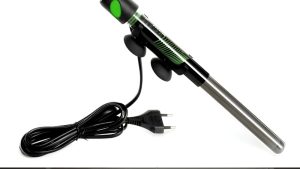
For the least spend on a small drop, the IceProbe is the value pick at around $250, delivering about 6 to 8 degrees Fahrenheit on 10 gallons on 60 watts total. On a tank that only drifts a few degrees, it meets the job for the lowest price, which is exactly what value means here.
It is not a universal best-value winner, because its metric differs from the others. Its drop falls to about 1 to 2 degrees at 40 gallons, it needs a separate controller, and it cannot be scored against a compressor on one number. For genuinely light cooling, though, it is the cheapest unit that does the job.
JBJ Nano E10G: Best Value Complete Nano System
When a nano needs a firmer drop, the Nano E10G is the value choice as a complete, included-pump system rated to about 10 gallons with a roughly 9-to-11 degree pulldown for around $400. Because the pump is included, its full setup cost stays lower than a probe plus controller for the same tank.
Its value holds only within its class. Above 10 gallons the drop shrinks, and its capacity claim is not comparable to a probe’s degree rating or a compressor’s class, so judge it on fit. For a nano needing real cooling in one box, it is the cheapest complete solution that meets that job.
JBJ Mini Arctica 1/15: Best Value Entry Compressor
For a larger tank on a budget, the Mini Arctica 1/15 is the value entry into compressor cooling, rated to about 40 gallons at roughly 100 to 200 GPH of feed flow for around $600. It is the lowest-cost way to get compressor-class capacity a nano thermoelectric unit cannot reach.
Factor in the pump you must add. As a compressor it needs an external feed pump, space, and ventilation, so its true cost is above the sticker, and its gallon class is not comparable to a BTU rate. For a 40-gallon-class job, it is still usually the cheapest qualifying compressor choice.
Active Aqua 1/10: Best Value With a Published Rate
When you want a documented cooling rate, the Active Aqua 1/10 offers a published 1,020 BTU-per-hour figure, a titanium exchanger, and 132 to 396 GPH of feed flow at 190 watts for about $595. For buyers who value verifiable capacity, that published rate is worth the modest premium over an entry compressor.
Its rate is not a cross-brand value score. The nominal 1,020 BTU-per-hour equals roughly 299 watts of thermal equivalent, but it only compares to another unit under matched conditions, so do not turn it into a percentage. For a mid-size tank where a published rate matters, it is the value pick.
Frequently Asked Questions
Value questions here keep circling back to a defined job, since the units cannot be ranked on one number. These answers cover the cheapest option, whether a nano system is worth its premium, why a compressor costs more, and whether a published BTU rate is better value.
What Is the Cheapest Aquarium Chiller?
The IceProbe, at around $250, is the lowest-priced unit here, but cheapest is only best value if it meets your job. It delivers about 6 to 8 degrees Fahrenheit on 10 gallons for light cooling, so on a small drop it is a genuine bargain, while on a big drop it simply cannot do the work.
Add the extras before calling it cheapest overall. It needs a separate controller and may require drilling, which raises the real cost, so compare complete setups. The cheapest unit that verifiably meets your defined cooling job is the value winner, and that is not always the lowest sticker on the shelf.
Is a Nano System Worth the Premium?
Often, yes, for a nano needing real cooling. The Nano E10G costs more than a probe but includes its pump and delivers a larger roughly 9-to-11 degree pulldown, so as a complete solution its full setup cost can undercut a probe-plus-controller build while doing a firmer cooling job.
It is not worth it if your drop is tiny. For a couple of degrees, a probe or fans may meet the job for less, so the premium pays off only when the extra pulldown is needed. Match the unit to the measured drop, then the nano system’s value becomes clear or unnecessary accordingly.
Why Does a Compressor Cost More?
Because it delivers capacity thermoelectric units cannot, along with the parts to do so. The Mini Arctica 1/15 reaches about 40 gallons, well beyond a probe or nano’s practical range, so its higher price buys real cooling headroom, though it also needs an external pump and ventilation that add to the total.
That cost is value when the job demands it. For a larger tank or a hot room, a compressor is the cheapest thing that can actually hold temperature, making it the value choice despite the price; for a small drop, it is overkill and a probe or nano system is the better spend.
Is a Published BTU Rate Better Value?
It is better information, which supports value, but it is not a cross-brand score. The Active Aqua 1/10’s published 1,020 BTU-per-hour lets you match capacity to a heat load with confidence, yet it only compares to another unit under matched test conditions, so it is not a percentage you can rank against others.
For value, use the rate to confirm fit, then weigh price. A documented rate reduces the risk of under-buying, which protects your money, so for a mid-size tank it can be the best value; just avoid turning the BTU figure into a false efficiency comparison with differently measured units.
Final Thoughts
The best aquarium chiller for the money is the cheapest unit that verifiably meets your defined cooling job, not the lowest sticker or a made-up cooling-per-dollar score. Set your volume and drop first, include the pump and controller you must add, and treat every price here as a dated snapshot to re-check before buying.
Ready to decide? Our #1 pick for 2026 is the Nova Tec IceProbe.
Live price & availability on Amazon.
Related Reviews & Guides



Best Rotary Drum Filter for Large Aquariums: Expert Picks
Best Koi Pond Filter Systems in 2026: Compared and Ranked