Last Updated: October 4, 2026
Freshwater cooling spans a wide range, from a nano needing a few degrees to a warm-room community tank fighting summer heat all day. The best aquarium chiller for freshwater tanks is the one whose capacity matches your volume and heat load at the right flow, read from published cooling figures rather than a single headline number.
As an Amazon Associate we earn from qualifying purchases.
By David Nguyen
How to Choose an Aquarium Chiller
Freshwater sizing works from volume and the temperature drop you need, then the feed flow the unit requires and the cooling technology that fits. Because heat load comes from lights, pumps, and a hot room as much as gallons, the right chiller is matched to your real conditions, not to the biggest capacity number.
Match Capacity to Volume
Start with true volume and needed drop, then read each unit’s rating. The Nano E10G and E20G cover up to about 10 and 20 gallons with a roughly 9-to-11 degree Fahrenheit pulldown, the Mini Arctica 1/15 up to about 40 gallons, and the Active Aqua 1/10 spans roughly 10 to 40 gallons with a published cooling rate.
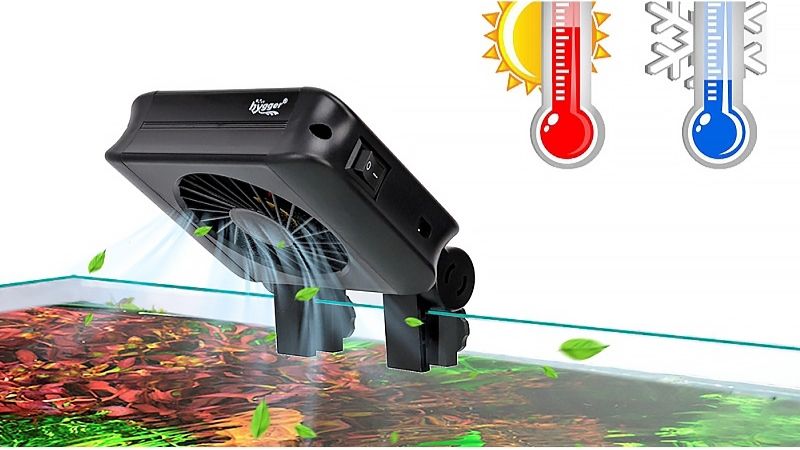
Larger tanks need a class with real capacity. A nano thermoelectric unit cannot cool a 40-gallon community tank in summer, so step up to a compressor when volume or heat load demands it, and read the rating against your total water volume including any sump rather than the display alone.
Account for Summer Heat Load
Cooling need is driven by heat load, which peaks in summer from ambient air, lighting, and pumps, not by gallons alone. A brightly lit freshwater planted or community tank in a warm room gains heat all day, so size for that peak load, since a chiller rated for your volume can still run flat out on the hottest days.
Because pulldown is measured below room temperature, a hot room shrinks a unit’s effective drop. Factor your summer room temperature into the choice, and where the room runs warm, favor a compressor’s steadier capacity over a thermoelectric unit that may struggle to keep up at peak.
Give the Chiller Its Flow
Each unit specifies a feed flow that must be met for it to cool. The Nano E units want about 78 and 118 GPH, the Mini Arctica roughly 100 to 200 GPH, and the Active Aqua 1/10 about 132 to 396 GPH, so the feed pump has to sustain the unit’s range through your plumbing.
Flow within the rated range keeps cooling and the exchanger healthy. Too little reduces cooling and can risk freezing on nano units, while a compressor’s range gives room to tune, so plan the loop to hold the unit’s GPH without starving the tank’s own circulation, and keep intakes clean so flow stays steady.
Choose the Right Technology
Match the cooling technology to the job and read its figures honestly. Thermoelectric nano units suit small tanks and modest drops, while compressors like the Mini Arctica and the titanium-exchanger Active Aqua 1/10 handle larger volumes and warmer rooms, with titanium resisting corrosion for long-term freshwater use.
Do not cross-compare mismatched numbers. A nano unit’s included-pump wattage is not the whole-unit draw, so it cannot be set against a compressor’s total watts, and BTU-per-hour figures only compare across brands when test conditions match, so weigh each unit on its own stated basis rather than a false ratio.
Top Picks
These four cover freshwater tanks from nano to mid-size, matched to volume, heat load, and flow rather than ranked on one figure. The right freshwater chiller depends on your gallons, your summer room temperature, and whether a simple nano system or a titanium compressor suits the cooling you actually need.
| Product | Best For | Key Spec | Watch Out For |
|---|---|---|---|
| Active Aqua 1/10 | Best Overall for mid-size freshwater | 1,020 BTU/h; titanium; 132-396 GPH; 190W; ~$595 | Overkill for a nano tank |
| JBJ Nano E10G | Best for a freshwater nano to 10 gal | 9-11 F drop; 78 GPH; ~under $400 | Small volumes only |
| JBJ Nano E20G | Best value up to 20 gallons | 9-11 F drop; 118 GPH; ~under $450 | Verify PSU variant |
| JBJ Mini Arctica 1/15 | Best compressor up to 40 gallons | <=40 gal; 100-200 GPH; ~under $600 | Needs external pump and venting |
Active Aqua 1/10: Best Overall for Mid-Size Freshwater
For a 10-to-40-gallon freshwater tank, the Active Aqua 1/10 leads with a published 1,020 BTU-per-hour cooling rate, a titanium heat exchanger for corrosion resistance, and roughly 132 to 396 GPH of feed flow at 190 watts for about $595. A published rate plus titanium makes it a dependable mid-size choice.
Its capacity is overkill for a nano and its rate is not a cross-brand ratio. The nominal 1,020 BTU-per-hour is roughly 299 watts of thermal equivalent, but that only compares to another unit under matched conditions, so judge it on fit, not a percentage. For a warm-room mid-size tank, though, it is the solid pick.
JBJ Nano E10G: Best for a Freshwater Nano up to 10 Gallons
For a small freshwater or planted nano, the Nano E10G is a complete system rated to about 10 gallons with a roughly 9-to-11 degree Fahrenheit pulldown, about 78 GPH of feed flow, and an included pump for around $400. It is the simplest right-sized cooling for a genuine nano tank.
It stays within its class. Above 10 gallons or in a hot room the drop shrinks, and its included-pump wattage is not comparable to a compressor’s total draw, so do not read it as low-power cooling for a big tank. Keep its 78 GPH feed steady to avoid cooling loss or internal freezing.
JBJ Nano E20G: Best Value for up to 20 Gallons
For a freshwater tank up to about 20 gallons, the Nano E20G brings the same roughly 9-to-11 degree pulldown and included-pump simplicity with about 118 GPH of flow for around $450. It is a cost-effective step between a nano and a compressor for mid-teen to twenty-gallon freshwater setups.
Verify the variant and feed it properly. The listed power-supply voltage differs between the manual and one retailer, and the PSU figure is a ceiling rather than draw, so confirm the model, and keep the 118 GPH feed satisfied, since low flow can reduce cooling or risk freezing on this unit.
JBJ Mini Arctica 1/15: Best Compressor for up to 40 Gallons
When a freshwater tank reaches up to about 40 gallons, the Mini Arctica 1/15 compressor delivers capacity a nano cannot, taking roughly 100 to 200 GPH of feed flow at about 39 decibels for around $600. It holds temperature in a larger tank or warmer room through summer.
It needs a proper install. As a compressor it requires an external feed pump you supply, space, and ventilation for its exhaust, and its gallon class is not directly comparable to a BTU-per-hour rate. Choose it for a 40-gallon-class freshwater tank whose heat load exceeds what a thermoelectric unit can manage.
Frequently Asked Questions
Freshwater chiller questions often ask whether cooling is needed at all and how to size it, so these answers keep to measured load. They cover whether every freshwater tank needs a chiller, sizing a 20-gallon and a 40-gallon tank, and whether adding more flow improves cooling.
Does Every Freshwater Tank Need a Chiller?
No. Many freshwater tanks stay in range with fans, cooler lighting, or room air conditioning, so a chiller is warranted only when a measured summer peak stresses the fish or plants. Coldwater species and heavily lit tanks are the common cases, so decide from your own readings rather than a blanket assumption.
Measure across a hot day first. If the tank drifts only slightly, non-chiller fixes may suffice, while a persistent climb into stressful temperatures justifies cooling. Sizing to the measured drop and heat load keeps you from buying a compressor for a problem a fan or a lighting change could solve.
What Size Chiller for a 20-Gallon Tank?
For up to about 20 gallons, the Nano E20G fits, with a roughly 9-to-11 degree Fahrenheit pulldown and about 118 GPH of feed flow, while the Active Aqua 1/10 covers 20 gallons within its 10-to-40-gallon range if you want a compressor with a published cooling rate and titanium exchanger.
Let heat load and room temperature guide the class. A cool-room 20-gallon tank suits the nano unit, whereas a warm room or heavy lighting may favor the compressor’s steadier capacity, so size to your total volume and summer peak, not to gallons alone, and keep the feed flow within the unit’s rated range.
Can a Chiller Handle a 40-Gallon Tank?
Yes, with a compressor-class unit. The Mini Arctica 1/15 is rated to about 40 gallons at roughly 100 to 200 GPH of feed flow, and the Active Aqua 1/10 covers up to 40 gallons with a published 1,020 BTU-per-hour rate and 132 to 396 GPH, so both suit a 40-gallon freshwater tank.
A nano thermoelectric unit will not manage that volume in summer. Its drop is too small at 40 gallons, so step up to a compressor and plan for its feed pump, space, and ventilation. Match the choice to your heat load, since a warm room pushes even a 40-gallon-rated unit toward continuous running.
Does More Flow Improve Cooling?
Only within the unit’s rated range. Each chiller specifies a feed flow, such as 132 to 396 GPH for the Active Aqua 1/10, and staying in that band keeps cooling effective; pushing far beyond the range does not add cooling and can strain plumbing, while too little flow reduces cooling and can risk freezing on nano units.
Aim for steady flow inside the range, not maximum flow. Keep the feed pump matched to the unit, route short clean plumbing, and clean intakes so flow does not fade. Correct, consistent flow within spec is what lets a freshwater chiller deliver its rated cooling, not simply more gallons per hour through the loop.
Final Thoughts
The best aquarium chiller for freshwater tanks is the one whose capacity matches your volume and summer heat load at the right feed flow, read from published figures on each unit’s own basis. Size from a nano to a titanium compressor by your real conditions, and never cross-compare mismatched wattage or BTU numbers.
Related Reviews & Guides


Best Aquarium Filter with Debris Chamber: Smart Top Picks
Best Probes and Calibration Kit for a pH and ORP Monitor