Last Updated: September 25, 2026
Best app controlled aquarium light for reef is about pairing reliable control with enough real light for your corals, since a slick app cannot fix a light that under-covers the tank. This guide sorts the options by need group and price tier, gives the numbers that decide fit, and flags the honest trade-offs of app control.
As an Amazon Associate we earn from qualifying purchases.
As an Amazon Associate we earn from qualifying purchases at no extra cost to you. Prices and availability are accurate as of the date shown and are subject to change.
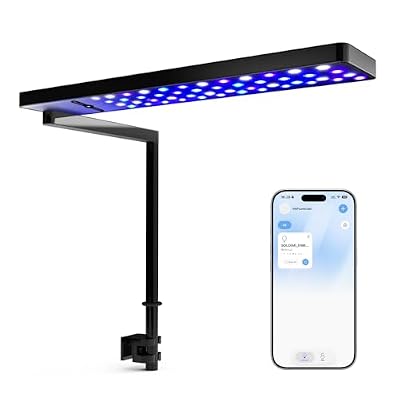
FZONE Solo Series Nano Aquarium Light for Saltwater and Reef Coral Tanks
Selected for "Best App Controlled Aquarium Light for Reef Tanks Guide": this listing is lighting (FZONE Solo Series Nano Aquarium Light for Saltwater and Reef Coral Tan), matching the equipment this article covers.
View on Amazon
Pawfly Aquarium Light with Bluetooth for Plants, 8W 16 inch Full Spectrum Fish Tank Light for 17-30 inch Fish Tanks, Submersible LED Lights with App Control, Timer Modes & Adjustable Brightness
Selected for "Best App Controlled Aquarium Light for Reef Tanks Guide": this listing is lighting (Pawfly Aquarium Light with Bluetooth for Plants, 8W 16 inch Full Spect), matching the equipment this article covers.
View on Amazon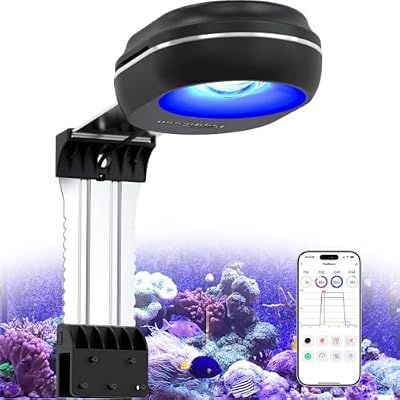
PopBloom RL60 WiFi Reef LED Light, 60W Full Spectrum Marine Reef LED Aquarium Lighting for Soft/LPS Corals & Saltwater Fish Nano Tanks, Built-in Timer, WiFi Phone Programmable, Sunrise Sunset
Selected for "Best App Controlled Aquarium Light for Reef Tanks Guide": this listing is lighting (PopBloom RL60 WiFi Reef LED Light, 60W Full Spectrum Marine Reef LED A), matching the equipment this article covers.
View on Amazon
CURRENT USA 48"-60" Inch Orbit Marine LED Saltwater Reef Marine Aquarium Light with Bluetooth App Control | Wireless Lighting & eFlux Wave Pump Control for Fish Tank (4203)
Selected for "Best App Controlled Aquarium Light for Reef Tanks Guide": this listing is lighting (CURRENT USA 48"-60" Inch Orbit Marine LED Saltwater Reef Marine Aquari), matching the equipment this article covers.
View on AmazonBy David Nguyen
Quick answer: For most people in 2026, the best app controlled aquarium light for reef tanks is the Compact app puck — our #1 rated choice. See the full ranked comparison, alternatives and buying advice below.
Control is only half the light
The best app controlled aquarium light for reef still has to deliver PAR at depth and cover the footprint, so judge the light first and the app second. Set the numbers before you shop.
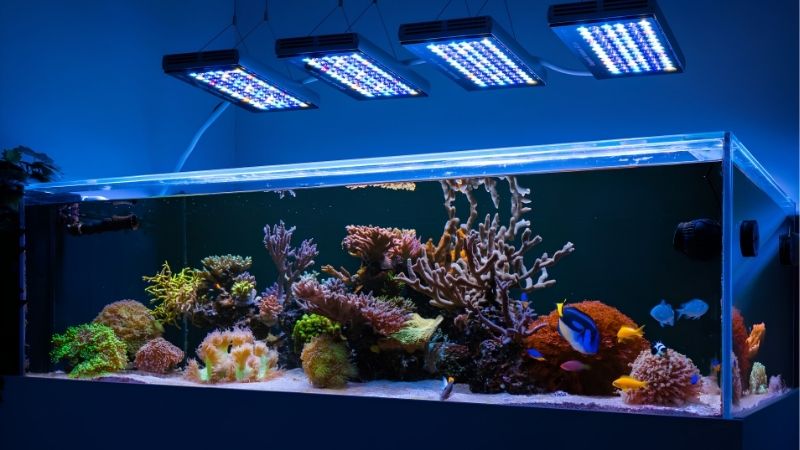
The decision number: PAR at depth and coverage
PAR at the coral in micromoles at your sand depth is the deciding figure, with coverage footprint in inches and centimeters close behind. A light that programs beautifully but only reads well at the surface still starves corals 18 to 24 inches (46 to 61 cm) down.
Spectrum is next: a strong, tunable blue channel plus full white for viewing. The app should let you schedule ramps and set spectrum, but those features only matter once the light physically covers your tank with enough PAR at depth.
Criteria beyond the app
Weigh control reliability, local versus cloud dependence, and whether multiple units sync as a group. An app that needs the cloud can drop schedules if the service is down, so favor lights with stable local control as a fallback.
Tank size, placement, and fit
Coverage and mount height decide how many units you need, and a long reef often needs two or more. Measure your tank length, width, and depth, and your mount height, before ordering, because app control cannot compensate for a light that leaves dark corners.
App lights grouped by reef need
The best app controlled aquarium light for reef depends on tank size and corals, so here are picks by need. Confirm current PAR and coverage data at purchase.
For a nano reef
A compact app-controlled puck covers a nano footprint with schedules and spectrum in one unit. It fits small tanks. Drawback: app dependence on a nano can feel like overkill, and cloud outages can interrupt simple schedules.
For a mid reef needing coverage
A mid app light or a pair covers a standard reef footprint evenly with programmable ramps. It fits most reefs. Drawback: to cover a long tank you often need two units, doubling the cost and the app setup.
For an SPS reef
A high-PAR app light delivers the intensity SPS need at depth with fine spectrum control. It fits demanding keepers. Drawback: high output run wide open can over-light or overheat a small tank, so you must dial and cool it carefully.
For simple, reliable control
A light with stable local control and a straightforward app suits keepers who want set-and-forget schedules. It fits busy owners. Drawback: simpler ecosystems may lack advanced group features or fine spectrum steps.
For a multi-light synced system
A light designed to group and sync many units suits big or multi-fixture reefs. It fits large systems. Drawback: group ecosystems can lock you into one brand’s app and accessories, raising the cost to expand.
For a budget app-controlled option
An affordable wifi light gives scheduling and spectrum at low cost. It fits value builds. Drawback: budget app lights often have coarser control, weaker apps, and less honest PAR, so verify real output before trusting it over SPS.
Head-to-head and who should skip app control
Choosing the best app controlled aquarium light for reef also means recognizing when the app is not the point.
App control versus a simple controller
An app adds convenience and ramps; a simple onboard or knob controller is more robust with nothing to crash. If you value reliability over programming, a non-app light with local control may serve a simple reef better.
When app control is unnecessary
On a soft-coral tank with steady needs, elaborate scheduling adds little. If you will set a light once and leave it, you are paying for app features you will not use, so a simpler light may be the wiser buy.
A cheaper or simpler route
A quality light on a basic timer covers many reefs without an app at all. Match the control to how much you will actually program, since a fancy app on a rarely-touched schedule is spent convenience.
Think in twelve-month terms: an app that updates and occasionally breaks is one more thing to manage over a light’s multi-year life, so weigh whether the convenience is worth the upkeep or whether a simple, stable schedule serves you better.
Reliability, wear, and yearly cost
The best app controlled aquarium light for reef runs daily for years, so plan for LED wear, app quirks, and cost.
Where app lights wear or falter
LED PAR declines slowly over years, drivers can fail, and humidity corrodes contacts. On top of hardware, apps and firmware update and occasionally break schedules, so a light with local control as a fallback is more resilient.
Running cost and coral acclimation
Lights draw a modest wattage 24/7 with no consumable media, so running cost is low. Ramp a new light up over 2 to 4 weeks rather than full intensity day one, so corals acclimate; app control makes this easy, but no schedule is an instant fix for stressed corals.
Warranty, safety, and buying season
Check the fixture and driver warranty, and keep leads on a drip loop with a GFCI. App-controlled reef lights see their deepest discounts over Black Friday and Cyber Monday in late November and around Prime Day in late June; a sale is a good time to buy, but corals still need weeks to acclimate. Prices and specs shift, so verify current PAR data at purchase.
App light questions, answered
These come up most about the best app controlled aquarium light for reef.
Does app control improve coral growth?
Not directly; corals respond to PAR and spectrum, not the app. Control helps you deliver and ramp light consistently, but a light that under-covers the tank grows corals poorly no matter how good the app is.
What if the app or cloud goes down?
Favor lights with local control so schedules keep running if the cloud drops. Cloud-only lights can lose programming during outages, so check that the light holds a local schedule as a fallback before you rely on it.
How many units do I need?
It depends on coverage: measure your tank length and width against the light’s footprint. Long or wide reefs often need two or more units for even PAR, so plan coverage first and app features second.
Are budget wifi lights good enough?
For softies and easy corals, often yes; for SPS, verify real PAR, since budget lights sometimes overstate output. A weak app is livable, but weak light at depth is not, so check coverage and intensity before trusting one over demanding corals. Coverage aside, the best app controlled aquarium light for reef is the one whose light reaches the corals.
Choosing an app-controlled reef light
The best app controlled aquarium light for reef is the one that covers your footprint with enough PAR at depth and backs its app with reliable local control. For most reefs a mid app light, or a pair for a long tank, is the sensible default, while a budget wifi light suits softies on a limit. Measure your tank footprint and mount height and check PAR at depth before ordering, and confirm current data at purchase since specs and prices change.
| Option | Key number | Suitable tank | Recurring cost | Who it is for |
|---|---|---|---|---|
| Compact app puck | Nano coverage, tunable | Nano reef | Modest power | Small tanks |
| Mid app light (or pair) | Even mid coverage | Standard reef | Modest power | Most reefs |
| High-PAR app light | High output at depth | SPS reef | Modest power | Demanding keepers |
| Budget wifi light | Basic control, verify PAR | Soft-coral reef | Modest power | Value builds |
Ready to decide? Our #1 pick for 2026 is the Compact app puck.
Live price & availability on Amazon.
Related Reviews & Guides
8 Best Budget Aquarium Lighting for Coral Growth
Best Aragonite Sand for Saltwater Tank: Top Top Picks