Last Updated: October 21, 2026
A real sump adds hidden water and a place to tuck equipment, so the best all in one saltwater tank with a built in sump is one whose rear system genuinely functions as a sump, giving stability and room for a heater or skimmer, rather than a set of shallow chambers dressed up with the name.
As an Amazon Associate we earn from qualifying purchases.
By David Nguyen
How to Choose an All-in-One Saltwater Tank With a Built-In Sump
A built-in sump is attractive because the extra water steadies parameters and the space hides equipment, but the word covers a wide range. Some all-in-one tanks offer a genuine rear sump. Judge the real capacity and access first, remembering that system volume is not the display volume you stock.
Know What a Sump Really Adds
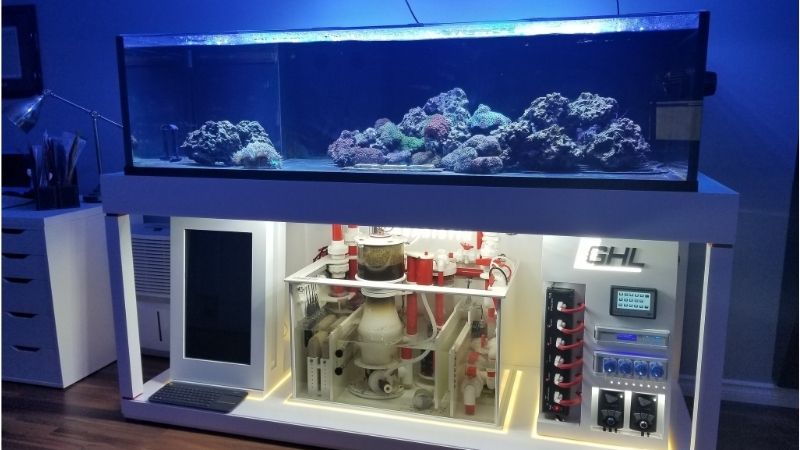
A true built-in sump adds meaningful water volume beyond the display, and that extra water is the main benefit. It also gives a place to house a heater, an auto top-off reservoir or a small skimmer out of sight. Together those make a sump-equipped tank both steadier and tidier than a bare display.
The catch is that the added water is system volume, not display volume, so it does not increase your swimming or aquascaping space. Read the display figure for stocking and the total for stability. Understanding that split keeps your expectations honest about what the sump actually contributes.
Chambers Are Not Always a Sump
Many all-in-one tanks use shallow rear chambers for filtration rather than a genuine sump, and the marketing does not always make the difference clear. A real sump holds enough water and depth to run equipment and buffer parameters. The name on the box is not proof of capacity.
So verify the rear section’s real dimensions and what it can hold before assuming it is a sump. Look at whether a skimmer or heater actually fits and how much water the section adds. Treating the chamber-versus-sump distinction as something to confirm, not take on faith, avoids paying for a sump you do not receive.
Equipment Access and Fit
A sump earns its keep only if you can reach and fit gear inside it. Check the opening size, whether a heater and return pump sit comfortably, and if a small skimmer rated for the volume will fit. A cramped or awkward sump makes maintenance harder rather than easier, undoing the tidiness it promised.
Consider also the equipment the tank does not include. A heater, an auto top-off and any skimmer are typically separate purchases whatever the tank’s marketing implies. Planning what will live in the sump, and confirming it fits, turns the space into the practical advantage it should be.
Stability Is the Real Prize
The steadier parameters a larger total volume brings are the strongest reason to want a built-in sump, especially for corals that dislike swings. More water dilutes mistakes and slows changes in salinity and temperature. For a reef, that buffering can be the difference between a forgiving tank and a fragile one.
Pair the sump’s volume with an auto top-off, since evaporation still concentrates salt over time even in a larger system. The sump gives you room for that reservoir and the stability to benefit from it. Treating the sump as a stability tool, not just storage, is what makes a sump-equipped tank worth the extra complexity.
Top Picks
These picks are ranked by how capable their rear systems are and how much stability they add, with a note that a genuine sump varies by SKU and should be verified. Specs are manufacturer-stated and prices change. The right pick suits your reef goals and the equipment you plan to hide.
| Product | Best For | Key Spec | Watch Out For |
|---|---|---|---|
| Red Sea MAX NANO G2 | Capable rear system | ReefLED G2 60; ATO-ready | Confirm true sump vs chambers |
| Waterbox AIO 20 | More rear volume | 20 gallons | Verify sump depth and access |
| IM Fusion 25 | Roomy rear section | ~465 sq in base | Rear chambers, not a large sump |
| Dedicated built-in-sump reef system | Maximum stability | Larger integrated sump (varies) | Specs vary; verify the SKU |
Red Sea MAX NANO G2 — Capable Rear System
The MAX NANO G2 pairs a reef-grade ReefLED G2 60 with ATO readiness and a rear system designed to hide filtration and gear. That integration adds stability and keeps equipment out of view, suiting a tidy reef. For a keeper wanting a capable, self-contained tank, it is a strong starting point.
Confirm whether its rear section meets your idea of a true sump, since it is more chamber-based than a large dedicated sump. The higher price buys the light and integration rather than a huge water buffer. It suits a keeper prioritizing a complete, capable reef over the largest possible sump volume.
Waterbox AIO 20 — More Rear Volume
At a full 20 gallons, the Waterbox AIO 20 offers more total water than the smaller nanos, and its rear section holds enough to steady parameters usefully. The extra volume is the draw here, buffering swings better than tighter tanks while keeping the tidy all-in-one look. For stability without a separate sump, it is sensible.
Verify the rear section’s depth and access to confirm what equipment fits, since it is still an integrated chamber design rather than a large open sump. Check what the SKU includes as well. Treated as a stable, self-contained tank rather than a full sump build, it delivers the steadier water most nano reefers want.
IM Fusion 25 — Roomy Rear Section
The Fusion 25’s larger footprint near 465 square inches comes with a roomier rear section that hides filtration and gear more comfortably than smaller Fusions. The extra display and total volume both help stability, and the space eases equipment placement. For a keeper wanting room to grow with tidy integration, it is a capable choice.
Its rear section is a set of chambers rather than a large dedicated sump, so judge it on the water and access it genuinely provides. Add a heater, top-off and any skimmer separately. Chosen for its roominess and stability rather than a true sump, it gives a nano reef comfortable headroom in a clean package.
Dedicated Built-In-Sump System — Maximum Stability
For the most stability, a reef system built around a genuine integrated sump adds the largest water buffer and the most equipment space. As a category rather than a single verified SKU here, it represents tanks whose rear sump is deep and roomy enough to run a skimmer and hold a real reservoir.
Because specific models vary widely, verify the sump’s actual dimensions, access and included gear before buying, since marketing uses the sump label loosely. Confirm a skimmer and heater fit and how much water it adds. With the specs checked, a true sump delivers the steadiest conditions of any all-in-one build.
Frequently Asked Questions
Buyers ask what a built-in sump adds, whether rear chambers count as a sump, what equipment fits, and if a sump is worth it. Each answer gives the practical rule first, then the condition that changes it for your tank and goals. Match the sump to the stability and equipment space you actually need.
What does a built-in sump add?
Mainly extra water volume and a place to hide equipment, both of which help a reef. The added water steadies temperature and salinity by slowing swings, while the space houses a heater, top-off reservoir or small skimmer out of sight. Together they make a tank both more stable and tidier than a bare display.
Remember the added water is system volume, not display volume, so it does not enlarge your swimming or aquascaping space. Read the display figure for stocking and the total for stability. Understanding that split keeps your expectations realistic about what the sump genuinely contributes to the tank.
Do rear chambers count as a sump?
Not always, since many all-in-one tanks use shallow chambers for filtration rather than a genuine sump. A real sump holds enough water and depth to run equipment and buffer parameters, while thin chambers mainly hide media and a return pump. The name on the box does not prove the capacity behind it.
So verify the rear section’s real dimensions and what it can hold before calling it a sump. Check whether a skimmer or heater fits and how much water it adds. Treating the distinction as something to confirm avoids paying for a sump you do not actually receive. A sump you have verified is worth far more than one you merely trusted.
What equipment fits in a built-in sump?
Typically a heater, an auto top-off reservoir and, if there is room, a small skimmer rated for the volume, but only if access and depth allow. A sump is space rather than included gear, so those items are usually separate purchases. Check the opening and dimensions to confirm what will actually fit before buying.
Plan what will live in the sump in advance, since a cramped section makes maintenance harder, not easier. Confirming a skimmer and heater fit, and that you can reach them, turns the space into a real advantage. A sump you cannot work in undoes the tidiness it was meant to provide.
Is a built-in sump worth it?
For a reef, often yes, because the extra water steadies parameters and the space hides equipment, both of which make the tank more forgiving. The buffering helps corals that dislike swings, giving you time to react to mistakes. If stability and a tidy look matter to you, a genuine sump earns its place.
For a simple fish tank the benefit is smaller, so it may not justify the added complexity. Weigh the value against your goals, and confirm the sump is real rather than shallow chambers. A sump is worth it when its stability and space serve a plan that actually needs them.
Final Thoughts
For steadier water, the best all in one saltwater tank with a built in sump is one whose rear system truly functions as a sump, adding real volume and room for equipment, not shallow chambers wearing the name. Verify the capacity and access, read display versus system volume, and the sump becomes a genuine advantage.

9 Best Aquarium Protein Skimmers for Saltwater Tanks
Red Sea Reefmat 500 Vs Nanomat Which Roller: Top Compared