Last Updated: October 9, 2026
- Top Pick: Magnetic Aquarium lid Fish Tank Hood top Cover Anti-Jumping net Cover mesh to Protect Fishs Jumping Out of Fishes Tank Hoods
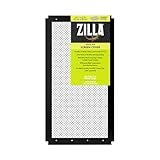
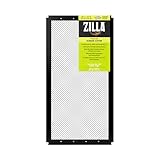
- Best Value: Zilla Fresh Air Screen Cover, Secure and Durable Metal Mesh Cover for Reptile Terrariums, 16 x 8 inches
- Premium Choice: Sieral Aquarium Polycarbonate Canopy Set 15.37 x 7.63 x 0.12 Inch for 5 Gallon Without Center Brace Aquariums Cover Fish Tank Lid with a Hook Knife, Clear
Aquarium Lid Guide: Glass, Mesh or Polycarbonate?
An aquarium lid is not merely a rectangle that fits the rim. It manages animal escape, evaporation, light, feeding access, humidity, cables, and maintenance. Glass, mesh, and polycarbonate solve those jobs differently. The safest choice begins with the animals and the aquarium manufacturer’s support requirements, then accounts for the room and equipment.
No cover makes an aquarium escape-proof. Fish can find small cutouts, push light panels, or jump during maintenance. A lid also must not seal away essential gas exchange or surface access for air-breathing species. The RSPCA’s fish welfare guidance emphasizes meeting environmental and behavioral needs; those needs outrank a purely decorative preference.
As an Amazon Associate we earn from qualifying purchases at no extra cost to you.





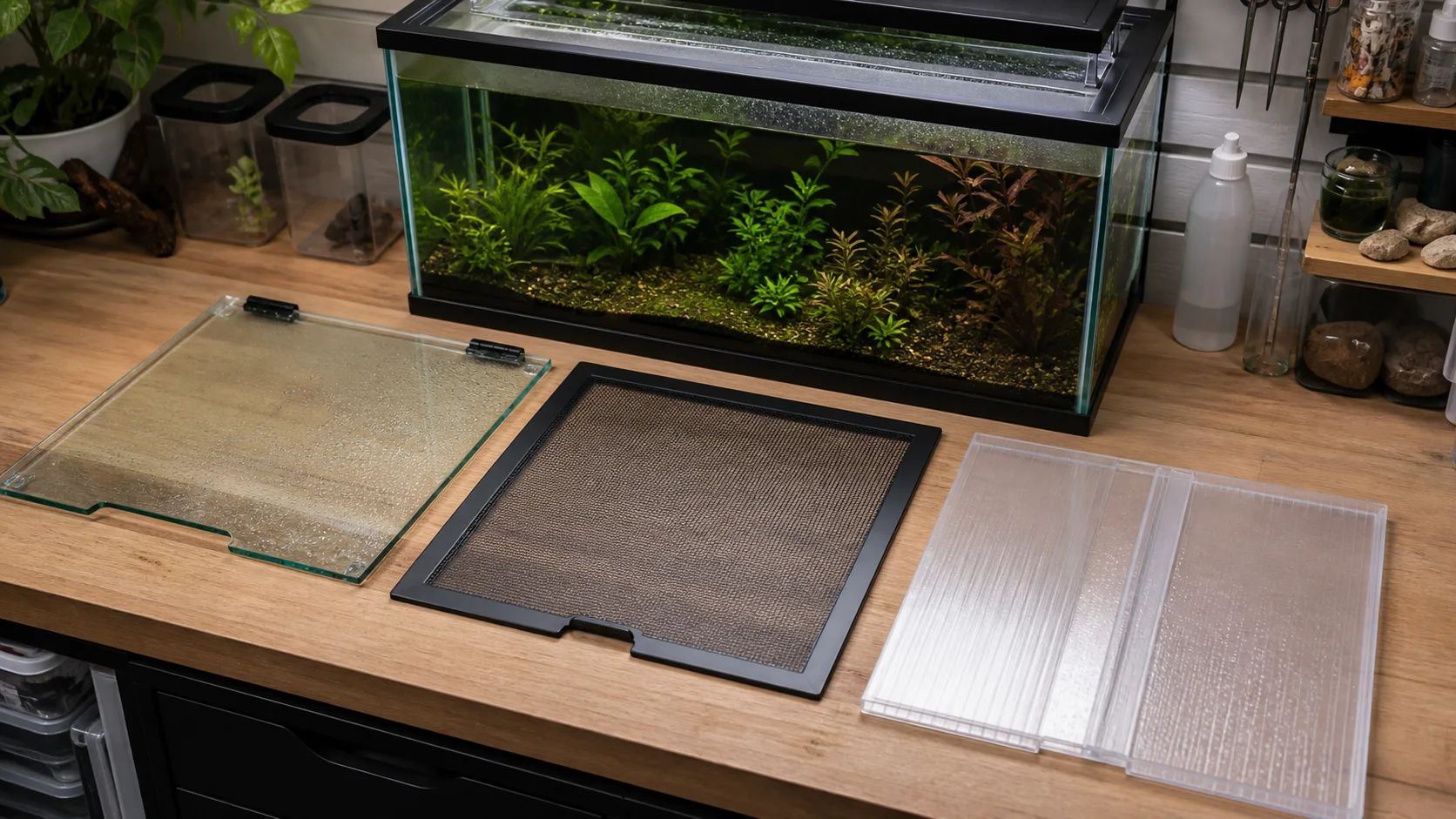
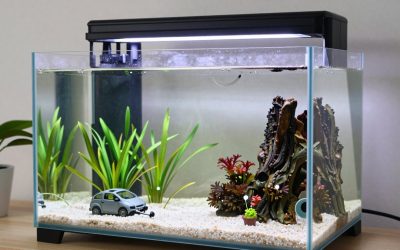
Editorial illustration; not evidence for species identification.
Define the lid’s non-negotiable jobs
List the stocked species, adult size, escape behavior, breathing mode, and feeding method. Include animals not normally called jumpers: a frightened fish can leave the water, and eels, snails, shrimp, and amphibious species may climb through gaps. Ask a qualified aquatic professional about species-specific clearance if reliable husbandry sources conflict.
Next map every penetration: filter pipes, hang-on equipment, airline, automatic feeder, heater lead, and light mounts. Openings must be small enough for the animals without pinching cables or forcing plugs into wet areas. Maintain drip loops and manufacturer-specified clearances. Never cut or alter a powered appliance to make a lid fit.
Finally, decide which trade-offs matter:
- humidity retention and reduced evaporation;
- ventilation and cooling;
- transmission and spread of the chosen light;
- resistance to sagging, impact, heat, and cleaning chemicals;
- ease of daily feeding and emergency removal;
- safe support on the specific rim or bracing.
Glass: stable and humidity-retaining
Purpose-made glass can remain flat, resist routine aquarium humidity, and reduce evaporation. It suits rooms where water loss is significant and layouts that benefit from retained warmth. Hinged sections offer convenient feeding access, and transparent panels provide a predictable visual finish.
Its disadvantages are weight, breakage, mineral deposits, and condensation. A wet or dirty glass panel reduces light transmission; clean it using aquarium-safe methods while supported on a towel, never balanced on the tank. Chipped or cracked glass should be replaced, not patched above animals. Edges and handle attachments must be finished for the application.
Use only the thickness, span, and support arrangement approved by the aquarium or lid manufacturer. Ordinary picture-frame glass, improvised shelves, and unsupported large spans are not interchangeable with an engineered cover. Tempered glass also cannot be casually drilled or trimmed. Ask a professional fabricator or manufacturer when customization is needed.
Glass is not airtight. Preserve ventilation and open surface movement. Condensation must drain back without running along a cable toward a plug, power strip, or non-rated light. Follow the light’s required distance from water and wet-location instructions.
Mesh: ventilation with escape control
Mesh lids preserve airflow, reduce condensation, and usually transmit light without the film and water deposits of a solid cover. They are useful when cooling and gas exchange matter, or when lights must remain separated from trapped humidity. Lightweight framed kits can be removed easily.
Mesh size is the central welfare decision. Openings must account for the smallest animal, not the largest adult fish. Flexible netting can bow, tear, or leave corners around equipment. A fish can strike abrasive material during a jump, so use aquarium-intended smooth mesh, secure tension, and inspect it regularly.
Evaporation rises compared with a solid lid. That changes top-off frequency and may affect room humidity. Replace evaporated freshwater with appropriate freshwater; evaporation leaves dissolved minerals behind, so top-off is not a substitute for water changes. Heaters may run more often in a cool room, and temperature should be monitored rather than assumed.
Mesh does little to contain splashes. Equipment above it must be suitable for the actual environment. UL Solutions resources explain the importance of product certification and following installation markings; a certification mark does not authorize use outside the product instructions.
Polycarbonate: light and workable, with limits
Multiwall or solid polycarbonate can be lighter than glass and easier for a competent fabricator to cut around equipment. Compared with some other clear plastics, it is known for impact resistance. Yet “polycarbonate” is not one universal product: thickness, coating, sheet structure, span, temperature rating, and UV exposure affect performance.
Thin sheets can bow under heat, humidity, or their own span. Multiwall channels can collect condensation or debris if edges are not finished according to the manufacturer. Some cleaners scratch or chemically damage plastic. Obtain technical data for the exact sheet and use its supported-span, temperature, cleaning, and orientation guidance. Do not place it closer to a lamp than either manufacturer permits.
Provide secure support without wedging a sheet against glass panels or braces. Heat expansion needs allowance; an over-tight improvised fit can buckle or load the aquarium rim. Smooth all accessible cut edges and use a handle that cannot detach into the tank.
Polycarbonate can retain humidity nearly like glass depending on gaps. Maintain ventilation deliberately. Its low weight also means a large fish or curious pet may lift it unless stops or clips approved for the tank are used.
Compare the options by the failure that matters
For a small jumping fish, fine smooth mesh may provide ventilation but demands meticulous edge sealing. For a warm aquarium in a cool, dry room, glass may reduce heat and water loss but needs condensation routing and safe light clearance. For an unusual pipe layout, a correctly specified polycarbonate panel can allow tailored cutouts, provided span and heat data support it.
A hybrid can be effective: a solid rear strip around plumbing with a mesh front, or segmented glass with a ventilated area. Every join becomes a possible escape gap and maintenance point. Avoid a patchwork that cannot be removed quickly during an emergency.
Floating plants add another layer. A solid cover can drip on leaves; mesh can increase evaporation and air movement. Keep an open surface corridor and consult the floating plant guide rather than packing plants against the lid.
Light, timers, and heat
Confirm whether the light is designed to sit over an open tank, glass, or a particular mounting system. A solid lid may reflect or absorb some light, especially when wet or scaled; compensate through plant selection and maintenance, not by exceeding fixture limits. The aquarium light guide explains fixture selection.
Maintain the specified air gap, never enclose a driver intended for ventilation, and keep connectors out of condensation paths. A reliable light timer can stabilize the photoperiod, but it does not make an unsuitable electrical installation safe.
The U.S. Consumer Product Safety Commission provides home electrical safety guidance. All outlet, wiring, wet-location, circuit-load, or code questions should go to a licensed electrician in the reader’s jurisdiction. Do not handle plugs with wet hands or operate cracked lights and damaged leads.
Fit and inspect before stocking
Place the empty, dry lid on the manufacturer-approved support. Confirm that it cannot slide into the aquarium, overload a hinge, or rock on plumbing. Test every access panel with the light mounted. Verify that maintenance equipment can be used without leaving a dangerous opening unattended.
After stocking, inspect weekly for bowed panels, torn mesh, loose clips, chipped glass, blocked ventilation, wet connectors, and widening cable gaps. Clean salt or mineral deposits before they obscure damage. During feeding, replace the access panel immediately; many escapes happen during ordinary routines.
Never set a heavy object on a lid unless the manufacturer explicitly rates it for that load. Keep children and pets from climbing or pressing on the aquarium. A lid is a containment component, not a shelf or structural brace.
The practical decision
Choose glass for flatness and evaporation control when its weight and condensation are manageable. Choose fine framed mesh for ventilation when evaporation and every perimeter gap can be controlled. Choose polycarbonate when low weight or tailored cutouts are valuable and exact manufacturer data supports the span, heat, and cleaning method. If no option meets the animals’ escape risk and the equipment layout simultaneously, redesign the layout with the aquarium manufacturer or an experienced aquatic installer rather than improvising around mains-powered equipment.
Sources
- RSPCA: Keeping fish as pets
- U.S. Consumer Product Safety Commission: Electrical Safety
- UL Solutions safety resources
- Electrical Safety Foundation International: Home Safety
Related Reviews & Guides
6 Best Aquarium Sumps With Refugium 2026
5 Best Fish Tank Heater 20 Gallons (2026)