Last Updated: September 25, 2026
The aio vs sump reef tank which for beginners question is a trade, not a ranking: an AIO puts filtration in rear chambers and removes most external plumbing decisions, while a sump moves filtration below the display for more space and water volume but requires drain and return plumbing. Neither guarantees easier long-term ownership.
As an Amazon Associate we earn from qualifying purchases.
As an Amazon Associate we earn from qualifying purchases at no extra cost to you. Prices and availability are accurate as of the date shown and are subject to change.
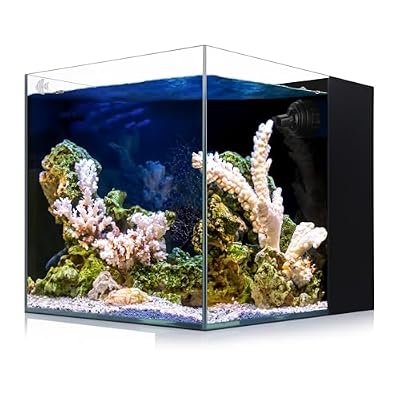
Coralland 8-Gallon Saltwater Aquarium - Ultra Clear Low Iron Glass, 45° Angled Joint Design, Crystal Clear Viewing, Perfect for Marine Fish & Reef Tanks & Freshwater
Selected for "AIO vs Sump Reef Tank Which for Beginners: Top Proven Guide": this listing is lighting (Coralland 8-Gallon Saltwater Aquarium - Ultra Clear Low Iron Glass, 45), matching the equipment this article covers.
View on Amazon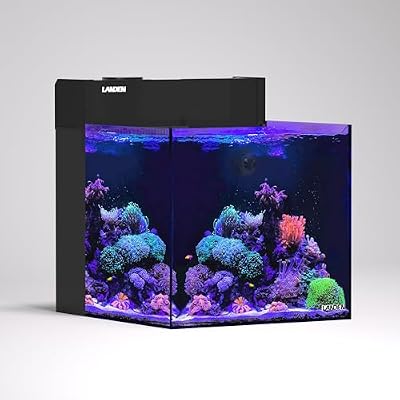
LANDEN EzCube 45K AIO 20 Gallon Reef Tank Kit, Skimmer + Pump Included
Selected for "AIO vs Sump Reef Tank Which for Beginners: Top Proven Guide": this listing is protein skimmers (LANDEN EzCube 45K AIO 20 Gallon Reef Tank Kit, Skimmer + Pump Included), matching the equipment this article covers.
View on Amazon
LYL LEYOULAND Adjustable Sump Baffle Kit - Refugium Kit for 10 Gallon Tank - Reef Aquarium - Saltwater Aquarium Filter System- Protein Skimmer Sump
Selected for "AIO vs Sump Reef Tank Which for Beginners: Top Proven Guide": this listing is protein skimmers (LYL LEYOULAND Adjustable Sump Baffle Kit - Refugium Kit for 10 Gallon ), matching the equipment this article covers.
View on Amazon
LYL LEYOULAND Adjustable Sump Baffle Kit - Refugium Kit for 20 Gallon Long Tank - Reef Aquarium - Saltwater Aquarium Filter System- Protein Skimmer Sump
Selected for "AIO vs Sump Reef Tank Which for Beginners: Top Proven Guide": this listing is protein skimmers (LYL LEYOULAND Adjustable Sump Baffle Kit - Refugium Kit for 20 Gallon ), matching the equipment this article covers.
View on AmazonBy David Nguyen
Quick answer: Our top pick in 2026 is the Filtration location — our #1 rated choice. See the full ranked comparison, alternatives and buying advice below.
How AIO and Sump Reef Tanks Work
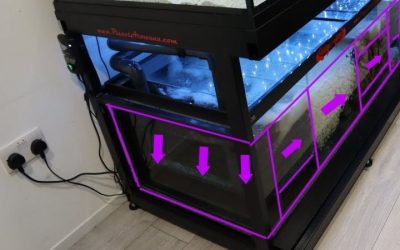
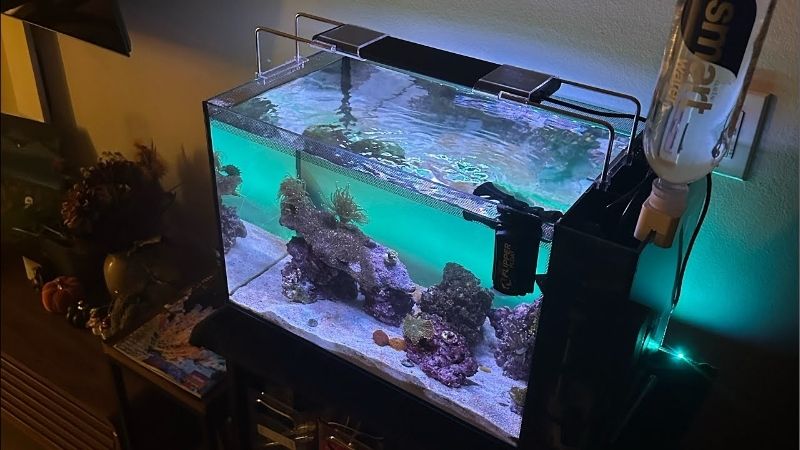
An AIO integrates filtration behind the display, while a sump places it in a separate vessel below with overflow and return plumbing. The table sums up the differences, and the sections below explain each architecture and how to compare them honestly.
| Factor | AIO | Sump |
|---|---|---|
| Filtration location | Rear aquarium chambers | Separate vessel below display |
| Plumbing | Integrated, minimal | Overflow, drain and return |
| Water volume | Tank name is not usable volume | Can add system water |
| Equipment space | Limited to rear chambers | More flexible, larger gear |
| Failure planning | Chamber levels/dimensions | Test power-off drain-down |
AIO: Filtration Behind the Display
In an AIO, water passes through rear chambers and returns through an integrated pump, so no under-cabinet drain system is necessary. That removes most external plumbing decisions, which is why AIOs are often seen as simpler to get running.
So an AIO keeps the whole system in one tank, with filtration hidden behind the display. The trade is that everything must fit those rear chambers, so the simplicity comes with constraints on how much equipment you can add later.
Sump: Filtration Below the Aquarium
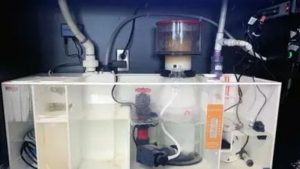
A sump requires an overflow or drain, a separate sump vessel and return plumbing, but it gains physical filtration and equipment space below the tank. That space is the main reason reefers choose a sump over an AIO.
So a sump trades added plumbing for room to grow. It moves the equipment out of the display and can add water volume, but it introduces drain and return plumbing that an AIO avoids, which is a real setup and planning consideration.
Compare Total Water Volume, Not Tank Name
Model names are not reliable volume figures: the current Waterbox AIO 25 spec is 23.7 gallons despite the name. So compare the actual listed water volume rather than the number in the product name, which can overstate usable capacity.
This matters for dosing and stability, since real volume drives both. So read each system’s current spec for total or display volume rather than assuming a “25” means 25 gallons, since nominal marketing names are not dosing-volume measurements.
Compare Service Clearance
Access differs by architecture: for an AIO, measure the rear chambers, while for a sump, measure cabinet openings, skimmer-removal height and power-off drain capacity. Service clearance is a practical factor that neither architecture wins automatically.
So plan how you will actually service the system. An AIO’s rear chambers set what fits and how you reach it, while a sump’s cabinet and drain planning determine access below, which is why measuring clearance is part of choosing between them.
What It Looks Like in Practice
In practice, the choice shows up in compact first reefs, equipment upgrades, larger skimmer or refugium plans, and failure planning. Real current systems illustrate the trade between an AIO’s simplicity and a sump’s flexibility.
Compact First Reef
A current Waterbox AIO 25 is 23.7 gallons at 23.6 by 15.7 by 15.7 inches, with rear filtration and return hardware built in. For a compact first reef, that integration means a mostly complete system without external plumbing to design.
So an AIO suits a smaller starter reef where simplicity matters. The rear chambers handle filtration and return, letting a beginner focus on livestock and husbandry rather than plumbing, which is a real advantage early on despite the space limits.
Equipment Upgrades in an AIO
Innovative Marine’s current 25-gallon rear system includes a 326-GPH return, a filter sock and a CustomCaddy, but any additional equipment still has to physically fit the rear chambers. So upgrades are possible but bounded by chamber size.
So plan upgrades around that space from the start. An AIO can accept a skimmer, media or a small roller where the chambers allow, but the physical limit is real, which is why matching your equipment plans to chamber dimensions matters before buying.
Larger Skimmer/Refugium Plans
A sump provides more flexible physical space, and BRS specifically identifies larger skimmers, refugiums and fleece rollers as equipment that is easier to accommodate there. So bigger plans point toward a sump rather than an AIO.
So if you want a large skimmer, a refugium or a full roller, a sump gives the room. The AIO ecosystem increasingly supports smaller versions of these, but the sump remains the more flexible choice when equipment ambitions grow beyond a rear chamber.
Plumbing and Failure Planning
A sump requires testing the power-off drain-down volume so the sump does not overflow during an outage, while an AIO avoids that external overflow plumbing but remains constrained by chamber water levels and dimensions.
So each architecture has its own failure planning. A sump needs drain-down testing and a plan for power loss, while an AIO’s simpler plumbing shifts the constraint to chamber capacity, which is why neither removes the need to plan for failures.
Frequently Asked Questions
Beginners ask whether an AIO is easier to set up, whether a sump is more stable, whether AIOs are only for nanos, and whether an AIO can use a roller. The answers below avoid absolutes and quantify claims where possible.
Is an AIO Easier to Set Up?
Typically it requires fewer plumbing decisions. A current 25-gallon IM setup already includes its 326-GPH return system, overflow wall and filter chamber, so much of the system is integrated rather than assembled from separate plumbing.
So an AIO is usually simpler to get running, but not automatically easier to own long term. The integration removes plumbing choices up front, while ongoing maintenance and upgrade limits still apply, which is why easier setup does not mean easier overall.
Is a Sump More Stable?
It can add water volume, which supports stability, but quantify the actual gallons added rather than assuming a sump is always more stable. A larger total volume dilutes swings, so the benefit depends on how much water the sump actually adds.
A historical BRS example notes a 40-gallon display plus sump could increase total water by around 50%, but that is one example, not a rule. So measure your specific added volume rather than treating “sump equals 50% more stable” as a general truth.
Is an AIO Only for Nano Tanks?
No. Waterbox currently sells AIO systems from 20 through 65 gallons in its main range, so the architecture is not limited to nanos. Larger AIOs exist, extending the integrated approach well beyond small tanks.
So an AIO can suit a mid-sized reef, not just a nano. The rear-chamber space still sets equipment limits at any size, but the format itself scales up, which is why the choice is about space and plans rather than tank size alone.
Can an AIO Use a Roller Filter?
Yes, where the chamber geometry supports one. Innovative Marine, Red Sea and third-party makers now sell AIO-size roller products, though compatibility is model-specific, so a roller is not universal across every AIO.
So confirm your specific AIO’s chamber fits a roller before assuming it works. The option exists across much of the current AIO market, which narrows the old equipment-space gap with sumps, but you still need to check model compatibility rather than assuming it.
Final Thoughts
Do not present the aio vs sump reef tank which for beginners choice as beginner versus advanced ranks. The practical decision is driven by space, maintenance access, equipment plans and willingness to plumb the system, so compare real water volume rather than model names, quantify any stability claim, and remember current AIOs increasingly support skimmers, ATO and rollers, narrowing but not removing the space difference.
Ready to decide? Our #1 pick for 2026 is the Filtration location.
Live price & availability on Amazon.
Related Reviews & Guides

Best High Volume Recirculation Pump for Skimmers: Compared
Best 75 Gallon Aquarium Kit With a Stand Included: Top Smart