Last Updated: October 4, 2026
- Top Pick: Brio B.P.A. Free 5 Gallon Plastic Crown Cap Reusable Water Bottle Container
- Best Value: FastRack 5 Gallon Hedpak with Cap (Pack of 2) | BPA-free, Food-Grade, and Leak-Proof | White Water Container | Ideal for brewing, fermentation, or storage
- Premium Choice: Aqueon Aquarium Starter Kit with Smart Clean Filtration and LED Lighting, Freshwater and Saltwater Fish, Perfect for Tetras, Guppies, Platies, 10-Gallon
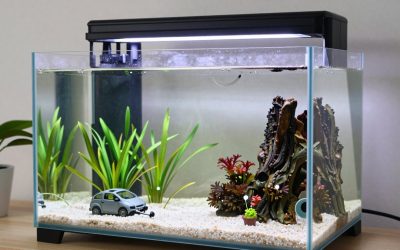
Choosing between a 5 gallon vs 10 gallon aquarium is less about buying the biggest tank you can fit and more about deciding how much stability, visual impact, and maintenance you want in your home. A 5-gallon tank takes up less room and can cost less to start, but its smaller water volume changes quickly when temperature, evaporation, or feeding gets out of balance. A 10-gallon aquarium needs a larger footprint, yet it generally gives fish more usable swimming space and gives beginners a wider margin for error.
For a desk, nightstand, or compact apartment, 5 gallons can be a sensible limit. For a first community aquarium, a child’s supervised hobby, or a display you want to enjoy for years, 10 gallons is usually the more comfortable choice. The right answer also depends on the stand, filtration, heater, lighting, livestock, and the amount of routine care you are willing to provide.
As an Amazon Associate we earn from qualifying purchases at no extra cost to you.



Quick Verdict
Choose a 5-gallon aquarium when floor space is the priority and you want a small, focused display with one suitable betta or a carefully planned invertebrate setup. It is easier to place, move, and furnish, but it is not automatically easier to maintain. Small tanks experience faster changes in water chemistry and temperature.
Choose a 10-gallon aquarium if you want greater flexibility, a more stable environment, or a small group of compatible freshwater fish. Its typical footprint is about 20 inches long by 10 inches wide, compared with roughly 16 inches long by 8 inches wide for many 5-gallon tanks. Those few extra inches make a meaningful difference in swimming room and equipment choices.
Side by Side
| Factor | 5-Gallon Aquarium | 10-Gallon Aquarium |
|---|---|---|
| Comfort for fish | Best for one appropriately selected centerpiece fish or invertebrates; limited swimming length | More comfortable for a betta, small community, or larger planted layout, depending on species |
| Durability | Glass is scratch-resistant but heavier; acrylic is lighter but can scratch more easily | Glass offers a sturdy, long-lasting display but requires a stronger, level support surface |
| Typical price range | About $30–$100 for a tank or basic kit; $100–$180 with upgraded equipment | About $60–$140 for a tank or starter kit; $110–$250 with heater, better filtration, and accessories |
| Maintenance | Small water changes are quick, but parameters can shift rapidly | More water to change, but chemistry and temperature are generally more forgiving |
| Space needed | Usually about 16 × 8 inches, plus clearance for cords and maintenance | Usually about 20 × 10 inches, plus a dedicated stand or sturdy furniture |
| Look | Compact accent piece suited to desks, shelves, and small rooms | More presence and depth for plants, décor, and a natural-looking aquascape |
| Resale and reuse | Easy to give away or repurpose, but demand can be limited by its size | Often more versatile for future fish, plants, or beginner setups |
| Best for | Small spaces, simple displays, and experienced stocking decisions | First-time keepers, families, planted tanks, and small freshwater communities |
Where 5 Gallon Wins
The strongest advantage of a 5-gallon aquarium is its small footprint. It can fit on a properly supported desk or compact cabinet where a 10-gallon model cannot. When filled, however, it is still heavy: water alone weighs about 41.7 pounds. Add glass or acrylic, gravel, décor, a filter, and a lid, and the finished setup can approach 50 pounds. It should never sit on a flimsy shelf or furniture that is not level.
A 5-gallon tank also uses less water during routine changes. A 25% change is only about 1.25 gallons before accounting for gravel and décor, so carrying buckets is easier. Equipment can be modest, too. A small adjustable heater may use roughly 25 watts, while a low-flow filter and compact LED light typically add little to household electricity use.
Its scale works especially well in minimalist interiors. A single piece of wood, a few hardy plants, and an unobstructed view can look intentional rather than undersized. It is also a practical format for learning the basics of cycling, testing water, and establishing a maintenance schedule without committing to a large display.
There is a distinction worth making when shopping: a 5-gallon aquarium is not the same as a 5-gallon water-storage container. Products such as the under-$40 Brio B.P.A. Free 5 Gallon Plastic Crown Cap Reusable Water Bottle Container and the under-$40 FastRack 5 Gallon Hedpak two-pack are designed for storing or transporting water, not for supporting aquatic life. They do not replace a purpose-built aquarium with safe viewing panels, filtration, lighting, and an appropriate lid.
Where 10 Gallon Aquarium Wins
The 10-gallon aquarium wins on flexibility. It offers roughly twice the water volume, which helps dilute waste and slows changes caused by evaporation, missed maintenance, or a small overfeeding mistake. It still requires regular testing and water changes, but beginners often find it less twitchy than a 5-gallon setup.
The extra length is especially valuable. Fish use horizontal swimming room, not just water volume, and a standard 10-gallon tank provides about 20 inches of length. That makes it easier to create separate open and sheltered areas, arrange live plants, and choose equipment without crowding the display.
It is also the more practical size for a small freshwater community, provided the species and final adult sizes are compatible. A 10-gallon aquarium can accommodate options such as a betta with carefully selected companions, a small group of nano fish, or livebearers in a properly planned setup. Stocking should be based on adult size, behavior, filtration, and water requirements—not a simple fish-per-gallon rule.
Starter kits can make the larger format approachable. For example, the Aqueon Aquarium Starter Kit with Smart Clean Filtration and LED Lighting is a 10-gallon option listed for under $150, while a separate 10 Gallon Aquarium Set with a heater, filter, media, light, and cleaning tools is listed for under $150. Exact package contents vary, so confirm whether a heater, thermometer, lid, conditioner, test kit, and filter media are included before comparing prices.
Cost Over 5 Years
Initial price is only part of the decision. A realistic five-year budget for a 5-gallon aquarium is approximately $250–$600, depending on livestock, décor, replacement media, and whether you buy a complete kit. A 10-gallon setup commonly totals about $350–$800 over the same period.
For either size, expect roughly $30–$100 for the tank or starter kit, $15–$40 for substrate and décor, $15–$40 for water conditioner and a basic test kit, and $15–$50 for a heater if one is needed. Replacement filter cartridges or media may cost about $10–$30 per year, although reusable sponge and biological media can reduce recurring expenses.
Electricity is usually a minor cost. A 25-watt heater running intermittently and a 5- to 10-watt LED light on a timer may use only several dollars to a few tens of dollars per year, depending on local utility rates and room temperature. The 10-gallon tank may need a 50-watt heater rather than a 25-watt model, but the difference in operating cost is generally modest.
Livestock, plant losses, disease treatment, and replacement equipment can matter more than tank size. Keeping the aquarium properly stocked and maintaining a stable routine is usually cheaper than correcting problems caused by overcrowding or inadequate filtration.
Which One for Your Home
Small apartment
A 5-gallon aquarium is usually the easier fit for a studio, bedroom, or compact living room. Measure the furniture first, including space behind the tank for filter tubing and power cords. Choose a 10-gallon model if you have a dedicated, level stand and want a more substantial focal point.
Family with kids or pets
A 10-gallon aquarium is generally preferable because its larger water volume is more forgiving and its wider footprint is less likely to be bumped than a small tank perched on a desk. Use a secure lid, manage cords carefully, and place the aquarium where children and pets cannot pull on equipment. Adult supervision is still necessary for feeding and water changes.
Rental home
Consider a 5-gallon setup if moving furniture, protecting floors, or limiting visual clutter is important. Remember that a filled aquarium is heavy even at this size. A 10-gallon tank can work in a rental, but use a purpose-built stand and place it away from radiators, direct sun, and areas where a leak could damage flooring.
Long-term home
If you expect to keep the aquarium for several years, the 10-gallon size offers more room to change direction. You can begin with a simple betta or planted display and later create a small community without immediately replacing the tank. The 5-gallon remains a good choice when you strongly prefer a compact, restrained display.
FAQ
Is a 10-gallon aquarium easier than a 5-gallon tank?
Usually, yes. The larger water volume changes more slowly, giving you a wider safety margin. Neither tank is maintenance-free: both need a fully cycled filter, regular testing, partial water changes, and appropriate stocking.
Can a betta live in a 5-gallon aquarium?
A 5-gallon tank can be suitable for one betta when it has a gentle filter, heater, lid, hiding places, and regular care. A 10-gallon aquarium provides more room for plants and swimming space, but it is not required for every betta.
How much does a full aquarium weigh?
Water weighs about 8.34 pounds per gallon. A 5-gallon aquarium contains about 42 pounds of water, while a 10-gallon model contains about 83 pounds. With the tank, gravel, décor, and equipment, plan for roughly 50–65 pounds for a 5-gallon setup and 100–125 pounds for a 10-gallon setup.
Should I buy a tank or a starter kit?
A starter kit can simplify shopping when it includes a properly sized filter, light, lid, and other essentials. Compare the included equipment rather than the package price alone. If the kit lacks a heater, thermometer, test kit, or suitable filter media, the final cost may be higher than expected.
Ready to decide? Our #1 pick for 2026 is the Comfort for fish.
Live price & availability on Amazon.
Related Reviews & Guides
8 Best Aquarium Black Backgrounds 2026
6 Best Plant Fertilizers For Aquarium Plants 2026