Last Updated: September 25, 2026
The honest verdict on metal vs wood aquarium stand pros and cons is that neither material wins by default. Capacity comes from bracing and top support, not the label, and the right pick depends on rated load, footprint, storage needs and how much moisture the surface can shrug off.
As an Amazon Associate we earn from qualifying purchases.
By David Nguyen
Quick answer: Our top pick in 2026 is the Load rating — our #1 rated choice. See the full ranked comparison, alternatives and buying advice below.
How Metal and Wood Stands Carry Aquarium Loads
A stand job is to move the tank full load safely to the floor. How it does that depends on the whole structure — frame, joints and the surface under the tank — far more than on whether it is welded steel or a laminate cabinet.
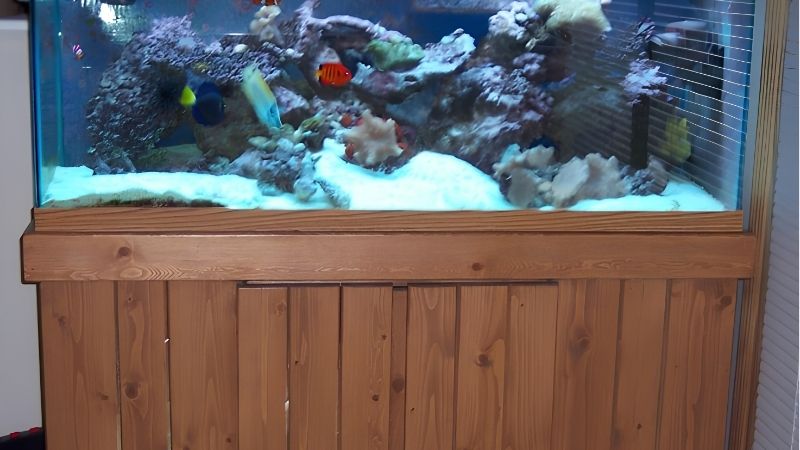
Load Rating Comes From the Whole Structure
Rated capacity is an engineering result, not a material property. Representative metal and wood stands are both listed at 550 lb [retailer/manufacturer, 2026], which shows the material name alone does not set the ceiling — the bracing and load path do.
Look for full-perimeter top support and reinforced corners on either type. A poorly braced steel frame can flex more than a well-built cabinet, so read the exact rating and joinery rather than assuming one material is inherently stronger. Check the leveling feet too, since an uneven foot concentrates the load on one corner no matter what the plate is rated for.
Metal Can Reduce Stand Weight
Where the two diverge is mass. A representative metal frame weighs about 22 lb while a comparable wood/laminate cabinet is around 62 lb — the wood example is roughly 182% heavier at the same 550 lb rating.
That matters if you rearrange often or set up on an upper floor, since a lighter empty stand is easier to position before filling. Stand weight is a handling trait, though, not a capacity figure, so do not read the heavier cabinet as the stronger one. A 62-lb cabinet also becomes a two-person lift once a filled sump sits inside, a hassle the 22-lb frame avoids.
Wood/Cabinet Designs Can Add Storage
Enclosed wood cabinets trade weight for utility. The closed body hides a sump, buckets, salt and test kits, and it dampens equipment noise better than an open frame — a real advantage in a living room or bedroom setup.
That storage carries recurring-supply value in this hobby, where salt mix, media and dosing bottles pile up fast. An open metal frame keeps everything visible and ventilated instead, so the choice tracks how you want to store and access gear. Over twelve months, salt mix, replacement media and dosing bottles pile up, so enclosed storage can pay back its higher price in daily convenience.
Moisture Protection Matters for Both
Water is the shared enemy. The wood example uses a moisture-resistant laminate, and metal frames rely on paint or powder coat; both fail first at the edges and joints where spills and salt creep collect over time.
Neither material is immune, so wipe spills promptly and check seams during water changes regardless of type. A sealed laminate resists swelling and a coated frame resists rust, but a standardized fatigue or lifespan comparison between the two is not published. A waterproof mat under the tank catches condensation and minor spills on either type before they reach a joint.
What the Tradeoffs Look Like in Practice
In practice the decision is situational. Match the rated load and footprint first, then let storage, noise, weight and moisture exposure break the tie. The table below frames the factors that actually decide a safe, practical choice.
| Factor | Normal Range | Watch-out Threshold | What to Do |
|---|---|---|---|
| Load rating | Rated lb above full tank weight | Rating at or below the load | Choose a stand rated above the load |
| Stand weight | ~22 lb metal to ~62 lb wood | Very heavy if relocated often | Pick a lighter frame if you move it |
| Moisture exposure | Laminate or coated metal | Bare board or unsealed joints | Wipe spills; buy moisture-resistant |
| Top support/footprint | Full contact under the base | Overhang or gaps under the base | Match exact footprint, full top |
When an Open Metal Frame Makes Sense
An open steel frame fits garages, fish rooms and anyone who moves tanks. At about 22 lb it is easy to position, ventilation keeps humidity from pooling, and a sump slides underneath with full access on all sides.
The tradeoff is exposure: pumps, wires and buckets sit in view, and there is no cabinet to muffle a return pump. If looks and noise control matter in a shared living space, the open frame is the weaker fit despite the same 550 lb rating.
When an Enclosed Wood Cabinet Makes Sense
A wood or laminate cabinet suits display tanks in living spaces. The closed body hides equipment, reduces pump hum and gives a finished look, which is why cabinet stands dominate furniture-style aquarium setups.
At roughly 62 lb it is heavier to move, and its price snapshot ran far above the metal example — about $256 versus $118 at one check, though both listings were out of stock at that time as of 09/2026. Prices and stock on either type shift, so verify current availability.
Compare Rated Capacity Before Material
Start every comparison with the printed load rating against the tank full weight, not with metal-versus-wood instinct. A 55-gallon at 625 lb full and a 75 at 785 lb need a rating comfortably above those figures whichever material you choose.
Material category is not a standardized structural metric, so two stands with the same 550 lb rating are equal on paper until you inspect bracing and top support. Rank capacity by verified numbers, then use material for the secondary tradeoffs.
Compare Top Support and Footprint
Both types must fully support the tank base. Rimless and rimmed tanks load a stand differently: a rimless tank needs continuous, flat top support, while a rimmed tank bears on its frame edges, and either material can be built for both.
Confirm the tank footprint sits fully on the stand, since the same gallon label can carry different dimensions across brands. Overhang concentrates stress no rating anticipates, so measure the base and match it before the material debate even starts. Add a foam leveling mat for a rimless tank so the base loads evenly across the whole top.
Frequently Asked Questions
Four questions decide most metal-versus-wood threads, and the answers hinge less on the material than buyers expect. Each opens with the direct verdict, then the condition that actually settles it.
Is metal always stronger than wood?
No. Strength depends on the whole structure, and representative metal and wood stands share the same 550 lb rating. A braced cabinet can match or beat a thin steel frame, so metal-is-stronger is not a rule you can bank on.
Judge each stand by its rated load, joinery and top support. If two options carry the same number, treat them as equal on capacity and decide on weight, storage and moisture instead.
Is wood safer for rimless tanks?
Not inherently — what a rimless tank needs is flat, continuous top support, which both materials can provide. A wood cabinet with a solid top and a metal frame with a full support panel both work; a frame with gaps under the base does not.
Confirm the top is truly continuous and level under the entire base. A padded mat can even out minor irregularities, but it cannot fix an unsupported span, so prioritize top design over material for a rimless build.
Which stand is lighter to move?
The metal frame, usually. At about 22 lb versus roughly 62 lb for the wood example, the open steel frame is far easier to reposition before the tank is filled — the wood cabinet is around 182% heavier empty.
Remember this is empty weight only; once filled, the tank load dwarfs both, so plan placement before adding water. If you relocate setups often, the lighter frame is the practical pick.
Which handles spills better?
Neither is spill-proof, but sealed surfaces help. The moisture-resistant laminate on the wood example and the coating on a metal frame both resist water until it reaches an unsealed joint or edge, where damage starts.
Wipe spills quickly on either type and inspect seams during maintenance. A standardized durability comparison between the materials is not published, so ongoing care matters more than the material for long-term condition.
Final Thoughts
Weighing the metal vs wood aquarium stand pros and cons comes down to verified numbers first and preferences second: confirm the rated load clears your tank full weight, check that the footprint and top fully support the base, then let storage, noise, weight and moisture exposure decide. Material is the tiebreaker, not the deciding spec.
As an Amazon Associate we earn from qualifying purchases at no extra cost to you. Prices and availability are accurate as of the date shown and are subject to change.

Herture 20-29 Gallon Fish Tank Stand, Aquarium Stand with Cabinet Accessories Storage, Heavy Duty Metal Frame, 31.49" L*15.74" W Tabletop, 330LBS Capacity, Rustic Brown PG07YGN
Selected for "Metal vs Wood Aquarium Stand Pros and Cons: Top Expert Guide": this listing is stands and furniture (Herture 20-29 Gallon Fish Tank Stand, Aquarium Stand with Cabinet Acce), matching the equipment this article covers.
View on Amazon
MZNZ 5-10 Gallon Fish Tank Stand with Storage Shelves, 3-Tier Aquarium Stand with Rust-Proof Metal Frame, Heavy Duty Waterproof Reptile Turtle Tank Stand for Home Office Up to 150LBS, 21.5" L x 11.5" W x 30" H, Black
Selected for "Metal vs Wood Aquarium Stand Pros and Cons: Top Expert Guide": this listing is stands and furniture (MZNZ 5-10 Gallon Fish Tank Stand with Storage Shelves, 3-Tier Aquarium), matching the equipment this article covers.
View on Amazon
fishkeeper Heavy Duty Metal 50 Gal Aquarium Stand, 36" Lx20 Wx29 H, 720LBS
Selected for "Metal vs Wood Aquarium Stand Pros and Cons: Top Expert Guide": this listing is stands and furniture (fishkeeper Heavy Duty Metal 50 Gal Aquarium Stand, 36" Lx20 Wx29 H, 72), matching the equipment this article covers.
View on Amazon
MKHRT Fish Tank Stand for 40-55 Gallon Fish Tanks, 43.3" x 22" Heavy Duty Aquarium Stand with Power Outlet, Storage Shelves & Adjustable Feet, Metal Terrarium Stand for Reptile Tanks
Selected for "Metal vs Wood Aquarium Stand Pros and Cons: Top Expert Guide": this listing is stands and furniture (MKHRT Fish Tank Stand for 40-55 Gallon Fish Tanks, 43.3" x 22" Heavy D), matching the equipment this article covers.
View on AmazonReady to decide? Our #1 pick for 2026 is the Load rating.
Live price & availability on Amazon.
Related Reviews & Guides




Best Aquarium Cabinet For Sump Setup: Essential Perfect

Best Pond Liner for a 1000 Gallon Pond: Top Expert Picks