Last Updated: October 21, 2026
Knowing what to look for in an all in one saltwater tank means judging a few features that decide success: the real display volume behind the headline gallons, the light’s usable output, the flow and filtration design, and the build quality and access that make the tank livable over years.
As an Amazon Associate we earn from qualifying purchases.
By David Nguyen
How the Key Features Work
An all-in-one bundles several systems into one tank, so the features worth judging are the ones that decide stability, coral potential and daily upkeep. Volume, light, flow and build each work in ways the spec sheet can obscure. Understanding how they actually work turns a list of numbers into features you can evaluate with confidence.
Display vs System Volume
An all-in-one’s headline gallons usually describe system volume, which includes the rear chambers, while the display volume you stock is less. That distinction shapes stocking, since the display figure governs how many fish and corals the tank holds. The total volume matters too, but mainly for stability rather than swimming space.
So the first feature to look for is a clearly stated display volume, not just a system total. A larger total steadies parameters, while the display sets capacity, and the two serve different purposes. Reading both figures for what they are keeps expectations about space and stability accurate.
The Light and Its Real Output
The light determines coral potential, and its real measure is PAR, the usable light corals absorb, not the watts, lumens or Kelvin on the box. A bright-looking fixture can still fall short at the coral’s depth, so the specs can mislead. What to look for is a light whose output suits the corals you intend, judged by PAR at placement.
For fish or hardy softies a modest light suffices, while LPS and SPS need more, so the light’s adequacy depends on your goal. A tank with a genuine reef light spares an upgrade, while a basic fixture may not. Judging the light by real output against your plan is the key feature to assess.
Filtration and Flow Design
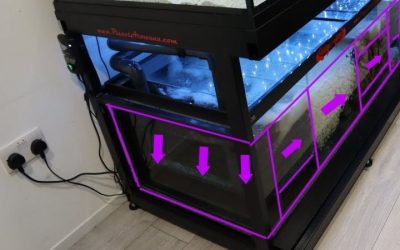
An all-in-one hides filtration in rear chambers fed by a return pump, and the design decides how well it handles waste and circulation. The return pump’s rated flow is filtration flow, not the total reef circulation corals need, so look at whether the chambers hold enough media and whether extra flow can be added.
Consider chamber size, media access and whether a heater or small skimmer fits, since these shape upkeep. A cramped or awkward filtration section makes routine care harder. Looking at the flow and filtration design, not just the pump’s number, reveals how livable the tank will be day to day.
Build Quality and Access
Build quality and access are easy to overlook yet decide how the tank ages and how pleasant it is to maintain. Clean silicone work, clear glass or acrylic, and a stable, level base all matter over years of use. What to look for is a tank built to last with rear sections you can actually reach for cleaning and equipment.
Serviceability is part of build quality, since a tank you cannot easily access becomes a chore. Consider how the lid, chambers and pump come apart for maintenance. A well-built, accessible tank rewards you every week, while a poorly finished or cramped one frustrates long after the specs are forgotten.
What to Look For in Practice
On the shelf these features hide behind spec sheets and marketing, but a few checks reveal them. The table maps each factor to a sensible norm, the warning sign and what to do, so you can inspect a tank’s real display volume, light, flow and build before buying rather than discovering the gaps afterward.
| Factor | Normal Range | Watch-out Threshold | What to Do |
|---|---|---|---|
| Volume | Display volume stated clearly | Only a system total given | Confirm the display figure |
| Light | PAR suited to your corals | Judged by watts or Kelvin | Check PAR at the coral’s depth |
| Flow and filtration | Room for media and added flow | Return pump treated as total flow | Plan a powerhead for corals |
| Build and access | Clean build, easy access | Cramped or poorly finished | Inspect serviceability first |
Checking Volume for Your Stock
In practice, look past the headline gallons to the display volume, since that governs how much you can stock. A tank advertised near twenty gallons total may offer noticeably less swimming space once the chambers are counted. Confirming the display figure keeps stocking realistic and prevents the crowding that destabilizes a small tank.
If a listing gives only a system total, treat that as a warning sign and seek the display figure before buying. Use the total to gauge stability and the display to gauge capacity. Checking both for what they are is the practical way to judge a tank’s real volume.
Judging the Light by PAR
To judge the light, look for its PAR at the depth your corals will sit, not its wattage or color temperature. A fixture described only by watts and Kelvin gives no reliable coral guidance, so treat that as a gap to fill with real PAR data. Matching the light’s output to your coral goal is what matters.
If only wattage is stated, check independent PAR figures or plan an upgrade rather than assuming adequacy. For fish or softies a modest light is fine, while demanding corals need more. Judging the light by PAR against your plan keeps coral ambitions grounded in what the fixture truly delivers.
Assessing Flow and Filtration
Assess the filtration by chamber size, media access and whether extra flow can be added, not by the return pump’s number alone. The return handles filtration, so corals usually need a powerhead for real circulation. Looking at how easily media and equipment fit reveals how the tank will run in practice.
If the design treats the return pump as total flow, plan a sized powerhead for corals from the start. Check that the chambers hold enough media and that you can reach them. Assessing flow and filtration by the design, not one figure, shows how livable the tank will be.
Inspecting Build and Serviceability
Inspect the build for clean silicone, clear glass or acrylic and a stable base, since these decide how the tank ages. Then check serviceability, how the lid, chambers and pump come apart for cleaning, because access shapes every future maintenance session. A well-built, accessible tank is a pleasure to keep for years.
If a tank is cramped or poorly finished, treat that as a warning sign regardless of its specs. Handling the tank or reading detailed reviews reveals build quality the spec sheet omits. Prioritizing build and access ensures the tank remains livable long after the numbers are forgotten.
Frequently Asked Questions
Buyers ask which feature matters most, how to judge the light, whether build quality counts, and what is commonly overlooked. Each answer gives the practical rule first, then the detail that adjusts it for your goal and tank. Weigh the features together against the tank you actually want.
What is the most important feature?
It depends on the goal, but the display volume and the light are usually decisive, since they set capacity and coral potential. Volume governs stocking and stability, while the light determines what corals are possible. For a reef, the light often matters most; for fish, stability from volume leads.
Build quality and flow follow closely, since they shape upkeep and coral health. No single feature works alone, so weigh them together against your plan. Prioritizing the feature that addresses your biggest need keeps the choice focused on what the tank must actually do.
How do I judge the light?
By its PAR at the depth your corals sit, not by watts, lumens or Kelvin, which describe the fixture rather than the usable light corals absorb. A bright-looking light can still fall short for corals at depth. Look for real PAR data suited to the corals you intend to keep.
For fish or hardy softies a modest light suffices, while LPS and SPS need more, so adequacy depends on your goal. If only wattage is given, seek PAR figures or plan an upgrade. Judging the light by real output against your plan is the reliable approach. Match the fixture’s real output to the corals, not to its wattage.
Does build quality matter?
Yes, because it decides how the tank ages and how pleasant it is to maintain over years. Clean silicone, clear glass or acrylic and a stable base all affect longevity, while access shapes every cleaning session. A well-built, serviceable tank rewards you long after the specs are forgotten.
A cramped or poorly finished tank frustrates regardless of its numbers, so treat build as a real feature, not an afterthought. Handling the tank or reading detailed reviews reveals what the spec sheet omits. Weighing build quality protects the daily experience of keeping the tank.
What is often overlooked?
The gap between system and display volume, the light’s real PAR, and serviceability are the most overlooked. Buyers focus on headline gallons and wattage while missing the figures that actually govern stocking and corals. Access for maintenance is likewise ignored until it becomes a weekly frustration.
Looking specifically for the display volume, PAR at depth and how the tank comes apart for cleaning covers these blind spots. A short checklist of the overlooked features prevents most regrets. Attending to what marketing glosses over is what separates a good choice from a disappointing one.
Final Thoughts
In judging what to look for in an all in one saltwater tank, weigh the features that decide success: the real display volume, a light judged by PAR, a sound flow and filtration design, and solid build with easy access. Read past the headline numbers to these, and the tank you choose will serve for years.
Best Adjustable Powerhead for Nano Reef: Top Top Picks
Best All in One Reef Tank Kit With Skimmer: Top Picks