Last Updated: October 9, 2026
- Top Pick: Orlushy Submersible Aquarium Heater,500W Fish Tahk Heater with Adjust Knob Thermostat 2 Suction Cups and Free Thermometer Suitable for Marine Saltwater and Freshwater (500W)
- Best Value: HiTauing Aquarium Heater, 300W Fish Tank Heater with LED Digital Display & 5 Safety Protection, Submersible Aquarium Heater with 2 Suction Cup and 8.2Ft Cord for 40-75 Gallon Fish Tank.
- Premium Choice: HiTauing Aquarium Heater, 50W/100W/200W/300W/500W Submersible Fish Tank Heater with Over-Temperature Protection and Automatic Power-Off When Leaving Water for Saltwater and Freshwater
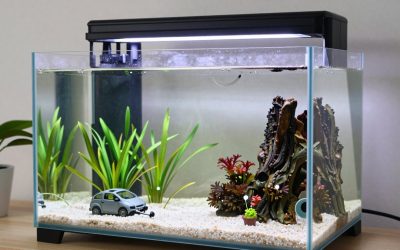
Choosing the right heater for a 55-gallon aquarium is less about finding the largest wattage and more about matching heat output to the room, tank location, and temperature you want to maintain. A 55-gallon tank holds enough water to change temperature slowly, but a poorly sized heater can still create cold spots, overheat the aquarium, or run constantly.
The Short Answer
For most indoor 55-gallon aquariums, choose an adjustable 300-watt aquarium heater. This is the best all-around size for a typical room kept between 68°F and 75°F, especially when the aquarium is covered and away from drafts.
As an Amazon Associate we earn from qualifying purchases at no extra cost to you.
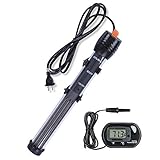


A practical sizing range is about 2.5 to 5 watts per gallon. For 55 gallons, that equals approximately 140 to 275 watts. Since heaters are usually sold in standard sizes, a 200-watt model may work in a warm room, while a 300-watt model provides a more comfortable margin in an average home.
- Warm room, small temperature increase: 200 watts
- Average room and tropical fish: 300 watts
- Cold room, basement, or large temperature increase: two 200-watt heaters or one 500-watt model, depending on the heater manufacturer’s tank rating
For many aquariums, two smaller heaters are preferable to one very large heater. Two 150-watt or two 200-watt units can distribute heat more evenly and provide limited backup if one heater fails. Always use an independent aquarium thermometer, even if the heater has a digital display.
Standard Sizes
The table below compares common aquarium heater choices for a 55-gallon tank. Physical dimensions are typical product sizes, not universal standards; the exact length and diameter vary by brand and design. Check the product specifications before buying, particularly if the heater must fit inside a narrow compartment.
| Heater size | Typical tank rating | Typical heater dimensions | Best use on a 55-gallon tank |
|---|---|---|---|
| 200 watts | 40–60 gallons | Approximately 12–13 in. long × 1.3–1.6 in. diameter (30.5–33 cm × 3.3–4.1 cm) |
Warm room, insulated room, or a modest temperature increase |
| 250 watts | 50–75 gallons | Approximately 13–14 in. long × 1.4–1.7 in. diameter (33–35.6 cm × 3.6–4.3 cm) |
Good middle ground when available |
| 300 watts | 40–75 gallons | Approximately 14–16 in. long × 1.4–1.8 in. diameter (35.6–40.6 cm × 3.6–4.6 cm) |
Best general choice for most 55-gallon aquariums |
| 400 watts | 75–100 gallons | Approximately 15–17 in. long × 1.5–2 in. diameter (38.1–43.2 cm × 3.8–5.1 cm) |
Usually unnecessary unless the manufacturer specifically approves it |
| 500 watts | 75–120 gallons, depending on design | Approximately 16–18 in. long × 1.5–2 in. diameter (40.6–45.7 cm × 3.8–5.1 cm) |
Very cold rooms or specialized setups; use cautiously on 55 gallons |
A standard 55-gallon aquarium is commonly about 48.25 inches long × 12.75 inches wide × 21 inches high, or approximately 122.6 × 32.4 × 53.3 centimeters. It does not contain a full 55 gallons after gravel, décor, equipment, and a partial fill are added. The actual water volume may be closer to 45–50 gallons, but heater sizing is normally based on the aquarium’s stated capacity and the manufacturer’s rating.
For reference, one U.S. gallon of water weighs about 8.34 pounds. Fifty-five gallons weighs roughly 459 pounds, before adding the glass tank, stand, gravel, rocks, filter, and décor. A complete setup can easily exceed 600 pounds, so place it on a properly rated stand away from exterior doors, windows, and heating or cooling vents.
How to Measure Your Space
- Measure the usable water depth. A submersible heater must remain below the minimum water line marked on its housing. Measure from the planned waterline to the substrate, not just the tank’s outside height.
- Measure the open length. A typical 300-watt heater can be 14–16 inches long. Leave room for suction cups, the power cord, and safe circulation around the unit.
- Check the tank width. A standard 55-gallon tank is only about 12.75 inches wide. Avoid placing a long heater diagonally if it could touch the glass, gravel, or lid.
- Choose a water-flow location. Install the heater near a filter return or circulation pump so warmed water moves through the aquarium. Do not bury it under gravel or wedge it against décor.
- Confirm the electrical reach. Measure the distance to the outlet and allow a drip loop below the outlet. The example heaters listed for this size range commonly have cords around 6–8 feet, but cord length varies.
- Verify the heater’s gallon rating. Wattage alone is not enough. A 300-watt unit rated for 40–75 gallons is a more suitable purchase than a 300-watt unit intended only for very large tanks.
By Room or Use Case
Average living room
Use a 300-watt adjustable heater for a tropical 55-gallon aquarium in a room that stays around 68°F to 75°F. Set the heater according to the fish’s requirements, commonly around 75°F to 80°F, and confirm the result with a separate thermometer. Current budget options in this category generally range from about $10 to $40. A basic PULACO 300-watt model may be near the lower end, while a 300-watt heater with a digital display and added safety features may cost closer to $30–$40.
Warm room or fish that need only a small increase
A 200-watt heater may be adequate when the room remains consistently warm and the aquarium needs only a few degrees of heating. This option can use less power during operation, but it may run for longer periods. Avoid choosing a smaller heater solely to save money if the room temperature changes significantly at night.
Cold basement or drafty room
If the room can fall below 65°F, a single 300-watt heater may work continuously and struggle to maintain the target temperature. Consider two 200-watt heaters placed at opposite ends of the tank. This arrangement spreads heat more evenly and gives each heater less work to do. A 500-watt heater is another option, but it must be specifically rated for the aquarium and monitored closely.
Saltwater aquarium
Saltwater is compatible with many submersible heaters, but corrosion resistance and reliable temperature control matter. Look for a model explicitly rated for marine use, use a guard if available, and keep the heater away from direct contact with rock or sand. Example 500-watt and adjustable 300-watt models marketed for fresh and saltwater commonly range from about $20 to $40.
Heater with a digital display
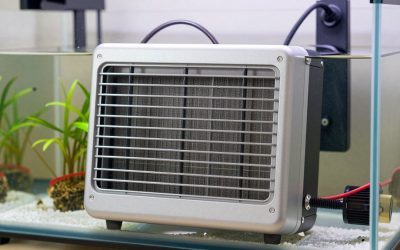
A built-in LED display makes setting and checking the heater easier, but it is not a substitute for an independent thermometer. Digital-display 300-watt heaters for approximately 40–75 gallons often cost around $30 to $40. Place a separate thermometer on the opposite side of the aquarium to check whether heat is circulating evenly.
Common Sizing Mistakes
- Buying by wattage alone: A heater’s gallon rating, dimensions, safety features, and thermostat quality all matter.
- Oversizing dramatically: A 500-watt heater on a 55-gallon tank can raise the temperature too quickly if its thermostat sticks on. More power is not automatically safer.
- Ignoring room temperature: The same 200-watt heater may work well in a heated living room but struggle in an unheated basement.
- Installing it without circulation: Heat must move through the tank. Place the unit near filter flow, while keeping it clear of décor and substrate.
- Removing the heater while it is hot: Unplug it and wait at least 15–30 minutes before taking it out or exposing it to air. Sudden temperature changes can damage the heater.
- Trusting the dial blindly: Heater markings are guides. Check the actual water temperature with a reliable thermometer and adjust gradually.
FAQ
Is 300 watts too much for a 55-gallon aquarium?
No. A 300-watt adjustable heater is a common choice for a 55-gallon tank when the model is rated for that volume. It is generally more appropriate than a 500-watt unit in an average room. Use a thermometer and choose a heater with automatic shutoff and over-temperature protection.
Can I use a 500-watt heater in a 55-gallon tank?
You can, but it is usually more power than necessary. Use one only when the manufacturer’s rating permits it and the room is unusually cold. Two smaller heaters are often easier to control and distribute more evenly. A 500-watt model may cost roughly $20–$35, but price should not determine the wattage.
Should I use two heaters instead of one?
Two heaters can be a smart choice for a cold room, valuable fish, or extra temperature stability. Two 150-watt or 200-watt heaters are typical combinations. Set them to the same temperature, place them in areas with good circulation, and connect them to a suitable aquarium-safe temperature controller if desired.
What temperature should a 55-gallon aquarium be?
It depends on the inhabitants. Many tropical freshwater fish do well around 75°F to 80°F, while some species require cooler or warmer water. Research the needs of the fish rather than choosing a temperature based only on tank size. The heater should maintain a stable temperature, not compensate for an unsuitable stocking plan.
Ready to decide? Our #1 pick for 2026 is the 200 watts.
Live price & availability on Amazon.
Related Reviews & Guides

Aquarium Sponge Filter Pros and Cons: An Honest Answer (2026)
Swordtail Fish Care: Space, Water and Population Control