Last Updated: September 10, 2026
Refugium setup for beginners works on three numbers: a chamber at 10-20% of display volume, macroalgae lit for 8-16 hours on a reverse cycle, and a harvest every two to four weeks. Without that last one, nothing is actually exported from the system at all, and the chamber becomes decorative rather than functional.
As an Amazon Associate we earn from qualifying purchases.
By David Nguyen
Why a Refugium Only Exports When You Harvest
A refugium setup for beginners is often described as a filter, which is misleading. It is a growth chamber: macroalgae takes up nitrogen and phosphorus as it grows, and those nutrients only leave the system when you physically remove the algae.
The Decision Numbers: Volume, Light, Flow and Harvest Interval
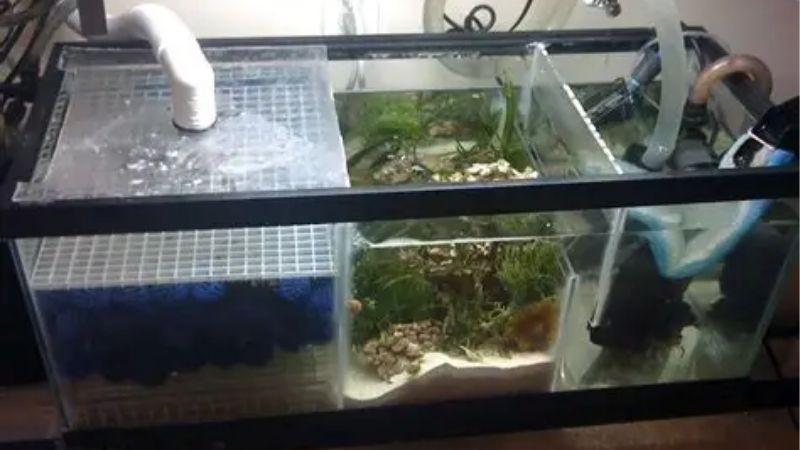
Size the chamber at 10-20% of display volume where the sump allows. A 75 gallon (284 L) display therefore wants 8-15 gallons (30-57 L) of refugium, which is enough macroalgae mass to matter rather than to look decorative in the cabinet.
Light chaetomorpha at roughly 20-50 µmol for 8-16 hours daily, run opposite to the display cycle. Flow through the chamber should be gentle at 2-5 times refugium volume per hour, enough to tumble the algae slowly without pinning it against a baffle.
Harvest is the number that turns the chamber into a genuine export system. Remove roughly half the algae mass every two to four weeks, and weigh or photograph what you take out, because that growth rate tells you how much nutrient the tank is actually producing.
Why the Reverse Light Cycle Matters
Photosynthesis consumes carbon dioxide and raises pH; respiration at night releases it and lowers pH. A display running lights for ten hours therefore sees pH drift down overnight, and in a small system that swing can exceed 0.2 in a day.
Running the refugium light opposite the display evens that out. Algae photosynthesising while the display is dark holds pH up through the night, which is a genuine stability benefit independent of any nutrient export the chamber provides.
Target Figures and Action Thresholds
The table below gives the working numbers alongside the point where each needs attention. Most are set once at build time, with harvest interval as the one figure that responds continuously to how the tank is running.
| Measurement | Target | Action threshold | First action |
|---|---|---|---|
| Refugium volume | 10-20% of display | Under 5% | Accept limited export, use a skimmer |
| Light intensity | 20-50 µmol at the algae | Algae pale or not growing | Raise intensity or shorten distance |
| Photoperiod | 8-16 hours, reverse cycle | Same cycle as display | Move the timer to overnight |
| Flow through chamber | 2-5x refugium volume per hour | Algae pinned against a baffle | Reduce flow or reposition the inlet |
| Harvest interval | Every 2-4 weeks | Chamber full, no harvest done | Remove half the mass immediately |
| Display nitrate | 1-10 ppm | Falling toward zero | Shorten the refugium photoperiod |
| Display phosphate | 0.03-0.10 ppm | Falling toward zero | Shorten photoperiod, feed normally |
| pH swing overnight | Under 0.2 | Over 0.3 | Extend refugium hours into the dark period |
Note the two rows where nutrients falling is the problem. A refugium can over-export in a lightly stocked reef, and corals stripped of nitrogen and phosphorus pale and stop growing, which is a different failure from having too much of either.
Building It in a Real Sump
A refugium setup for beginners has to fit an existing cabinet, which usually means working with whatever chamber the sump already provides. This section covers placement, sizing across displays, and what actually goes into the chamber.
Tank Size, Placement and Fit
Measure the chamber width and the clearance above it before ordering a light, since most refugium fixtures need 4-8 in (10-20 cm) of height to mount and the cabinet door has to close afterwards with the light in place.
Position the refugium after the skimmer in the flow path rather than before it. A skimmer upstream removes dissolved organics the algae could have used, but placing the refugium first means the skimmer strips whatever the algae has just released.
Light spill is the practical nuisance. A refugium running overnight in a living room lights the cabinet interior brightly, so line the chamber with an opaque cover or accept a visible glow through the cabinet doors every night.
How 40, 75 and 125 Gallon Displays Differ
Under 40 gallons (151 L) a refugium rarely fits a sump usefully, and frequent water changes export more than a small chamber will. At that size the space is generally better used for a skimmer or simply left as extra water volume.
At 75 gallons (284 L) a chamber of 8-15 gallons (30-57 L) starts to matter, and at 125 gallons (473 L) the refugium can carry a meaningful share of nutrient export while still leaving sump space for other equipment.
What Goes in the Chamber
Chaetomorpha is the standard choice because it grows as a loose ball rather than attaching, tolerates a wide parameter range and harvests by simply lifting half of it out. It also shelters copepods and amphipods that feed the display above.
Add a handful of live rock rubble beneath the algae to give those copepods somewhere to breed. Rubble also holds detritus, so plan to lift it and siphon underneath at each harvest rather than leaving it undisturbed for a year.
Avoid caulerpa species in most cases. They grow faster but can go sexual, releasing stored nutrients and spores into the system in a single event, which undoes months of export and clouds the water for days.
Myths About Refugiums
Three claims cause most of the disappointment with a refugium setup for beginners, and each one has a measurement that replaces it as soon as the chamber has been running for a couple of months rather than weeks.
Myth: A Refugium Removes Nitrate On Its Own
The algae takes up nitrogen and phosphorus while growing, and it holds them in its tissue rather than destroying them. Left in the chamber, that nutrient returns to the water as the algae dies back, which is a cycle rather than an export.
The replacement measure is harvest weight. Remove half the mass every two to four weeks and track how quickly it regrows, since that rate is a direct reading of how much nutrient the system is producing week to week.
Myth: A Refugium Replaces a Skimmer
The two do different jobs. A skimmer removes dissolved organics before they break down into nitrate and phosphate; a refugium removes nitrate and phosphate after they have formed. Most established reefs benefit from having both rather than choosing.
Where only one is possible, size decides it. Below about 55 gallons (208 L) a skimmer plus water changes is usually the more effective pairing, and above that a refugium starts contributing enough to justify the sump space it occupies.
Myth: More Light Means Faster Export
Chaetomorpha saturates well below the intensity a coral light produces, so aiming a reef fixture at a refugium wastes electricity and grows nuisance algae on the chamber walls rather than accelerating the macroalgae itself.
Twenty to fifty micromoles for 8-16 hours is sufficient, and a modest dedicated fixture does the job. If growth is slow at that level, the limiting factor is usually nutrient availability or flow rather than light intensity.
Iron is the other common limit in a mature refugium. Chaetomorpha stalling in a tank with measurable nitrate and phosphate is often short of trace elements, which regular water changes normally supply without any separate dosing.
Running It Past the First Year
A refugium setup for beginners is low maintenance once established, which is precisely why the harvest schedule slips. This section covers the routine that keeps it exporting, what degrades, and what the chamber costs to run across twelve months.
The Routine That Keeps It Exporting
Every two to four weeks: lift out roughly half the algae mass, rinse it in tank water to release trapped detritus and copepods back into the sump, and discard the rest. Record the date so the interval does not quietly stretch.
Monthly: clear detritus from the chamber floor, check that flow has not been blocked by algae growth against a baffle, and confirm the reverse-cycle timer is still running the hours you originally set it to.
Watch for the algae mass pinning itself against the outlet, which reduces flow through the chamber and creates a stagnant pocket behind it. Turning the ball over at each harvest is usually enough to prevent that happening at all.
What Goes Wrong Over Time
Detritus accumulates under the algae ball and can build for months unnoticed, releasing nutrient back into the system. Lifting the mass out at each harvest and siphoning underneath it prevents that entirely, and takes an extra minute.
Lights degrade as they do everywhere, losing measurable output across two to three years. Slowing growth with unchanged nutrient levels is usually the fixture rather than the algae, so check output before changing anything else.
The 12-Month Running Cost
Recurring spend is small: replacement lighting eventually, and the electricity for a fixture running 8-16 hours daily. The chamber itself has no consumables, which makes a refugium one of the cheaper long-term additions to a sump.
On timing, refugium lights and sump components see their deepest discounts in late June and again in late November, which suits a planned addition. A sale changes nothing biological, since algae still takes weeks to establish, and prices move constantly.
Refugium Setup for Beginners: Questions
These arrive once the sump has a free chamber but before anything is bought. Every answer about a refugium setup for beginners points at a measurement, since the chamber is easy to build and easy to run without exporting anything.
How big does a refugium need to be?
Ten to twenty per cent of display volume to contribute meaningfully. Smaller chambers still shelter copepods and help pH stability, but their nutrient export is limited enough that a skimmer and water changes carry most of the load.
Do I need a special light?
A modest dedicated fixture delivering 20-50 µmol is enough. Reef lighting is far stronger than chaetomorpha needs, and using one over a refugium mostly grows nuisance algae on the glass while adding heat and power draw.
How often should I harvest?
Every two to four weeks, removing about half the mass. Slower growth than that usually means nutrients are already low, which is worth confirming with a nitrate and phosphate test before adjusting the lighting schedule.
Can a refugium lower nutrients too far?
Yes, in a lightly stocked reef. Nitrate falling toward zero or phosphate below 0.03 ppm shows as pale, slow-growing coral. Shorten the photoperiod rather than feeding more heavily, since the light schedule is the easier variable to control.
Will copepods actually reach the display?
Some will, carried through the return pump. Survival through an impeller is partial, so a refugium supports a population rather than stocking the display outright, which still helps fish that graze on microfauna between feeds.
See More:
Conclusion
A working refugium setup for beginners means a chamber at 10-20% of display volume, chaetomorpha lit at 20-50 µmol for 8-16 hours on a reverse cycle, gentle flow at 2-5 times chamber volume, and a harvest every two to four weeks.
Treat the harvest as the whole point rather than as tidying. Algae left in the chamber releases its nutrients back into the system, so the mass you physically remove is the only nutrient that has actually left the tank.

Best Laptops for Insurance Agents: Work & Travel
Best Mod Manager for Sims 4: Setup and Comparison