Last Updated: September 25, 2026
Java fern care guide advice comes down to one rule almost everyone breaks at least once: the rhizome must never be buried. Everything else about Microsorum pteropus is forgiving, which is why it survives in tanks that kill far more demanding plants, provided it is attached to hardscape rather than planted into the bed.
As an Amazon Associate we earn from qualifying purchases.
As an Amazon Associate we earn from qualifying purchases at no extra cost to you. Prices and availability are accurate as of the date shown and are subject to change.

Java Fern Microsorum Pteropus Easy Low Light Live Aquarium Plant - Buy 2 Get 1
Selected for "Java Fern Care Guide: How It Grows and What to Watch For": this listing is lighting (Java Fern Microsorum Pteropus Easy Low Light Live Aquarium Plant - Buy), matching the equipment this article covers.
View on Amazon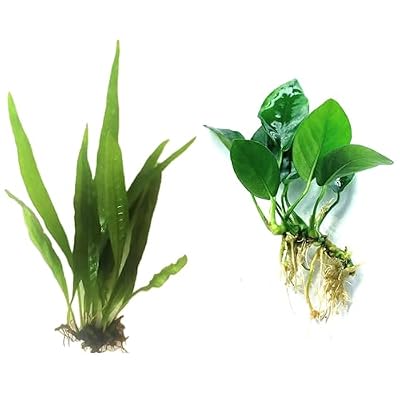
Java Fern and Anubias Aquarium Plant Bundle - Live Freshwater Plants for Aquascaping, Low Maintenance, Easy Beginner Friendly Decor for Fish Tank
Selected for "Java Fern Care Guide: How It Grows and What to Watch For": this listing is tanks (Java Fern and Anubias Aquarium Plant Bundle - Live Freshwater Plants f), matching the equipment this article covers.
View on Amazon
Marcus Fish Tanks - 3X Java Fern Microsorum Pteropus Easy Live Aquarium Plants Aquatic Fish Tank Plants
Selected for "Java Fern Care Guide: How It Grows and What to Watch For": this listing is tanks (Marcus Fish Tanks - 3X Java Fern Microsorum Pteropus Easy Live Aquariu), matching the equipment this article covers.
View on Amazon
Marcus Fish Tanks 3X Java Fern Windelov Microsorum pteropus Lace Java Fern Live Aquarium Plant Planted Tank Beginner
Selected for "Java Fern Care Guide: How It Grows and What to Watch For": this listing is tanks (Marcus Fish Tanks 3X Java Fern Windelov Microsorum pteropus Lace Java ), matching the equipment this article covers.
View on AmazonBy David Nguyen
Quick answer: Our top pick in 2026 is the Small brown bumps under leaves — our #1 rated choice. See the full ranked comparison, alternatives and buying advice below.
Rhizome, Light and What Java Fern Actually Needs
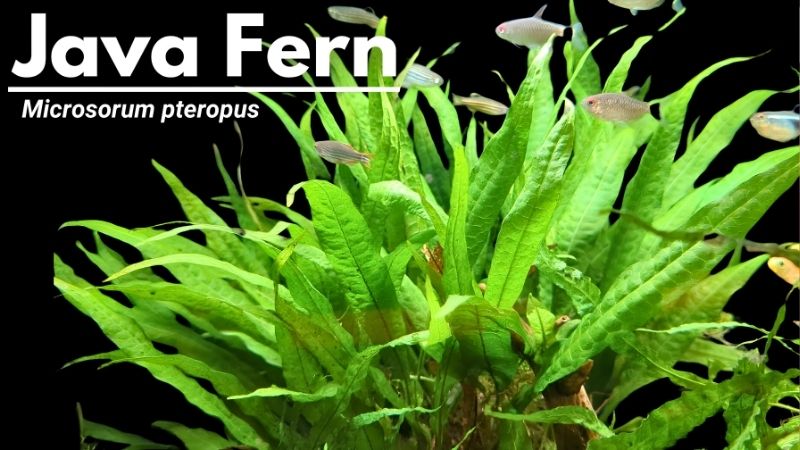
This java fern care guide starts with the plant’s structure, because the structure explains the rule. Java fern is an epiphyte: in the wild it grows attached to wood and rock along stream margins, taking nutrients from the water rather than from soil beneath it. That fact drives every rule below.
The Deciding Numbers: Tank Minimum, Temperature, Light and Growth Rate
Java fern tolerates 68-82 F (20-28 C), pH 6.0-7.5 and GH 3-15 dGH (54-268 ppm), which covers almost every tap water supply in use. It needs no CO2 injection and grows perfectly well at 15-30 micromoles of PAR, the range most basic LED fixtures deliver. No specialist equipment is required.
Growth rate is the number people underestimate. A healthy plant produces roughly one new leaf a month, so a specimen that looks unchanged after three weeks is behaving normally rather than failing. Mature leaves reach 8-13 in (20-33 cm) depending on the variety you have. Plan the layout around that height.
Tank minimum is 5 gallons (19 L) for a single small plant, though a standard variety fills the back of a 10-gallon (38 L) tank within a year. Narrow leaf and needle leaf forms stay considerably smaller, which makes them the sensible choice for nano layouts. Match the variety to the footprint.
Rhizome, Roots and Why Burial Kills It
The rhizome is the thick green horizontal stem the leaves and roots grow from, and it must stay in open water. Buried in substrate it rots from the inside within roughly 10-14 days, blackening outward, and no amount of correct dosing or lighting reverses that process. The rule is absolute, not a preference.
The roots are anchors rather than feeding organs, which is why they look dark, wiry and sparse compared with a sword plant’s. Tie the rhizome to wood or rock with cotton thread or fishing line, and within four to six weeks the roots grip firmly enough to remove it. Cotton thread rots away on its own.
Normal Appearance Versus Action Thresholds
Java fern looks alarming while doing entirely normal things, which is why so many healthy plants get thrown out. The table below separates the appearances that need no action from the ones that do, using what you can see alongside a reading from a liquid test kit. Most rows need no action at all.
| What you see | Reading alongside it | What it means | What to do |
|---|---|---|---|
| Small brown bumps under leaves | All parameters normal | Plantlets forming, normal reproduction | Leave until they grow roots and leaves |
| Older leaves brown at the edges | Nitrate under 5 ppm | Nitrogen shortage | Dose macros, retest in a week |
| New leaves pale, veins green | No micro dosing | Iron shortage | Dose a comprehensive micro mix |
| Rhizome blackening and soft | Parameters normal | Rhizome buried or damaged | Lift, cut to firm green, retie |
| Widespread transparent patches | Light 9 h or more | Too much light for a low-light plant | Reduce photoperiod to 6-7 hours |
| Whole plant melts after purchase | Parameters normal | Emersed growth converting | Trim dead leaves, keep the rhizome |
Java Fern in Real Tanks
The practical half of any java fern care guide is placement, because a plant that grows on hardscape competes for space differently than one rooted in the bed. Where you attach it decides how much light it receives and how the layout looks a year later. Attachment point is a design decision.
Tank Size, Placement and Fit
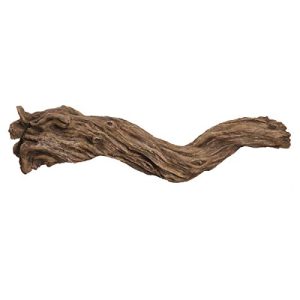
Java fern belongs in the mid-ground or background, attached to wood or rock and lit indirectly. It handles shade well, so the shadowed side of a piece of driftwood suits it better than an open position directly under the brightest part of the fixture in most tanks. Shade suits it well.
Leave headroom for the leaves. A standard variety reaching 13 in (33 cm) in a 12 in (30 cm) tall tank ends up growing along the surface, which shades everything beneath it. Measure the real numbers before you order: mature leaf length against your tank’s internal height. Height matters more than footprint here.
What Changes Between 10, 20 and 55 Gallon Tanks
In a 10-gallon (38 L) tank a single standard plant becomes the dominant feature within a year, so narrow leaf and needle leaf varieties suit that footprint better. They stay near 6-8 in (15-20 cm) and leave room for other plants and open swimming space. Small varieties suit small tanks.
In a 55-gallon (208 L) tank java fern works as a mass planting across several pieces of hardscape. Growth is slow enough that filling a background takes 18-24 months, which is worth knowing before buying one plant and expecting a wall of green by the following season. Buy several if you want mass.
Tankmates, Bioload and Fish That Leave It Alone
Java fern is one of the few plants goldfish generally ignore, because the leaves are tough and unpalatable. That makes it a genuine option in goldfish and larger cichlid tanks, where softer plants are eaten or uprooted within days of going into the water. Few other plants survive those tanks.
It also tolerates the higher nitrate those tanks run, up to and beyond 40 ppm, though that level is a problem for the fish rather than the plant. In shrimp tanks it doubles as grazing surface, and the leaves collect biofilm that shrimplets feed on. That surface matters in a breeding tank.
Myths and Mistakes Worth Clearing Up
Three misunderstandings account for most of the plants thrown away, and this section of the java fern care guide replaces each with something you can check. All three come from the plant behaving differently to the rooted stems most people buy alongside it. Judge it by its own standards.
Myth: Brown Bumps Mean the Plant Is Diseased
Those bumps are plantlets, the plant’s normal method of reproduction. Small dark growths appear on the underside and edges of mature leaves, develop their own leaves and roots over several weeks, then detach and drift until they lodge somewhere they can attach themselves. This is reproduction, not decay.
Leave them until each plantlet has two or three leaves and visible roots, then remove and tie it wherever you want it. Detaching them earlier usually fails, because a plantlet without roots has nothing to anchor with and simply circulates around the tank. Wait for visible roots first.
Myth: Java Fern Needs Root Tabs
Root tabs do nothing for a plant with no roots in the substrate. Java fern takes everything it needs from the water column, so a comprehensive liquid fertiliser at half the label rate weekly covers it, targeting roughly 10-25 ppm nitrate and 0.1-0.5 ppm iron. Tabs are wasted money here.
In a stocked tank fish waste supplies much of the nitrogen, which is why java fern often thrives with no dosing at all. What it still lacks is potassium and iron, and that shortage shows as pinholes in older leaves and pale new growth over several months. A weekly liquid covers both.
Myth: More Light Grows It Faster
Java fern is a low-light plant, and pushing PAR above 50 micromoles produces algae on the leaves rather than faster growth. Because the leaves are long-lived, algae that establishes on them stays for months, which is a considerably worse outcome than slow growth. Long-lived leaves keep their algae.
Transparent patches spreading through leaves in a brightly lit tank are usually a light and nutrient mismatch rather than disease. Reduce the photoperiod to 6-7 hours, keep dosing steady, and trim the worst-affected leaves at the rhizome rather than pulling the whole plant. The rhizome carries the recovery.
Long-Term Care, Propagation and Twelve-Month Costs
Java fern is a decade-scale plant in a stable tank, so the last part of this java fern care guide covers what changes over years rather than weeks. Attachment materials degrade, lighting fades, and the plant itself slowly outgrows the position you chose for it. Plan an annual check.
Routine Trimming and Propagation
Trim damaged leaves at the rhizome with clean scissors rather than tearing them, and remove any leaf more than half covered in algae. A plant carrying six to ten healthy leaves is in good shape; older leaves are shed naturally as newer ones take over the work. Leaf turnover is entirely normal.
Propagation needs no intervention beyond patience. Detach rooted plantlets, tie them to new hardscape, and expect a full-sized plant in 12-18 months. Dividing the rhizome works too, provided each section keeps three or four leaves and its own roots attached to it. Smaller divisions stall for months.
What Degrades Over Time
Cotton thread rots away within a month or two, which is intended, but fishing line stays and can cut into a thickening rhizome after a year if it was tied tightly. Check old attachments annually and cut away any line that has started to bite into plant tissue. One check a year is enough.
Equipment ages alongside the plant. LED fixtures lose measurable output over several years, so a tank that once suited java fern at 25 micromoles may drift lower, and ageing heaters commonly wander 2-4 F (1-2 C), which matters more for the fish than for the fern. Java fern tolerates that drift.
Twelve-Month Running Cost and Sourcing
Running costs are minimal: a comprehensive liquid fertiliser lasting most of a year, thread or plant-safe glue gel, and nothing else. Prices move constantly, so check them at the moment of purchase rather than budgeting from figures quoted months earlier. This java fern care guide avoids fixed prices for that reason.
One point on sourcing and disposal: rules on selling, transporting and discarding aquatic plants vary by state and country and change over time, so check your local authority before buying or disposing of anything. Never release plants or trimmings into natural waterways. Bag trimmings and bin them.
Frequently Asked Questions
These come up repeatedly from keepers in their first year with the plant, usually when it is doing something that looks like failure but is in fact ordinary behaviour for a slow-growing epiphyte attached to hardscape. Slow growth and odd leaves account for most questions this java fern care guide gets.
How long does java fern take to attach to wood?
Four to six weeks for roots to grip firmly, sometimes longer in cooler tanks near 68 F (20 C). Cotton thread rots away by itself in that time, while fishing line and plant-safe gel both hold indefinitely and should be checked once a year for tightness. Glue gel sets in seconds underwater.
Does this java fern care guide apply to all varieties?
Yes. Narrow leaf, needle leaf, trident and Windelov forms share the same rhizome rule, temperature range and light requirement. They differ mainly in mature size, from around 6 in (15 cm) for needle leaf up to 13 in (33 cm) for the standard variety. Choose by mature size, not price.
Can java fern grow in gravel if I do not bury the rhizome?
It can sit on gravel with the rhizome exposed and roots between the stones, but it will drift until the roots anchor. Wedging it between rocks works as a temporary measure, though tying it to hardscape gives a far more reliable result within the same timeframe. Wedging works only as a stopgap.
Why are my java fern leaves turning brown and transparent?
Check photoperiod and nitrate first. Widespread transparent patches usually follow too much light or a nitrogen shortage under 5 ppm, while brown edges on old leaves alone are normal ageing. Trim affected leaves at the rhizome and correct the underlying reading. New leaves show whether it worked.
Is java fern safe with shrimp?
Yes, and it is one of the better plants for a shrimp tank because the leaves collect biofilm that shrimplets graze. The caution is not the plant but the products: check every fertiliser and treatment for copper, which kills shrimp at very low concentrations. Read every label before dosing.
See More:
Conclusion
The whole java fern care guide reduces to a handful of numbers and one rule: 68-82 F (20-28 C), pH 6.0-7.5, 15-30 micromoles of PAR, no CO2 needed, roughly one leaf a month, and a rhizome that stays tied above the substrate rather than buried in it. Those numbers cover every variety.
Feed it through the water column, give it shade rather than intensity, and let plantlets develop roots before detaching them. Treated that way it outlasts most equipment in the tank, which is why it remains the default recommendation for a first planted aquarium. Few plants ask less in return.
Ready to decide? Our #1 pick for 2026 is the Small brown bumps under leaves.
Live price & availability on Amazon.
Related Reviews & Guides

Best Bearded Dragon Tanks in 2026: Compared and Ranked
How to Prevent Aquarium Algae: The Routine That Holds Up