Last Updated: October 4, 2026
Quick answer: Our top pick in 2026 is the More frequent water changes — our #1 rated choice. See the full ranked comparison, alternatives and buying advice below.
The Short Answer
It depends: a protein skimmer is worth it if you run a saltwater aquarium with a sump and want lower-maintenance nutrient control. For most reef tanks, especially systems over about 40 gallons with fish, corals, or frequent feeding, a skimmer is one of the most useful pieces of equipment you can add. It removes dissolved organic waste before that waste breaks down into ammonia, nitrite, nitrate, and phosphate.
That said, it is not magic. A skimmer does not replace water changes, appropriate stocking levels, mechanical filtration, or good feeding habits. It is also less essential on a lightly stocked nano tank, a fishless coral display, or a carefully maintained aquarium without a sump. In 2026, controllable DC models have made skimmers quieter and easier to tune, but the basic buying decision remains the same: buy one for stability and convenience, not because you expect it to fix an overloaded tank.
As an Amazon Associate we earn from qualifying purchases at no extra cost to you.


What You Actually Get
A protein skimmer mixes aquarium water with a dense cloud of tiny air bubbles inside a reaction chamber. Organic compounds stick to the bubbles and rise into a collection cup as dark, odorous liquid called skimmate. Emptying that cup removes some waste from the system rather than leaving it to decompose in the water.
The practical benefit is more stable water quality between maintenance days. A properly sized skimmer can help reduce dissolved organics, improve water clarity, increase gas exchange, and support more consistent pH and oxygen levels. Those gains matter most overnight, when aquarium oxygen can dip, and in tanks with larger fish or heavy feeding schedules.
For a sump-based reef aquarium, the skimmer usually sits in a dedicated chamber with a steady water depth. Many in-sump models need roughly 7 to 10 inches of water, although the exact recommendation depends on the unit. Before buying, measure the skimmer chamber’s length and width, not just the sump’s total size. A skimmer footprint commonly ranges from about 6 by 8 inches for compact models to 10 by 14 inches or more for larger systems. Also measure cabinet height: you need room to lift off and clean the collection cup, often requiring 18 to 24 inches of vertical clearance.
Budget also matters. Basic compact skimmers often cost about $90 to $160. Midrange DC skimmers commonly fall in the $170 to $300 range, while premium or oversized models can run $400 to $1,000 or more. For perspective, the MagTool N100 Plus is listed for under $200, while the larger MagTool N130 Plus is listed at $229. Their controllable pinwheel pumps are the kind of feature that can make daily tuning easier than on a fixed-output AC model.
Electricity use is usually modest. Smaller skimmers may draw roughly 8 to 15 watts, while medium models often use about 15 to 30 watts. Larger units can use 30 to 60 watts or more. The bigger operating cost is not electricity; it is the time spent emptying the cup, wiping the neck, cleaning the pump, and occasionally replacing worn parts.
Pros
- Removes waste before it fully breaks down. This can reduce the nutrient burden on a saltwater system and make nitrate and phosphate management easier.
- Helps with oxygen exchange. The air-water contact created by the pump and bubble column can support healthier oxygen levels, particularly in stocked reef and fish-only tanks.
- Makes maintenance more forgiving. A skimmer gives you a buffer after heavier feeding, a missed water change, or a temporary increase in livestock waste.
- Can improve water clarity and odor. Removing dissolved organics often produces clearer-looking water and less of the “aquarium” smell around the tank.
- Useful for reef tanks. Corals and invertebrates generally benefit from stable water conditions, and a skimmer is a proven tool for helping maintain them.
- DC models offer useful control. Adjustable pump speed can help reduce overflow during break-in, after dosing additives, or when the water level changes slightly.
- Simple ongoing routine. Once tuned, most owners only need to empty the cup every few days to once a week, depending on the tank’s bioload and the skimmer’s wetness setting.
Cons
- It is another piece of equipment to clean. Expect to rinse the collection cup regularly and clean the pump and air intake every few months. Neglect causes weaker performance and more noise.
- Break-in can be frustrating. New skimmers may overflow or produce inconsistent foam for several days to a few weeks while plastics and water chemistry settle.
- Fit is not universal. Many effective skimmers are designed for sumps. Hang-on-back options exist, but they can be bulkier, noisier, and less discreet.
- Oversizing is not always better. An oversized skimmer may struggle to produce stable foam on a lightly stocked tank because there is not enough dissolved organic material to collect.
- It can remove beneficial compounds too. Skimming may reduce trace organics and planktonic foods that some corals use. This is usually manageable, but very low-nutrient reef systems need careful feeding and testing.
- Noise and microbubbles are possible. A good setup is often quiet, but air intake hiss, pump vibration, and bubbles escaping into the return section can be annoying if the unit is poorly matched or installed.
- It does not solve the underlying problem. If a tank is overcrowded, overfed, or poorly maintained, a skimmer helps but cannot make those issues disappear.
Who Should Buy It
Buy a protein skimmer if you have a saltwater aquarium of roughly 40 gallons or larger, especially if it includes a sump. It is a particularly sensible purchase for mixed reefs, SPS-dominant reefs, fish-only-with-live-rock systems, and tanks with active fish that require regular feeding.
You should also consider one if you travel frequently, prefer a maintenance routine with more margin for error, or have had recurring nitrate, phosphate, water-clarity, or oxygen concerns despite reasonable water changes. A skimmer is not the first item to buy before a heater, return pump, circulation pump, lighting, and reliable test kits, but it is close to essential equipment for many serious reef keepers.
Choose capacity based on your actual bioload rather than the largest gallon rating printed on a box. For example, a skimmer advertised for a 100-gallon system may be a good fit for a heavily stocked 60- to 80-gallon reef, while a lightly stocked 100-gallon tank may need a smaller or lower-output unit. A controllable DC model is useful if your stocking level may change over time.
Who Should Skip It
Skip the skimmer, at least initially, if you have a small, lightly stocked saltwater nano tank and are committed to consistent water changes. On a 10- to 30-gallon system with modest feeding, weekly changes of 10% to 20%, good flow, and mechanical filtration can be simpler and more cost-effective than squeezing in a small skimmer.
You can also skip it if your aquarium has no practical place to install one. A cramped cabinet, unstable sump water level, or lack of clearance above the collection cup can turn a worthwhile purchase into a daily annoyance. Spend money first on an auto top-off system if fluctuating water level is the issue; skimmers perform best in a consistent water depth.
Finally, do not buy a skimmer as an emergency cure for persistently high nutrients. First check feeding quantities, livestock load, expired test reagents, clogged filter media, inadequate water changes, and dead spots in the aquarium. Add a skimmer as part of a sound maintenance plan, not as a substitute for one.
Cheaper Alternatives
| Option | Cost | Trade-off |
|---|---|---|
| More frequent water changes | $10-$40 for salt and water per month, depending on tank size | Low equipment cost, but requires time, mixing space, and consistency. |
| Filter floss or filter socks | $5-$30 to start; ongoing replacement or washing costs | Captures particles, not dissolved organics; must be changed every few days to avoid becoming a nutrient source. |
| Activated carbon | $10-$25 per month for many home aquariums | Helps water clarity and some dissolved contaminants, but does not provide the oxygenation or waste-export role of a skimmer. |
| Refugium with macroalgae | $40-$150 for light, algae, and basic setup | Can reduce nitrate and phosphate, but needs space, lighting, and regular algae harvesting. |
| Smaller hang-on-back skimmer | $80-$160 | Less expensive than many sump models, but may be more visible and can be harder to tune quietly. |
FAQ
Do I need a protein skimmer for a 20-gallon saltwater tank?
Usually not. A lightly stocked 20-gallon tank can often be maintained with controlled feeding, strong circulation, mechanical filtration, and regular 10% to 20% weekly water changes. A compact skimmer may help if the tank is heavily stocked, but it is rarely the best first upgrade.
How often should I empty a protein skimmer cup?
Most tanks need the cup emptied every three to seven days. A heavily stocked aquarium or a skimmer adjusted for wetter skimmate may need attention every day or two. Clean the cup neck at least weekly for more consistent foam production.
Should I run my protein skimmer all day?
In most reef and fish-only saltwater aquariums, yes. Running it 24 hours a day provides steady waste removal and gas exchange. You may temporarily switch it off when dosing certain medications, coral foods, bacterial additives, or water treatments if the product instructions recommend it.
Is a DC protein skimmer worth the extra cost?
Often, yes, if the price difference is reasonable. DC pumps let you adjust air and water throughput, which can make tuning easier and may help reduce overflow risk. A fixed-speed skimmer can still work very well, but controllability is valuable for new hobbyists and tanks with changing bioloads.
Ready to decide? Our #1 pick for 2026 is the More frequent water changes.
Live price & availability on Amazon.
Related Reviews & Guides

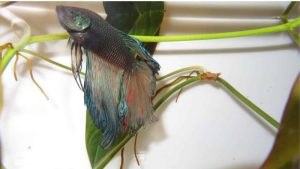
Signs of a Healthy Betta Fish and What to Check Each Week
6 Best Fish Tank Decoration Diys 2026