Last Updated: October 4, 2026
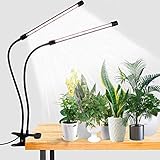
- Top Pick: GooingTop Grow Light,6000K Full Spectrum Indoor Plant Growing Lamp
- Best Value: Grow Lights for Indoor Plants, Upgrade 84 LEDs Clip Plant Lights, Full Spectrum LED Plant Growing Lamps with Flexible Gooseneck, 3/9/12H Timer, 3 Spectral Modes, 10 Dimmable Levels (2 Head 1 Pack)
- Premium Choice: Aokrean Grow Lights for Indoor Plants, Full Spectrum Plant Light with Base
Choosing a plant light is less about finding the brightest bulb and more about matching the light to your plants, shelf, and daily routine. Many shoppers make the same mistakes: they buy by LED count instead of usable brightness, assume “full spectrum” guarantees strong growth, or place a small clip-on lamp too far above a wide plant. Others choose a lamp with a convenient timer but no reliable way to position it.
This guide explains how to choose LED light for plants without overpaying for impressive-looking specifications. The goal is consistent, useful light at the correct distance, for the correct number of hours, with enough coverage for the plants you actually own. Prices and product expectations below reflect the 2026 indoor gardening market, where compact LED fixtures remain widely available from about $15 to $100 or more.
As an Amazon Associate we earn from qualifying purchases at no extra cost to you.


Decide These 3 Things First
- What are you growing? Low-light houseplants such as pothos, snake plants, and ZZ plants need less intensity than herbs, seedlings, succulents, tomatoes, or flowering plants.
- How much area needs coverage? Measure the shelf, grow cabinet, or plant cluster. A lamp designed for one 8-inch pot will not evenly light a 3-foot shelf.
- How will you mount and operate it? Decide whether you need a clip, base, hanging panel, or adhesive-mounted bar. Also consider whether you can run it for 10 to 16 hours daily.
These choices eliminate most unsuitable products before you compare timers, colors, and extra modes.
Size and Coverage
Light coverage is the first decisive factor. Compact clip-on lamps usually work best for one to three small plants within an area roughly 12 to 24 inches wide. Two-head fixtures can cover a broader cluster, but their actual useful area depends on the beam angle and how close the heads can be positioned.
For a single tabletop plant, a lamp with one flexible arm and a 6- to 10-inch light head may be sufficient. For a 24-inch shelf, look for two heads, a bar at least 18 inches long, or a panel mounted above the center. For a 36- to 48-inch shelf, a single inexpensive clip lamp will often create bright spots directly below the LEDs and dimmer areas at the edges.
Height matters as much as width. Start with the fixture 6 to 12 inches above foliage for a small LED lamp, then adjust based on plant response. Seedlings and high-light plants may need closer placement, while sensitive foliage may need more distance. A lamp that cannot be repositioned is harder to use successfully.
Material and Heat Management
Most affordable plant lights use plastic housings, aluminum heat sinks, or a combination of both. Plastic is lightweight and inexpensive, but it should not feel flimsy around the LED board or power connection. Aluminum is useful because it helps move heat away from the diodes and generally signals a more substantial fixture.
For small indoor lamps, look for a head or bar that stays reasonably cool to the touch after extended use. LEDs are more efficient than traditional bulbs, but they still produce heat. Avoid pressing a light directly against leaves, curtains, paper, or wood shelving. Leave at least 2 to 4 inches of clearance around the housing unless the manufacturer specifically allows closer placement.
Check the power cord and adapter as carefully as the lamp body. A cord of 5 to 6 feet is practical for a desk or shelf. Very short cords can force you to use an extension cable, while a heavy adapter dangling from a thin clip may make the fixture unstable.
Construction and Adjustability
Construction determines whether the light remains useful after the novelty wears off. A sturdy clamp should open at least 1.5 inches and grip a shelf, table, or cabinet without sliding. A weighted-base design should have a footprint of roughly 5 by 5 inches or larger for a single-head lamp. Narrow bases are easier to place but more likely to tip when a gooseneck is extended.
Flexible arms are convenient, but they should hold their position without slowly drooping. A gooseneck measuring 12 to 18 inches is common for compact lamps. Longer arms offer more positioning freedom but create more leverage on the clamp or base. If you need to light plants from above, a hanging or bar-style fixture is usually more stable than a fully extended gooseneck.
Look for controls located on the cord or housing, with clearly marked buttons for power, brightness, timer, and spectrum. A 3/9/12-hour timer is convenient, but remember that it normally repeats after the selected period rather than functioning like a full wall-clock schedule. If the lamp loses its settings after a power interruption, you may need to reset it manually.
Performance: Spectrum, Brightness, and Timing
“Full spectrum” is useful marketing shorthand, but it does not tell you how much light reaches the leaves. LED count is also an incomplete measure: 80 low-power diodes may produce less useful light than a smaller number of higher-output LEDs.
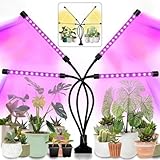
For foliage plants, a white light around 4,000K to 6,500K is generally comfortable to view and suitable for everyday growth. A 5,000K to 6,500K lamp looks daylight-like and makes it easier to judge leaf color. Red and blue modes can support plant growth, but many people find purple light unpleasant in living spaces. A white or mixed mode is usually the most practical choice.
For low-light plants, a modest lamp used for 10 to 12 hours per day may be adequate. Herbs, seedlings, succulents, and flowering plants commonly need stronger light or a closer fixture and may benefit from 12 to 16 hours daily. Give plants a dark period; leaving the lamp on 24 hours can disrupt normal growth.
Use visible plant responses as a guide. Leggy new growth, small leaves, and leaning toward the lamp suggest insufficient intensity or excessive distance. Bleached patches, curled leaves, or crispy margins can indicate too much intensity, heat, or an unrelated watering problem. Do not claim success based only on wattage; placement and schedule are equally important.
Price Tiers
Budget plant lights typically cost about $15 to $30. This range includes compact clip lamps, flexible two-head fixtures, basic full-spectrum lights, and models with simple timers. Examples in this category include the approximately $20 GooingTop 6000K lamp, a roughly $15 two-head, 84-LED timer lamp, and a under-$30 LEOTER fixture with adjustable brightness and multiple modes. These are sensible for one shelf or a few small plants, but do not expect broad, uniform coverage.
Midrange fixtures usually cost $30 to $75. They may offer stronger output, better heat management, longer bars, sturdier clamps, or more dependable controls. This tier is often the best value for a plant shelf because it improves coverage without requiring commercial-style installation.
Premium home fixtures cost about $75 to $200 or more. They are more likely to include rigid aluminum bodies, better mounting hardware, integrated dimming, quieter cooling, replaceable power supplies, or app-based scheduling. Choose this tier when you are lighting a cabinet, growing high-light plants, or want a fixture designed for daily, long-term use rather than occasional supplementation.
Warranty and Reliability
A written warranty of at least 12 months is a reasonable expectation for a powered LED fixture. Some brands offer 18 months to 3 years, especially on larger panels and bars. Confirm what the warranty covers: LEDs, power adapter, timer, and switch failures may be treated differently.
Keep the receipt, packaging, and model number. If the product listing only promises a vague “quality guarantee” without a time period or support contact, treat that as a warning. Also check whether replacement adapters are available. A lamp can become unusable when a proprietary power brick fails, even if the LEDs themselves still work.
Delivery and Assembly
Small clip-on lights usually require little assembly: attach the clamp, screw in the arm or head, and connect the adapter. Allow about 5 to 10 minutes. A base-style model may require attaching a pole or tightening one or two screws, while a shelf bar or panel can take 15 to 30 minutes if mounting brackets are included.
Before ordering, verify the package dimensions and total weight. A fixture weighing 1 to 3 pounds is easy to move between shelves. Larger panels may weigh 4 to 10 pounds and require stronger hooks, anchors, or a dedicated stand. Make sure the included hardware suits your surface; drywall, wire shelving, and solid wood each need different mounting methods.
Delivery damage is more likely with thin LED bars, glass-like diffusers, and long goosenecks. Inspect the housing, cord, and adapter before plugging it in. If a fixture arrives with a bent arm, cracked clamp, or loose connection, do not use it near water.
Spec Checklist
| Spec | Budget | Mid | Premium |
|---|---|---|---|
| Typical price | $15–$30 | $30–$75 | $75–$200+ |
| Best coverage | One to three small plants; 12–24 inches | One shelf; 24–36 inches | Cabinet, rack, or 36–48-inch shelf |
| LED or power information | LED count listed; wattage may be unclear | Actual wattage and output usually stated | Detailed power draw and performance specifications |
| Color | 4,000K–6,500K white or basic full spectrum | Full spectrum with dimming or mixed modes | Adjustable spectrum, white mode, or calibrated controls |
| Timer | 3/9/12-hour repeating timer | Timer plus memory or more scheduling options | Precise digital or app-based scheduling |
| Adjustment | One clip and 12–18-inch gooseneck | Multiple heads, bar, or stronger arm | Rigid brackets, rails, or adjustable mounting system |
| Warranty target | At least 6–12 months | At least 12 months | 18 months–3 years |
Red Flags
- Only the LED count is provided. Without wattage, coverage, or brightness information, comparison is difficult.
- Unrealistic coverage claims. A tiny clip light claiming to replace sunlight for an entire room is unlikely to deliver even light to every plant.
- No timer details. “Automatic timing” should specify the available cycle and whether settings survive a power interruption.
- Unstable hardware. A narrow base, weak clamp, or drooping arm can place a hot fixture near leaves or water.
- Excessive heat. Warmth is normal, but a housing or adapter that becomes too hot to touch deserves caution.
- Missing electrical information. Look for input voltage, adapter details, and a recognizable safety certification where applicable.
FAQ
How many watts should an LED plant light have?
There is no single wattage for every plant. A small supplemental lamp may draw 5 to 15 watts, while a shelf fixture may use 20 to 60 watts and a larger panel considerably more. Compare actual power draw with coverage, not LED count alone. Start with the manufacturer’s recommended hanging distance and adjust according to plant growth.
Is 6000K good for indoor plants?
Yes. A 6000K to 6500K white light resembles daylight and is a practical choice for foliage plants, seedlings, herbs, and many houseplants. Color temperature describes the appearance of the light, not its intensity, so a 6000K lamp still needs enough output and correct placement.
How long should an LED grow light stay on?
Many indoor plants do well with 10 to 14 hours of supplemental light per day. High-light plants and seedlings may need up to 16 hours, while low-light plants may need less. Use a timer and provide a consistent dark period of at least 8 hours unless you have a specific reason to follow a different schedule.
Are cheap clip-on grow lights worth buying?
They can be worthwhile for one or two small plants, especially when they include dimming, a timer, and a flexible arm. They are less suitable for a wide shelf, dense foliage, or high-light crops. If the lamp costs under $30, treat it as a targeted supplemental light rather than a replacement for strong natural light across a large growing area.
Ready to decide? Our #1 pick for 2026 is the Typical price.
Live price & availability on Amazon.
Related Reviews & Guides
Best 10 Gallon Heater For Fish Tank 2026
Freshwater Shrimp Tank Setup: How It Works and What to Watch