Last Updated: October 4, 2026
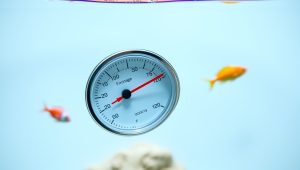
An aquarium heater thermostat can drift, read inaccurately, or cycle at the wrong temperature. A poorly calibrated heater may leave tropical fish chilled, overheat the tank, or create rapid temperature swings that stress fish, shrimp, corals, and beneficial bacteria. The safest approach is not to open the heater or adjust internal components. Instead, compare the heater’s setting with a reliable thermometer, make small knob adjustments, and allow enough time for the water temperature to stabilize.
This process works for adjustable submersible heaters in freshwater and saltwater aquariums. It is especially useful when setting up a new heater, after a water change, or whenever the displayed temperature does not match the heater’s dial. Use the following procedure as a practical 2026 maintenance routine.
As an Amazon Associate we earn from qualifying purchases at no extra cost to you.
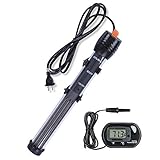

Quick answer: Our top pick in 2026 is the Adjustable submersible aquarium heater — our #1 rated choice. See the full ranked comparison, alternatives and buying advice below.
What You Need
| Item | Why | Optional? |
|---|---|---|
| Adjustable submersible aquarium heater | The thermostat controls when the heating element turns on and off. Choose a wattage appropriate for the aquarium and room temperature. | No |
| Independent aquarium thermometer | This is your reference temperature. A digital thermometer is usually easier to read, while a glass thermometer can serve as a second check. | No |
| Clean container or cup | Useful for holding the thermometer during a calibration check or for preparing replacement water. | Yes |
| Small towel | Protects the floor and cabinet from drips and helps dry your hands before handling electrical equipment. | Yes |
| Outlet timer or temperature controller | A controller can provide an additional temperature reading and a backup shutoff, but it does not replace a functioning heater thermostat. | Yes |
For a typical aquarium, adjustable heaters are commonly available from 50 to 500 watts. A 50-watt model may suit a small tank in a warm room, while a 300- or 500-watt heater is intended for larger aquariums or cooler rooms. Follow the manufacturer’s tank-size guidance rather than selecting the largest heater automatically. A 500-watt heater in a small aquarium can raise the temperature too quickly if it malfunctions.
For reference, the Orlushy submersible heater with an adjustment knob, two suction cups, and a free thermometer is listed at about $20 to $21 in the 500-watt version. The HiTauing heater is offered in 50-, 100-, 200-, 300-, and 500-watt versions and is listed at about $27 to $28. Features such as over-temperature protection and automatic shutoff when the unit leaves the water are helpful, but you should still monitor the tank independently.
Step-by-Step
1. Confirm the target temperature — 5 minutes
Identify the temperature range recommended for your fish, plants, or invertebrates. Many tropical community aquariums are maintained around 75°F to 80°F, but species requirements vary. Do not calibrate to a generic number if your livestock needs something different.
Also check the room temperature and tank volume. A heater that is too powerful for the aquarium may overshoot between cycles, while an undersized heater may run almost continuously without reaching the target.
2. Place the thermometer correctly — 5 minutes
Position the thermometer in an area with good water circulation, away from the heater itself. Keep it several inches from the heater and avoid placing it directly in the warm water rising from the heating element. In a larger aquarium, check the opposite end of the tank as well.
Make sure the thermometer is fully submerged to its marked line. Wait until its reading stops changing before using it as your reference. If you have two thermometers, compare them in the same location. A consistent difference of 1°F to 2°F should be noted before you adjust the heater.
3. Inspect and position the heater — 10 minutes
Unplug the heater before touching or repositioning it. Confirm that the glass or plastic housing is not cracked, the power cord has no exposed wire, and the suction cups hold the unit securely. Never operate a submersible heater above its minimum water line.
Install the heater vertically or at the angle permitted by the manufacturer. Keep it near water movement from a filter outlet so warmed water circulates through the tank. Do not bury it in gravel, place it against decorations, or allow it to touch the aquarium wall.
4. Allow the heater to reach room temperature before starting — 15 to 20 minutes
If the heater has been out of water, let it cool completely before submerging it. A hot glass heater placed into cooler water can crack from thermal shock. After positioning it, wait the period specified in the instructions before plugging it in; if no period is stated, 15 to 20 minutes is a cautious starting point.
5. Set the thermostat to the target — 2 minutes
Turn the adjustment dial to the target temperature, such as 78°F. The printed dial is a starting point, not a guaranteed measurement. Some heater dials are marked in whole degrees, while others use a vague low-to-high scale.
Plug the heater into a grounded outlet with a drip loop in the cord. The drip loop is a low section of cord below the outlet that prevents water from running into the receptacle. Confirm that the indicator light or other operating signal turns on.
6. Wait for stabilization — 6 to 12 hours
Do not adjust the dial every few minutes. Check the independent thermometer after at least 6 hours, then again after 12 hours. A small aquarium may stabilize sooner, but larger tanks and rooms with temperature changes can take longer.
Record the heater setting, thermometer reading, room temperature, and time. For example, if the dial is set to 78°F but the thermometer remains at 76°F after 12 hours, the heater is reading approximately 2°F low under those conditions.
7. Make one small adjustment — 2 minutes
If the tank is too cool, increase the heater setting by 1°F to 2°F. If it is too warm, decrease the setting by the same amount. Make only one adjustment at a time, and unplug the heater before turning the dial if the manufacturer recommends it.
Wait another 6 to 12 hours before evaluating the result. Repeat in small increments until the water remains within the desired range. Avoid raising the temperature rapidly; a change of about 1°F every several hours is gentler than a sudden increase of 4°F or 5°F.
8. Verify the cycle — 24 to 48 hours
Observe the tank over a full day or two. The heater should switch on as the water cools and switch off near the target temperature. A variation of roughly 1°F to 2°F can be normal because thermostats have a cycling range. The heater does not need to maintain a perfectly constant reading every second.
Check the temperature in the morning and evening. If the heater runs continuously, overshoots by several degrees, or cannot maintain the target after adjustment, stop relying on its thermostat and prepare to replace it.
Mistakes to Avoid
- Do not open the heater housing or attempt to bend, loosen, or repair internal thermostat parts. This can cause electric shock or make the heater unsafe around water.
- Do not handle a plugged-in heater with wet hands. Unplug it before repositioning, cleaning, or removing it.
- Do not calibrate using the heater’s printed dial alone. Always compare the setting with an independent thermometer.
- Do not place the thermometer directly beside the heating element, where it may show an artificially high reading.
- Do not adjust the heater repeatedly within minutes. Water takes time to circulate and stabilize.
- Do not leave a heater running outside the water unless its instructions specifically allow that function.
- Do not assume a larger wattage is safer. Match the heater to the aquarium volume, room conditions, and manufacturer recommendations.
How Often
Check the thermometer daily during the first 48 hours after installing or adjusting a heater. After the temperature is stable, glance at it at least several times per week. Recheck calibration after a major water change, moving the aquarium, changing the heater’s position, or a noticeable room-temperature change.
Perform a more deliberate comparison every one to three months. Keep a simple log so you can identify gradual drift instead of waiting for fish behavior or algae growth to reveal a problem.
When to Call a Pro or Replace
Replace the heater immediately if it has a cracked housing, exposed wiring, melted plastic, corrosion inside the unit, or a damaged plug. Also replace it if it stays on after the water exceeds the set temperature, repeatedly trips a ground-fault circuit interrupter, makes unusual sounds, or causes a strong electrical smell.
For a persistent temperature problem, first verify the thermometer with a second unit and check water circulation. If both thermometers agree and the heater still misses the target by more than 2°F to 3°F after several adjustment cycles, replacement is usually safer and more economical than repair. An aquarium service professional can inspect the setup when livestock is valuable, the tank is large, or electrical wiring is involved.
FAQ
Can I calibrate an aquarium heater without removing it?
Yes. Compare the heater’s setting with an independent thermometer while the heater remains properly submerged and positioned. Make small dial adjustments, then wait 6 to 12 hours between changes.
What temperature should my aquarium heater be set to?
Set it according to your animals’ requirements. Many tropical community tanks use approximately 75°F to 80°F, but some fish, shrimp, corals, and plants need different conditions. Follow species-specific guidance rather than copying another aquarium’s setting.
How accurate should an aquarium heater thermostat be?
Many consumer heaters are not perfectly accurate. A difference of 1°F to 2°F between the dial and the thermometer can occur, and a small cycling range is normal. A difference greater than about 2°F to 3°F, severe overshooting, or continuous heating indicates a potential fault.
Should I use a separate temperature controller?
A separate controller can add an independent sensor and emergency shutoff, making it useful for large, expensive, or temperature-sensitive aquariums. It should be installed according to its instructions and treated as backup protection, not as permission to keep using a heater with damaged wiring or a failing thermostat.
Ready to decide? Our #1 pick for 2026 is the Adjustable submersible aquarium heater.
Live price & availability on Amazon.
Related Reviews & Guides
Best Aquarium For Small Apartment: Best Well-Researched Guide
Active Substrate vs Inert Aquarium Substrate: Which Is Right for Your Home (2026)