Last Updated: October 4, 2026
- Top Pick: Briignite Grow Light Bulbs, LED Grow Light Bulb A19 Bulb, Full Spectrum
- Best Value: BoRccdit SunLike Full Spectrum Light Bulb 15W 1000lm Bright, Flicker-Free & UV-Free & Vivid 90+ CRI Comfort LED, A19 E26 Sunlight Light Bulbs for Humans, Home, Office (4-Pack Soft White)
- Premium Choice: Novique LED Aquarium Light with IP68 Waterproof and Memory Function Submersible Fish Tank Light with Remote and 16 Colors 7.5 Inches Brightness Adjustable Underwater Light Bar for Fish Tank Aquarium
Choosing between a full spectrum LED and an RGB aquarium light is less about finding the “brightest” fixture and more about deciding what you want to see and support in your tank. A planted freshwater aquarium needs usable light for aquatic plants, predictable timing, and even coverage. A decorative or fish-only tank may benefit more from adjustable colors that make fish, rocks, and décor stand out.
The real decision is whether your aquarium should look most like a natural underwater environment or function as a flexible accent light in your room. Full spectrum fixtures generally deliver a balanced blend of wavelengths for plants and natural color rendering. RGB lights use red, green, and blue diodes to create vivid shades, including purple, pink, blue, and cyan. Some modern lights combine both approaches, but the difference remains important when comparing dedicated fixtures.
As an Amazon Associate we earn from qualifying purchases at no extra cost to you.


Quick Verdict
Choose a full spectrum LED aquarium light if you have live plants, want natural-looking fish colors, or prefer a simple daylight schedule. It is usually the safer all-purpose choice for a freshwater planted tank.
Choose an RGB aquarium light if your tank is primarily decorative, you want dramatic color effects, or you value remote-controlled customization more than plant growth. RGB is especially appealing for fish-only aquariums, small tanks, and rooms where the aquarium doubles as accent lighting.
For many homes, the best compromise is a fixture marketed as full spectrum with separate RGB color channels. It can provide a white daylight setting for everyday use and colored effects for evening viewing.
Side by Side
| Factor | Full Spectrum LED | RGB Aquarium Light |
|---|---|---|
| Comfort | Usually calmer and more natural at a moderate brightness; easier to use as room-adjacent lighting. | Color effects can be visually intense, particularly blue, red, or purple at high output. |
| Plant support | Best choice for low- to medium-light freshwater plants when output and coverage are appropriate. | Can support some plants, but decorative RGB output alone may not provide a balanced planting spectrum. |
| Durability | Often built as a slim, splash-resistant bar; look for an appropriate water-resistance rating. | Available in bars and submersible tubes; waterproofing varies substantially by model. |
| Price range | About $25–$80 for many home freshwater fixtures; larger planted-tank models can cost more. | About $10–$70, depending on size, waterproofing, remote controls, and programming. |
| Maintenance | Usually simple: wipe the cover and check the timer or power supply. | Also simple, though underwater models require more attention to seals, cable routing, and mineral buildup. |
| Space needed | Common bars are roughly 12–36 inches long and sit across the tank rim. | Compact bars may be 7–8 inches long; larger models commonly span 18–48 inches. |
| Look | Natural white light shows realistic water, plants, gravel, and fish colors. | Creates a theatrical look with saturated reds, blues, greens, and blended colors. |
| Resale and flexibility | More broadly useful for future planted tanks and easier to explain to a future buyer. | Appeals to buyers who specifically want color effects, but may be less useful for planted-tank upgrades. |
| Best for | Planted tanks, natural décor, community aquariums, and everyday viewing. | Fish-only tanks, nighttime effects, parties, children’s rooms, and decorative displays. |
Where Full Spectrum Led Wins
Full spectrum LED aquarium lights are the better starting point for live plants. “Full spectrum” is not a guarantee of a particular performance level, so you still need to check wattage, brightness controls, fixture length, and the manufacturer’s recommended tank size. However, a balanced white output generally gives plants and fish a more natural visual environment than a single saturated color.
Natural color rendering is another advantage. White full spectrum light tends to show subtle differences in a fish’s scales, the green variation in plants, and the actual color of substrate. This matters if the aquarium is near a dining table, entryway, or living-room seating where it will be viewed for several hours each day.
Full spectrum fixtures are also easier to match with a regular schedule. Many include a timer or gradual sunrise and sunset settings. A six- to eight-hour initial photoperiod is a reasonable starting point for a planted aquarium, although the right schedule depends on plant density, room light, and algae response. Longer or brighter operation is not automatically better.
A useful example is the hygger Advanced LED Aquarium Light with Timer, 24/7 Lighting Cycle and DIY Mode, listed for a 30–36-inch freshwater planted tank for under $60. Its timer and programmable modes illustrate why planted-tank buyers often prioritize scheduling and coverage over novelty colors.
Full spectrum LEDs can also be more comfortable in a multipurpose room. They tend to resemble daylight rather than casting a nightclub-like glow across nearby walls. If your aquarium is in a bedroom, office, or open-plan living area, that restrained appearance may be easier to live with.
Where Rgb Aquarium Light Wins
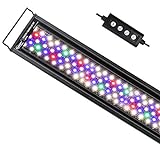
RGB aquarium lights win when visual customization is the priority. With separate red, green, and blue channels, they can create a blue evening setting, a pink or purple accent, or a bright mixed color that makes pale fish appear more dramatic. Remote controls and memory functions are common, allowing you to change the mood without reaching behind the tank.
They are particularly effective in fish-only aquariums. If there are no demanding live plants, you do not need to optimize the fixture around plant growth. An RGB light can then serve as both aquarium equipment and room décor. Lower-intensity blue light may also be useful for brief evening viewing, though it should not replace a consistent dark period for the tank’s inhabitants.
Compact RGB lights work well in small spaces. The Novique LED Aquarium Light, for example, is a 7.5-inch underwater light bar with IP68 waterproofing, a remote, adjustable brightness, a memory function, and 16 colors. For under $10, it shows how inexpensive a small decorative accent can be. It is better understood as a color-effect light than as a complete planted-tank lighting solution.
RGB is also convenient for a temporary display or a child’s aquarium. A 7- to 12-inch light can fit a nano tank or desktop setup without adding a large bar to the room. Still, verify that any submersible product is designed for aquarium use, keep the power connection outside the tank, and follow the installation instructions carefully.
Cost Over 5 Years
The purchase price is only part of the five-year cost. A basic RGB bar may cost $10–$25, while a programmable full spectrum fixture often costs $35–$80. Larger or higher-output planted-tank lights can exceed $100. LED fixtures generally use less electricity than older fluorescent systems, but actual energy cost depends on wattage, daily hours, and local utility rates.
For a simple comparison, a 15-watt light running 8 hours per day uses about 43.8 kilowatt-hours per year. At $0.16 per kilowatt-hour, that is approximately $7 per year, or $35 over five years. A 30-watt fixture used on the same schedule uses about 87.6 kilowatt-hours annually, costing approximately $14 per year at that rate, or $70 over five years. These are examples, not guaranteed operating costs.
Replacement is another consideration. A well-made fixture may last five years or longer, but power supplies, switches, remotes, waterproof seals, and mounting legs can fail before the LEDs do. A slightly more expensive fixture with replaceable brackets, a standard adapter, and a reliable timer may be better value than the cheapest light.
Do not substitute a household grow bulb for an aquarium fixture. The Briignite Grow Light Bulbs A19 Full Spectrum model costs under $10, and the BoRccdit SunLike 15-watt, 1,000-lumen full spectrum bulbs cost under $30 for a four-pack, but these are household screw-in bulbs rather than purpose-built aquarium lights. They lack the tank-specific mounting, splash protection, and even coverage that an aquarium normally requires.
Which One for Your Home
Small apartment
Choose a compact RGB light for a fish-only nano tank if you want the aquarium to function as a small accent piece. A 7- to 12-inch bar takes little visual space and can create a strong effect at low cost. For a planted tank, choose a short full spectrum fixture with a timer instead, and keep brightness moderate to limit algae and glare.
Family with kids or pets
A protected, rim-mounted full spectrum fixture is usually the practical choice. It is easier to keep away from curious hands and paws than an exposed underwater light. Look for secure mounting legs, covered wiring, a low-voltage adapter, and a clear operating schedule. RGB can be fun for supervised viewing, but avoid treating color changes as a substitute for a stable day-night cycle.
Rental
Renters should favor lightweight, reversible equipment. A 12- to 24-inch clip-on or rim-mounted full spectrum bar can provide useful illumination without wall modifications. RGB is a good option when the tank is temporary or primarily decorative. Select a model with a memory function so it does not reset every time the power strip is switched off.
Long-term home
If you expect to keep the aquarium for years or upgrade to a larger planted tank, invest in a programmable full spectrum fixture sized for the aquarium. A 30- to 36-inch tank may need a bar in that same length range, while a 10-gallon tank often needs only about 18–24 inches. A hybrid model with independent white and RGB channels offers the most flexibility for changing décor, fish, and plants.
FAQ
Is full spectrum LED better than RGB for aquarium plants?
Usually, yes. A balanced full spectrum fixture is generally easier to use for live plants because it provides broad white output and natural viewing color. Plant success still depends on brightness, tank depth, plant type, nutrients, and carbon dioxide—not the label alone.
Can RGB aquarium lights grow plants?
Some can, particularly when they include a strong white channel or are specifically designed as planted-tank lights. A decorative RGB light with 16 colors and low output may make plants visible without providing the consistent, balanced illumination they need.
Are RGB aquarium lights safe at night?
Use nighttime colors sparingly and maintain a dark period. Continuous blue or colored light can disturb the aquarium’s normal day-night rhythm. A timer or 24/7 schedule with a genuine off period is preferable to leaving an RGB effect on all night.
What should I buy for a natural-looking aquarium?
Buy a full spectrum LED with adjustable brightness, a timer, and coverage appropriate to your tank’s length. If you occasionally want colored effects, select a hybrid fixture with separate RGB controls rather than relying on a decorative RGB bar alone.
Ready to decide? Our #1 pick for 2026 is the Comfort.
Live price & availability on Amazon.
Related Reviews & Guides

Canister Filter vs Internal Aquarium Filter: Which Is Right for Your Home (2026)
Best Aquarium Starter Kit: What Is In It and What Is Not