Last Updated: October 4, 2026
Quick answer: Our top pick in 2026 is the Reduce aquarium lighting — our #1 rated choice. See the full ranked comparison, alternatives and buying advice below.
The Short Answer
Maybe—but only if you have a specific water-clarity or disease-control problem that ordinary mechanical and biological filtration has not solved. A UV aquarium filter can be worthwhile for persistent green water, some suspended microorganisms, or reducing the spread of free-floating pathogens. It is not essential for a healthy aquarium, and it will not replace regular water changes, a properly sized filter, or good fish-keeping practices.
For most community tanks, the best answer is “not yet.” First test ammonia, nitrite, and nitrate; clean clogged filter media; reduce excessive light; and confirm that your filter is appropriately sized. If the water remains green or cloudy despite those steps, a UV unit may be a practical upgrade in 2026.
As an Amazon Associate we earn from qualifying purchases at no extra cost to you.


What You Actually Get
A UV aquarium filter combines a water pump with an ultraviolet-C light chamber. As water passes near the bulb, UV-C energy damages the DNA of certain free-floating algae, bacteria, and other microorganisms, making it harder for them to reproduce. The treated water then returns to the aquarium.
That description is important because a UV filter only treats what passes through the device. It does not sterilize gravel, decorations, plants, fish, or the inside of your aquarium. It also does not remove ammonia, nitrite, nitrate, fish waste, or dissolved medications. A cloudy tank caused by suspended debris still needs mechanical filtration, while a bacterial imbalance still requires time and stable biological filtration.
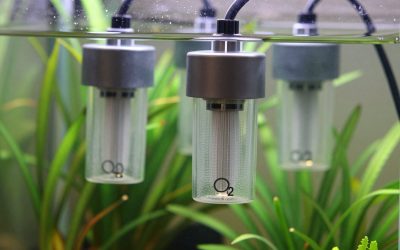
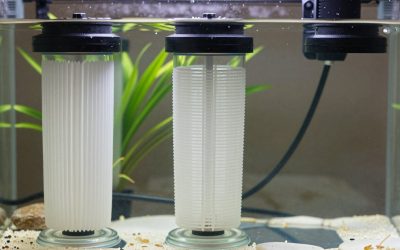
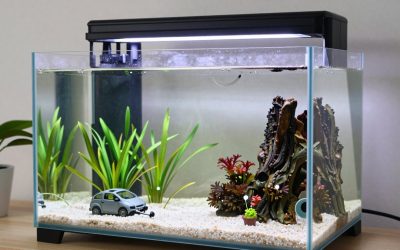
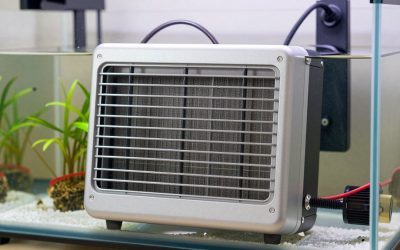
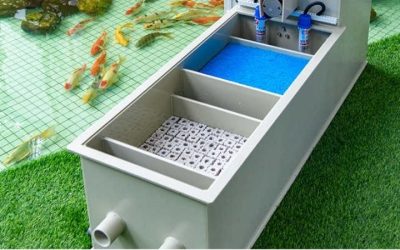
There are two common designs. An in-tank internal unit hangs or sits inside the aquarium and includes a pump, intake, filter media, and UV light. An inline or external unit connects to canister-filter tubing or a dedicated pump. Internal models are generally simpler and less expensive, but they take up aquarium space and add equipment to the display.
As a rough buying reference, compact aquarium UV units commonly use about 3 to 9 watts and cost roughly $30 to $100. The two budget-style examples in this category illustrate the lower end: the under-$40 TARARIUM unit lists a 5W UV light, a 200 GPH pump, and a stated range of 20 to 75 gallons; the under-$40 COODIA internal UV pump is another inexpensive option aimed at green-water control. Treat gallon ratings as starting points, not guarantees. Actual performance depends on flow rate, water clarity, bulb condition, and how long the water remains exposed to the light.
A high pump rate is not automatically better. UV treatment needs adequate contact time. If water races through the chamber, the exposure may be too brief to have much effect. Conversely, a very slow flow may improve exposure but provide less circulation. Look for a model with adjustable flow or a manufacturer-recommended flow range for the result you want.
Pros
- Can clear green water. Free-floating algae are one of the most visible problems a UV unit can address. When the water looks like pea soup but surfaces are not covered in algae, UV treatment can be especially useful.
- May reduce suspended microorganisms. Properly sized UV exposure can reduce some free-floating bacteria and parasites. It cannot eliminate organisms attached to fish, plants, substrate, or decorations.
- Works continuously. Once installed, the unit can treat water around the clock without adding chemicals. Many aquarists use one temporarily until a clarity problem is resolved, then turn it off.
- Can improve visual clarity. Even when water is not green, reducing fine suspended life can make the aquarium look brighter and cleaner.
- Affordable entry point. Basic internal models often cost about $30 to $50, making UV treatment accessible without buying a complete canister-filter system.
- Useful for large or heavily stocked systems. More fish, frequent feeding, and greater bioload can make water-quality problems harder to control. UV is not a cure for overstocking, but it can be a helpful supporting tool.
Cons
- It does not fix the cause. Excess light, overfeeding, poor maintenance, dead plant material, and an immature nitrogen cycle can all create cloudy water. UV may hide the symptom while the underlying problem continues.
- Limited effect on established disease. UV can affect free-floating stages of some organisms, but it cannot treat fish directly. Sick fish may need quarantine, diagnosis, medication, warmer or cooler water, and improved husbandry.
- Bulbs lose effectiveness. A UV bulb may still appear lit after its useful output has declined. Depending on the bulb and manufacturer, replacement may be needed roughly every 6 to 12 months of continuous use. Follow the product instructions.
- Maintenance is easy to overlook. Mineral deposits, algae, and a dirty quartz sleeve can block UV exposure. Mechanical media also needs rinsing in removed aquarium water so beneficial bacteria are not unnecessarily damaged by tap-water chlorine.
- It consumes electricity and space. A 5W unit uses little power, but an internal filter still occupies part of the tank and may add pump noise, heat, or visible equipment.
- It can interfere with some treatments. UV may reduce the effectiveness of medications or additives that are intended to remain active in the water. Turn it off when the label or a veterinarian recommends doing so.
- Cheap specifications can be optimistic. A stated 200 GPH flow rate may be measured with no media, no lift, and no buildup. Real-world flow can be lower, so do not select a unit solely by the advertised number.
Who Should Buy It
Consider a UV aquarium filter if your tank has recurring green water after you have reduced excessive lighting, limited feeding, performed appropriate water changes, and confirmed that ammonia and nitrite are zero. It can also make sense for aquarists who keep large tanks, quarantine multiple fish, or want an additional layer of control over free-floating organisms.
Choose the size based on actual aquarium volume, not the maximum number printed on the box. A 20-gallon aquarium should not automatically receive a model marketed for up to 75 gallons if that model cannot be adjusted to a suitable flow. Check that the unit is safe for freshwater or saltwater, that replacement bulbs are available, and that intake guards are appropriate for shrimp, fry, or small fish.
For a modest freshwater tank with green water, a budget internal unit in the $30-to-$50 range may be reasonable. A 5W model with a listed 200 GPH pump can be a practical starting point, provided the flow is suitable and the unit has enough contact time. Larger systems may benefit from a more serviceable external unit with a replaceable bulb and a clearly published flow range.
Who Should Skip It
Skip a UV filter if your aquarium is clear, stable, and lightly stocked. There is no special health benefit that makes UV mandatory for every tank. Also skip it as a first response to ammonia or nitrite. Those toxins require immediate attention to the nitrogen cycle, stocking, feeding, and water changes—not ultraviolet light.
You should also wait if the aquarium is newly established and you are trying to build biological filtration. UV does not normally replace the beneficial bacteria living on filter media, but constant use can reduce some free-floating bacteria before they settle. It is better to stabilize the system first unless you have a clear reason to run UV.
Cheaper Alternatives
| Option | Cost | Trade-off |
|---|---|---|
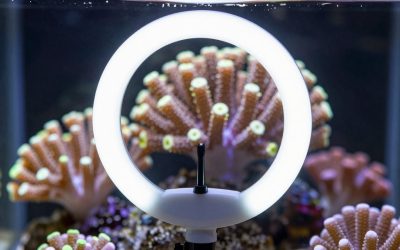
| Reduce aquarium lighting | $0 | Often helps green water, but the tank may look dimmer and plants may grow more slowly. |
| Blackout for several days | $0-$10 | Can suppress algae temporarily; not suitable as a long-term solution or for every planted aquarium. |
| Fine mechanical filter floss | $5-$15 | Removes suspended particles but will not eliminate free-floating algae or solve water chemistry. |
| Regular water changes and gravel cleaning | $0-$30 for basic equipment | Essential maintenance, but it requires time and will not always clear persistent green water quickly. |
| Live plants and better feeding control | $10-$60 | Can reduce available nutrients, though plants require light, care, and a suitable setup. |
These alternatives are not competitors in every situation. Mechanical media catches particles; biological media processes toxic waste; water changes dilute pollutants; and UV treats certain organisms in the water column. A healthy aquarium may use all of those approaches, but UV is the optional one.
FAQ
Does a UV aquarium filter replace a normal filter?
No. A standard aquarium filter provides water movement and mechanical and biological filtration. A UV unit is a supplemental device. Even an internal UV model with foam media should not be treated as a complete substitute unless its manufacturer specifically provides adequate filtration capacity for your aquarium and livestock.
Will UV clear cloudy aquarium water?
It depends on the cause. UV is most effective against green water caused by suspended algae and may help with some microbial cloudiness. It will not reliably clear dust, suspended gravel particles, dissolved tannins, or cloudy water caused by ammonia, overfeeding, or a new biological cycle.
Should I leave the UV light on all the time?
Not necessarily. Continuous use can help during a green-water problem, but many owners run UV temporarily and then use it only as needed. Turn it off during treatments that can be affected by UV, and follow the manufacturer’s schedule for bulb replacement and cleaning.
Is a 5W UV filter enough for my aquarium?
There is no universal answer. A 5W unit may be suitable for a small or medium aquarium when its flow and exposure time match the manufacturer’s guidance. A 20-to-75-gallon rating and a 200 GPH pump are useful reference points, not a promise of identical results in every tank. Prioritize adjustable flow, replacement-bulb availability, safe construction, and a realistic match for your aquarium’s volume.
Ready to decide? Our #1 pick for 2026 is the Reduce aquarium lighting.
Live price & availability on Amazon.
Related Reviews & Guides
Aquarium Air Pump Buying Guide for Noise in 2026: What Actually Matters

Gifts for Aquarium Keepers: Safe Picks When You Don’t Know Their Tank