Last Updated: October 4, 2026
The clip on vs full hood aquarium light choice comes down to one trade-off: a clip-on gives you lighting flexibility and easy tank access, while a full hood encloses the tank and cuts evaporation. Neither is universally better, so the right pick follows your tank type and your priorities.
As an Amazon Associate we earn from qualifying purchases.
By David Nguyen
Quick answer: For most people in 2026, the best clip on vs full hood aquarium light is the Tank access — our #1 rated choice. See the full ranked comparison, alternatives and buying advice below.
Core Differences That Actually Matter
Both designs light a tank, but they solve different problems. A clip-on clamps to the rim and leaves the top open for access and flexibility, while a full hood sits over the tank as an enclosure that reduces evaporation and contains splash. These four differences decide which suits you.
Mounting and Tank Access
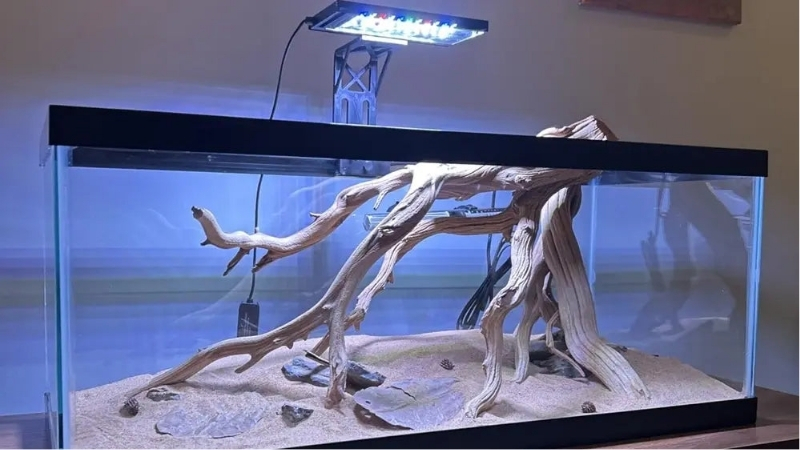
A clip-on mounts with a clamp and leaves the top of the tank largely open. The Aqueon Planted Clip-On screws onto framed or frameless rims and measures 8 by 7 by 4.75 inches (Aqueon, 2026), so it takes up little space and lets you reach in easily for maintenance and planting.
A clip-on does not force an open top, since you can still add a separate lid underneath it. A full hood, by contrast, is the lid: it covers the tank and you lift or use its access door to get inside. That enclosure is the whole point of the design.
Evaporation Control
Covering the water surface is the clearest functional split between the two. The Aqueon Deluxe Full Hood is designed to sit over the tank and, in Aqueon’s words, greatly reduce evaporation (Aqueon, 2026), because a covered surface loses less water to the air than an open one does.
A clip-on alone leaves more surface exposed unless you pair it with a separate lid, so top-offs come more often. If stable water level and less frequent topping up matter to you, the hood’s enclosure is a real advantage; if you prefer open access, that is the trade you accept.
Plant Lighting Flexibility
Clip-ons tend to be easier to aim, swap and upgrade. The Aqueon Planted Clip-On uses 60 planted-spectrum LEDs and is rated for tanks up to 20 gallons (Aqueon, 2026), and because it is a standalone fixture you can reposition or replace it without changing the tank’s lid.
A full hood is more integrated: the Deluxe Full Hood ships with one LED lamp and an extra slot for a second (Aqueon, 2026), so it is modular within its own system. Comparing 60 LEDs against one interchangeable lamp does not establish which is brighter, since the fixtures are measured differently.
Feeding and Equipment Access
How you get into the tank day to day differs. A hood typically includes a feeding door and rear cutouts for filters and heaters, so you feed and run equipment through built-in openings while the rest of the surface stays covered and protected from dust and jumping fish.
A clip-on leaves the top open by default, which makes feeding, dosing and equipment changes simple but offers less protection against jumpers and evaporation. Which you prefer depends on whether easy open access or a contained, covered top matters more for your livestock and routine.
Which Design Fits Your Aquarium Better?
The best answer depends on the tank in front of you. Below are four common situations and which design tends to win, with the reasoning kept to the trade-offs that actually differ. Prices are close for the sizes shown, so let function, not a few dollars, drive the choice.
| Factor | Clip-On | Full Hood | Better For |
|---|---|---|---|
| Tank access | Open, easy reach | Enclosed, door access | Clip-on for planting |
| Evaporation | More top-offs | Greatly reduced | Hood for stability |
| Light swapping | Reposition freely | Modular lamp slots | Clip-on for upgrades |
| Jump protection | Needs a lid | Built in | Hood for jumpers |
Small Planted Tank Leans Clip-On
For a small planted tank up to 20 gallons, a clip-on usually fits best. The Aqueon Planted Clip-On targets that range with 60 planted LEDs (Aqueon, 2026) and leaves the top open for trimming, replanting and dosing, which planted keepers do often. Its compact 8-inch footprint keeps it out of the way.
You can still add a lightweight lid to cut evaporation if you want, keeping the flexibility while limiting water loss. For an aquascape you tend to actively, the easy access and repositionable light are worth more than a fully sealed top most of the time.
Fish-Only Rimmed Tank Leans Full Hood
A standard rimmed fish tank often pairs better with a full hood. The Deluxe Full Hood 20 fits 10 and 20 Extra High tanks for that specific SKU and sits at about $55 at Chewy as of 09/2026 (Aqueon, 2026), enclosing the tank and reducing evaporation while protecting against jumpers.
The hood’s feeding door and rear cutouts handle daily care without removing the whole cover. For a community tank where a stable, protected top matters more than frequent aquascaping, the enclosure is the practical choice, and the price sits close to a comparable clip-on.
Rimless Aquascape Leans Clip-On
Rimless tanks are built to be open, and a clip-on suits that look. Because the Aqueon Planted Clip-On mounts on framed or frameless rims (Aqueon, 2026), it clamps neatly to a rimless edge and keeps the clean, uncovered aesthetic that rimless aquascapers usually want to preserve.
A full hood generally does not fit or suit a rimless display, so the clip-on wins by default here. Accept that evaporation runs higher on an open rimless tank and plan for more frequent top-offs, or add a low-profile glass lid if you want some of the hood’s water-saving benefit.
Evaporation-Sensitive Setup Leans Full Hood
If you fight constant evaporation, from dry rooms, heaters or salt creep, the hood’s covered surface is the direct fix. Aqueon markets the Deluxe Full Hood as greatly reducing evaporation (Aqueon, 2026), which means steadier water level, less frequent topping up, and more stable parameters between water changes.
The hood also cuts dust and reduces humidity escaping into the room. If low-maintenance stability is your priority and you do not need constant open access, the enclosure earns its keep, and larger sizes like the Hood 24 and Hood 30 scale up at roughly $65 and under $80.
Frequently Asked Questions
A few questions come up whenever people weigh these two designs: whether a clip-on forces an open top, which lights plants better, whether hoods truly cut evaporation, and how they fit odd tanks. Short answers first, then the practical caveats.
Does a clip-on light mean an open-top tank?
No. A clip-on clamps to the rim and leaves the top accessible, but you can still place a separate lid or glass cover underneath it. The clip-on handles lighting while a lid handles evaporation and jump protection, so the two are not mutually exclusive on the same tank.
That combination is common for keepers who want flexible lighting plus some of a hood’s benefits. If jumpers or evaporation worry you, pairing a clip-on with a lightweight lid gets you both, at the cost of a slightly less open look than a fully bare rimless top.
Which design grows plants better?
Neither wins automatically, because plant growth depends on usable light at the leaf, not the housing style. A clip-on with 60 planted LEDs and a hood with a planted lamp can both grow plants; comparing an LED count to a single interchangeable lamp does not tell you which delivers more usable output.
Judge by the actual light output for your tank depth and plant needs, then let access and evaporation preferences break the tie. For heavily planted tanks you tend often, the clip-on’s easy access is a practical bonus on top of adequate lighting.
Does a full hood really reduce evaporation?
Yes, in the sense that covering the water surface slows the water loss an open top allows. Aqueon explicitly claims the Deluxe Full Hood greatly reduces evaporation (Aqueon, 2026), and physically a covered surface exchanges less water with the air, so top-offs become less frequent.
A separate glass lid on an open tank achieves much of the same effect, so the benefit is really about covering the surface, not the hood specifically. Choose the hood when you also want the enclosure, feeding door and jump protection that come with it.
How do I know which fits my tank?
Start with your tank type and habits. Rimless or heavily aquascaped tanks favor a clip-on for open access; standard rimmed community tanks favor a hood for enclosure and stability. Then confirm exact fit, since a hood SKU may fit only specific sizes, like the 20-inch model suiting 10 and 20 Extra High tanks.
Because pricing sits close for comparable sizes, roughly a $5 difference at 20 inches, let function decide rather than cost. Match the design to how you actually use and maintain the tank, and the choice usually becomes obvious once access and evaporation are weighed.
Final Thoughts
The clip on vs full hood aquarium light decision is really about flexibility versus enclosure: clip-ons give open access and easy light changes, full hoods reduce evaporation and protect the tank. Match the design to your tank type and maintenance style, confirm exact fit, and treat the small price gap as a minor factor rather than the deciding one.
As an Amazon Associate we earn from qualifying purchases at no extra cost to you. Prices and availability are accurate as of the date shown and are subject to change.
Ready to decide? Our #1 pick for 2026 is the Tank access.
Live price & availability on Amazon.
Related Reviews & Guides

Fluval 207 Canister Filter Review 2026

Aquarium Decoration Cave