Last Updated: October 9, 2026
Steady salinity during water changes gets harder once a reef outgrows buckets, and hand-mixing saltwater eats time you would rather spend on corals. The best saltwater mixing station for reef tanks is really a setup, not one product, storing RO/DI and mixed saltwater apart so each change is ready fast.
As an Amazon Associate we earn from qualifying purchases.
As an Amazon Associate we earn from qualifying purchases at no extra cost to you. Prices and availability are accurate as of the date shown and are subject to change.

Gingerbread Pet Supply Pre-Mixed Saltwater for Aquariums – Ready to Use Marine Saltwater Bulk Case – 4 x 1 Gallon
Selected for "Best Saltwater Mixing Station for Reef Tanks: Smart Top Pick": this listing is aquarium equipment (Gingerbread Pet Supply Pre-Mixed Saltwater for Aquariums – Ready to Us), matching the equipment this article covers.
View on Amazon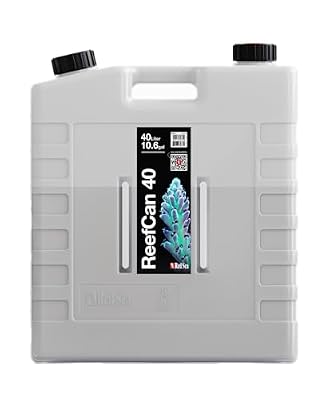
Red Sea ReefCan 40L 10 Gallon Vertical ATO Auto Top Off Container for Aquariums | Saltwater Freshwater Marine
Selected for "Best Saltwater Mixing Station for Reef Tanks: Smart Top Pick": this listing is aquarium equipment (Red Sea ReefCan 40L 10 Gallon Vertical ATO Auto Top Off Container for ), matching the equipment this article covers.
View on Amazon
Saltwater Complete – Live Nitrifying Bacteria Blend for Saltwater & Reef Aquariums - Instant Cycle Marine Tank Starter - Removes Ammonia Nitrite - Clarifier - Safe for Fish Coral Invertebrates - 12oz
Selected for "Best Saltwater Mixing Station for Reef Tanks: Smart Top Pick": this listing is tanks (Saltwater Complete – Live Nitrifying Bacteria Blend for Saltwater & Re), matching the equipment this article covers.
View on Amazon
Fluval Evo XII Saltwater Aquarium Kit, 13.5 Gal.
Selected for "Best Saltwater Mixing Station for Reef Tanks: Smart Top Pick": this listing is tanks (Fluval Evo XII Saltwater Aquarium Kit, 13.5 Gal.), matching the equipment this article covers.
View on AmazonBy David Nguyen
Quick answer: For most people in 2026, the best saltwater mixing station for reef tanks is the Dual BRUTE 32 build — our #1 rated choice. See the full ranked comparison, alternatives and buying advice below.
How to Choose a Saltwater Mixing Station
A good station handles three simultaneous jobs: store enough water, mix it safely, and transfer it to the display without spills. Match the pieces to your show tank volume and change routine, since a station sized for a 40-gallon nano looks nothing like one feeding a large, heavily stocked mixed reef.
Reservoir Size: Gross vs. Usable Volume
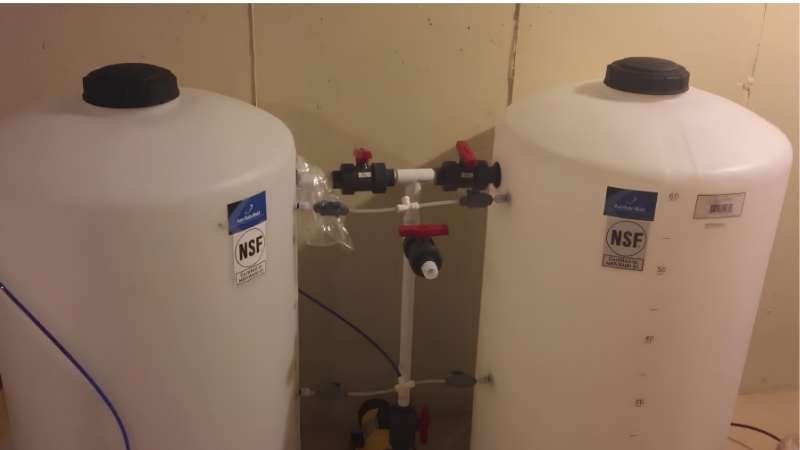
Gross drum size and usable change water are two different numbers. A dual BRUTE 32 build holds 64 gallons gross split across fresh and salt, but you cannot drain a drum to zero, and salt needs headroom to circulate, so plan around the water you actually move during each change, not the printed label.
BRS suggests a mixed-saltwater reservoir of at least around 50% of display volume as a practical starting point, not a rule; a 75-gallon reef doing 20% weekly changes needs far less standing volume than one running 50% resets. Other sources size it differently, so match the reservoir to your own schedule.
Separate Fresh and Salt Reservoirs
Two containers matter because RO/DI top-off water and mixed saltwater serve different jobs. One drum feeds an auto top-off to replace evaporation with fresh water; the other holds salinity-corrected saltwater for changes. Combining them forces constant refilling and risks dosing salt into your ATO line.
Dual BRUTE 32 (64 gallons gross) and BRUTE 44 (88 gallons gross) give paired reservoirs at around $82 and $108 for the containers as of 09/2026. Tight-fitting lids cut evaporation and airborne dust, and matching drum sizes keep a fish-room footprint predictable when floor space near the sump is tight.
Mixing Pump vs. Transfer Pump
These are two roles, not one pump. A mixing pump circulates salt inside the drum; the Sicce Syncra 1.5 moves up to 357 GPH at low head and suits mixing plus short transfers. A utility transfer pump like the Sicce Ultra Zero (793 GPH, 97W) is engineered to move water farther and higher across a room.
Those 793 GPH and 10-foot figures are separate maximums, not delivered flow together; actual output at 4, 6 or 8 feet of head is lower, and Sicce does not publish discrete points for it. Size by total head in your room, and expect real transfer rates below the box number as elbows and hoses add drag.
Safe, Automated Autofill
Automation is where a station saves time and where it can flood a floor. A float valve, such as the BRS adjustable float with a 1/2-inch fitting at around $20, shuts off RO/DI fill on the fresh reservoir once it reaches level, so the drum tops off unattended rather than with someone minding the fill hose.
Mechanical floats stick over time, so a second shutoff, an electronic float or a timer on the RO/DI line, adds cheap insurance against an overnight overflow. Budget for RO/DI membrane and DI resin too, since a station raises how much source water you make, and consumables are the real long-run cost.
Top Picks
These four builds cover most reef routines, from a first automated setup to a permanent fish room. Each pairs named containers with a pump matched to its transfer distance, and prices are component totals as of 09/2026, not fixed quotes, since drum and pump pricing shifts with retailer and current stock.
| Product | Best For | Key Spec | Watch Out For |
|---|---|---|---|
| Dual BRUTE 32 build | Best value | 64 gal gross; Syncra 1.5 357 GPH max | Gross capacity is not usable change volume |
| Dual BRUTE 44 build | Best overall | 88 gal gross; Ultra Zero 793 GPH / 97W max | Max flow and head are separate, not delivered together |
| Dual Norwesco 50 build | Best for large reservoirs | 100 gal gross; 18×18 in footprint each | Tall and heavy – confirm floor support |
| Permanent PVC / manifold | Best for fish rooms | Ultra Zero 793 GPH / 97W; BRS 1/2 in float | Higher install cost; more leak points |
Dual BRUTE 32 Build: Best Value
For a first automated setup, the dual BRUTE 32 station is the easy entry: two 32-gallon containers give 64 gallons gross, paired with a BRS float and a Sicce Syncra 1.5 (357 GPH) for mixing and short transfers, at around $192 as of 09/2026. It suits reefs into roughly the 50-to-65-gallon display range.
The trade-off is capacity: 64 gallons gross split into fresh and salt leaves a modest single-change reserve once you keep circulation headroom, so small weekly changes fit better than occasional large resets. As a value pick it earns its keep by making routine changes easy, with room to upgrade the pump.
Dual BRUTE 44 Build: Best Overall
The dual BRUTE 44 is the best overall for most reefers because it adds reservoir headroom and a stronger transfer pump, though its Sicce Ultra Zero is rated at 793 GPH and 10 feet as separate maximums, not delivered flow at working head. Two 44-gallon drums give 88 gallons gross with a float, near $258.
That is about $66 more than the BRUTE 32 build as of 09/2026, and the Ultra Zero draws 97W, so running it only during transfers keeps consumption sensible. The larger drums also demand more floor space and a level base, but the extra volume covers bigger changes without a second mid-week mixing session.
Dual Norwesco 50 Build: Best for Large Reservoirs
When a large or multi-tank system needs volume, dual Norwesco 50 tanks bring 100 gallons gross with an 18×18-inch footprint each and a vertical shape that saves floor area, paired with the Ultra Zero and a float at around $620 as of 09/2026. It fits systems doing frequent or large saltwater changes.
Full drums carry considerable water weight, so a ground-floor slab or reinforced stand and confirmed floor loading matter before filling. The tall shape needs ceiling clearance for lids and fill lines, and the higher price buys sturdier tanks built to stand permanently, not a brute-and-bucket stopgap.
Permanent PVC/Manifold Build: Best for Fish Rooms
A hard-plumbed station is the pick for a dedicated fish room: reservoirs feed a PVC manifold with a Sicce Ultra Zero (793 GPH, 97W) and a BRS 1/2-inch float, so filling, mixing and transfer run through fixed lines, not loose hoses. Total cost varies with tanks and fittings, landing at the premium end.
The upside is repeatability; the downside is that every glued joint and valve is a potential leak point, and relocating the setup later means cutting plumbing. Add unions and ball valves so pumps and floats stay serviceable, and pressure-test the manifold dry before trusting it with a full reservoir.
Frequently Asked Questions
A mixing station raises a few practical questions before you commit floor space and money. These cover the numbers most reefers ask about: how much water to store, how long fresh salt should mix, whether to run equipment nonstop, and how far a transfer pump can really push water in a working fish room.
How much mixed saltwater should I store?
Aim for enough mixed saltwater to cover your largest routine change with headroom to spare. BRS offers a mixed reservoir of at least around 50% of display volume as a practical starting point, not a rule, so a 90-gallon reef often lands near 45 gallons of standing saltwater for comfortable weekly changes.
Go smaller for modest changes, larger for heavy resets or several simultaneous tanks. Remember gross drum size overstates what you can actually pour, since circulation and pickup clearance eat into the bottom few gallons, so buy a size up from the number you first calculate rather than sizing exactly.
How long should new salt mix before use?
Give it time to fully dissolve and stabilize before testing salinity. BRS testing supports a 24 to 48-hour mix with heat and circulation for many salts, but follow your specific salt manufacturer, since blends differ in how fast they clear and settle to a steady pH and alkalinity before a water change.
A powerhead plus a heater matched to tank temperature accelerates dissolution and avoids adding cold or cloudy water to the display. Mix a fresh batch a day ahead, not same-day, and confirm salinity with a calibrated refractometer, because guessing from the salt scoop is where most salinity swings begin.
Should I run the pump and heater continuously?
Run them while mixing, then ease off. Strong circulation and heating a full drum nonstop wastes power and can raise evaporation; once the batch is mixed and stable, gentle periodic flow prevents stagnation without keeping a 97W transfer pump running between scheduled weekly water changes on the reef.
Fresh RO/DI storage needs considerably less, so an occasional stir suffices for a top-off reservoir. Match any storage heater to the drum volume and target temperature, and keep lids on to limit the evaporation that quietly raises salinity in a mixed reservoir over a week between scheduled water changes.
How far can a transfer pump actually move water?
It depends on total head, not just the box rating. The Sicce Ultra Zero lists 793 GPH and a 10-foot maximum head as separate ceilings; at real vertical lift plus horizontal run, delivered flow drops well below 793 GPH, and Sicce does not publish output at discrete 4, 6 or 8-foot points on its curve.
Measure the full vertical rise and pipe length to the destination, add margin for every elbow, and select a pump whose curve still moves useful volume at that head. For a genuine second-floor run, a dedicated high-head utility pump beats stretching a mixing pump past its comfortable operating range.
Final Thoughts
The right build comes down to volume, transfer distance, automation and floor space, not one number. The best saltwater mixing station for reef tanks is the one tailored to your change routine: BRUTE 32 for value, BRUTE 44 for most reefs, Norwesco 50 or hard-plumbed PVC for larger fish-room systems.
Ready to decide? Our #1 pick for 2026 is the Dual BRUTE 32 build.
Live price & availability on Amazon.
Related Reviews & Guides


Aquarium Hang On Back Nano Protein Skimmer
8 Best Budget Aquarium Sump Pumps for Refugium