Last Updated: October 21, 2026
Picking the best pH and ORP monitor for a freshwater tank is less about the flashiest controller and more about matching real needs: freshwater compatibility, true simultaneous pH and ORP, the complete configured cost, and whether you want alerts or active control.
As an Amazon Associate we earn from qualifying purchases.
By David Nguyen
How to Choose a pH and ORP Monitor for Freshwater
Freshwater owners rarely need every reef feature, so the smart move is to weigh four things in order. Confirm freshwater compatibility, check that the unit reads pH and ORP at the same time, price the fully configured build, then decide whether you want alerts or hands-off control.
Freshwater Compatibility
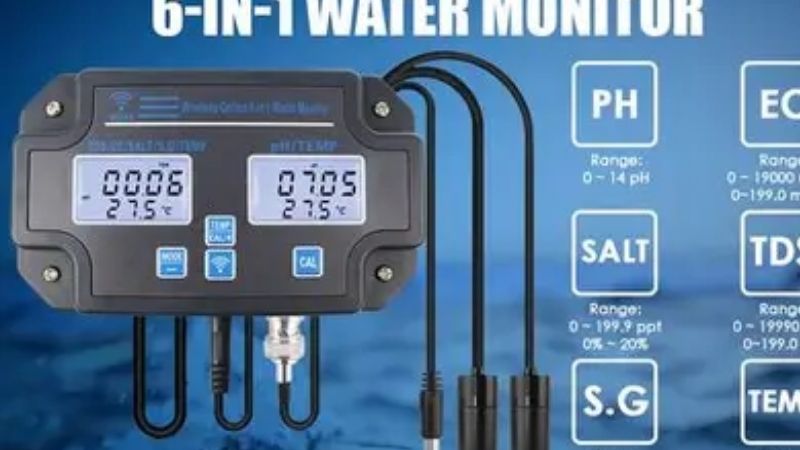
Every controller here reads pH in the freshwater range, but ORP behaves differently in low-conductivity water and is best read as a trend rather than a fixed grade. ORP is nonspecific, so pair it with pH and temperature history instead of treating one millivolt figure as a water-quality score.
Compatibility also means the probes you will actually replace. The Milwaukee MC125 PRO ships with both pH and ORP probes and reads pH 0–14, while the HYDROS Control X4 includes pH and temp but adds ORP as a separate probe around $55 as of 09/2026, so budget for the exact sensor you need.
Simultaneous pH and ORP
Simultaneous reading is the spec that defines this category, and not every box handles it the same way. The Milwaukee MC125 PRO and Neptune A3 Apex Pro each expose two probe ports, so pH and ORP run together without swapping a single input, a real edge when both channels must log continuously.
The GHL ProfiLux 4 Mega-Set 6E goes further with pH 3–10.5 plus redox, conductivity and temperature probes, though that breadth is often overkill for a planted or community tank. Confirm the ORP channel is in the box, not a later add-on, since a missing probe quietly turns a simultaneous system into a pH-only one.
Complete Configured Cost
Sticker price rarely equals the price of a working pH-and-ORP build. The HYDROS Starter reads about $500, but a true simultaneous setup runs about $600 once the ORP probe is added, as of 09/2026 — a common surprise when a starter bundle is priced as though it were already complete.
Against that, the Milwaukee at around $322 direct includes both probes, while the Apex Pro sits near under $1,100 at BRS. On the same configured basis the Apex lands roughly 87% above the HYDROS build, so it pays to match spend to the parameters you will genuinely track on a freshwater system.
Alerts and Control
Decide early whether you want to watch numbers or act on them, because that choice changes the hardware you need. A monitor-only path suits many freshwater keepers, since pH and temperature stability is often the real goal and ORP can be an overbuy when no ozone or trend workflow is actually in the plan yet.
If you do want control, the HYDROS Starter includes four WiFi AC outlets and the Apex Pro pairs with the EB832 and its eight switched outlets, while the Milwaukee offers two dedicated control outputs. More outlets are not automatically better; count only the switched loads you will really use.
Top Picks
These four pH and ORP monitors cover the range a freshwater keeper actually faces, from a probes-included budget controller near $322 to a full reef-grade platform above $1,000. Each entry lists verified specs, a relative price tier, and the one drawback worth knowing before you spend on a build.
| Product | Best For | Key Spec | Watch Out For |
|---|---|---|---|
| HYDROS Control X4 + ORP | Best overall | 2 pH/ORP ports; pH + temp; 4 WiFi outlets | ORP probe is a separate add-on |
| Milwaukee MC125 PRO | Best value | pH 0–14; both probes included; 2 outputs | Standalone; no app ecosystem |
| GHL ProfiLux 4 Mega-Set 6E | Best for multi-parameter | pH 3–10.5; redox, conductivity, temp probes | Powerbar is separate hardware |
| Neptune A3 Apex Pro | Best for full automation | 2 ports; leak + 15-in level; 8 outlets | Standard A3 differs from the Pro |
HYDROS Control X4 + ORP
The HYDROS Control X4 + ORP is the balanced choice for freshwater because it reads pH and ORP on two ports, includes pH and temperature, and bundles four WiFi AC outlets in the Starter for light automation such as a heater or return. The controller body itself measures a manageable 7.8×3.6×2.5 in on the stand.
Its honest catch is cost transparency: the Starter is about $500, but simultaneous pH+ORP means adding the roughly $55 ORP probe for about $600 configured as of 09/2026. Read the bundle contents rather than the headline so the ORP channel you came for is genuinely included.
Milwaukee MC125 PRO
The Milwaukee MC125 PRO is the value pick because both pH and ORP probes come in the box, it reads pH across 0–14 with ORP to ±1000 mV, and two dedicated control outputs can toggle a heater or doser without buying into a wider ecosystem a freshwater tank rarely needs. Nothing here waits behind an app or a paid tier.
At around $322 manufacturer-direct as of 09/2026 it undercuts every app-based rival, though it is a standalone controller with no phone platform. One caveat: pH resolution differs between sections of the official page, so treat display precision as unconfirmed rather than a headline selling point.
GHL ProfiLux 4 Mega-Set 6E
The GHL ProfiLux 4 Mega-Set 6E suits keepers who want more than two parameters at once on a single dashboard. It reads pH 3–10.5 and ORP −1000 to 1000 mV, and the set includes pH, redox, conductivity and temperature probes plus a six-socket Powerbar for switching connected equipment from the controller.
That capability lands near under $1,000 at GHL USA as of 09/2026, and the Powerbar is separate hardware, so the controller footprint is not the total installed footprint you plan around. For most planted or community freshwater tanks, a good share of this parameter range will simply go unused day to day.
Neptune A3 Apex Pro
The Neptune A3 Apex Pro is the automation-heavy option, with two pH/ORP BNC ports and included pH, ORP, temperature, leak and a 15-inch level sensor, paired to the EB832 and its eight AC outlets. It acts on readings rather than merely displaying them — more capability than a typical freshwater tank calls for.
Expect around $1,100 at BRS or under $1,200 direct as of 09/2026, the top of this field by a wide margin. Watch the SKU carefully: the standard A3 Apex has a single pH port and no included ORP probe, so confirm you are buying the Pro if simultaneous pH and ORP on a freshwater tank is the actual goal.
Frequently Asked Questions
A few questions come up repeatedly when freshwater keepers shortlist a pH and ORP monitor for the first time. Each answer leads with the practical call, then the condition that changes it, so you can map specs to your own tank instead of chasing a generic ideal that fits nobody’s setup exactly.
What spec should decide this purchase?
Freshwater compatibility comes first, then true simultaneous pH and ORP. A unit that reads both parameters together on the tank you actually keep beats one with a longer feature list you will never switch on, even when the second unit shows a bigger headline number.
After that, weigh the complete configured cost, which swings from about $322 to nearly $998 across these picks as of 09/2026. Two probe ports and a bundled outlet strip matter more day to day than an accuracy figure measured under lab conditions you cannot replicate at home on a working tank.
Which numbers are hard facts and which are planning heuristics?
Port counts, probe ranges such as pH 0–14, and September 2026 prices are hard manufacturer or retailer facts you can plan around. Treat them as fixed for now, and keep the ORP value itself as a directional trend, since ORP is nonspecific and shifts with dosing, salts and the age of the probe reading it.
The heuristics are the interpretation layer: what an ORP reading actually means for your livestock on a given day. Read it alongside pH and temperature history rather than as a single pass-or-fail grade, and recalibrate on the schedule the maker of your specific probe recommends, not a number borrowed elsewhere.
Is the highest headline number always better?
No. A wider ORP range or a larger outlet count only helps if you actually use it, and specs measured under different conditions are not directly comparable across brands. The right pick is the one that reads pH and ORP together for the tank you keep at a configured cost you can genuinely justify.
This is why the Milwaukee can beat pricier rivals for a simple freshwater build: both probes are included and it reads pH 0–14 for about $322 as of 09/2026, with no ecosystem to buy into. Extra parameters on a $998 controller add nothing if your plan never actually uses conductivity or redox breadth.
When might a freshwater keeper not need this at all?
Freshwater owners do not automatically need ORP at all. If pH and temperature stability is the real objective, a simpler pH-and-temperature setup can be the more rational buy, and a full pH+ORP controller may be an overbuy that adds cost and setup without adding any day-to-day value to the tank.
ORP earns its place once ozone, trend logging or a defined dosing response becomes part of the routine on the tank. Until then, put the money toward a reliable heater, calibrated pH, and a controller with only the switched outlets a freshwater tank genuinely needs rather than a strip of unused ports.
Final Thoughts
For a freshwater build, the best pH and ORP monitor is the one that fits your axis: confirmed compatibility, simultaneous pH and ORP, a configured cost you can plan for, and only the control you will use. Price the full build, not the starter, and skip ORP if steady pH and temperature is the tank’s real need.
Best 20 Gallon Fish Tank Kit: Best Proven Compared Buyer Guide
Best Aquarium Rack for a 40 Gallon Tank: Strong Top Picks