Last Updated: October 4, 2026
Nitrate removers are not one technology, so picking by mechanism matters more than picking by brand. The best nitrate remover for aquarium use is the one whose mechanism fits your system, because ion-exchange resin, biological denitrification, and adsorption behave very differently, and none of them removes the need for regular water changes.
As an Amazon Associate we earn from qualifying purchases.
By David Nguyen
Quick answer: For most people in 2026, the best nitrate remover for aquarium is the API Nitra-Zorb — our #1 rated choice. See the full ranked comparison, alternatives and buying advice below.
How to Choose a Nitrate Remover
Choosing well starts with the mechanism, then the operating conditions, then the freshwater or saltwater limits, and finally the recognition that water changes still matter. These four points keep you from treating ion exchange, denitrification, and adsorption as identical, when in fact each needs different conditions to work.
Choose the Mechanism First
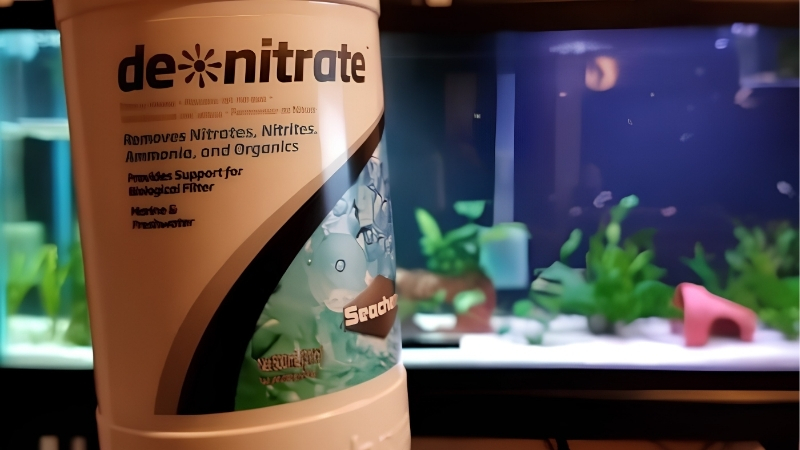
The three products work in fundamentally different ways, so do not assume all nitrate removers work chemically. API Nitra-Zorb is an ion-exchange resin, Seachem de*nitrate is porous biological media hosting denitrifying bacteria, and Fluval ClearMax is an adsorption resin, which are three distinct approaches.
Ion exchange swaps nitrate for other ions until the resin is spent, biological denitrification converts nitrate to nitrogen gas in low-oxygen zones, and adsorption binds nutrients onto the resin. Match the mechanism to how you want to manage nitrate, since they differ in speed, longevity, and the conditions they require.
Match the Operating Conditions
Each mechanism needs the right conditions, and flow is the critical variable for biological media. Seachem de*nitrate relies on low-oxygen micropores, so it must run at 50 gallons per hour or less to create the anaerobic zones denitrification needs, while above about 100 gallons per hour it functions only as aerobic media.
So de*nitrate does not work at any flow, and placing it in a high-flow canister undermines its purpose. Ion-exchange and adsorption resins are less flow-sensitive, but they saturate and need recharging or replacing, so match each product’s required conditions rather than dropping it anywhere in the filter.
Freshwater or Saltwater Limits
Some media are freshwater-specific or behave differently in saltwater, so check the limitation before use. Fluval ClearMax removes phosphate, nitrite, and nitrate in freshwater, but it does not remove nitrate in saltwater, so do not expect it to lower nitrate in a reef tank.
API Nitra-Zorb is likewise a freshwater product, so confirm your water type against the label. Using a freshwater-oriented nitrate remover in a marine system, or assuming ClearMax handles reef nitrate, leads to disappointment, so match the media to freshwater or saltwater as the manufacturer specifies.
Water Changes Still Matter
No media removes the need for water changes, which remain the baseline for controlling nitrate and replenishing minerals. Nitrate removers help between changes or in specific setups, but they are a supplement to good husbandry, not a replacement for it, and overstocking will outpace any resin.
So treat these products as tools that ease nitrate management rather than eliminate maintenance. Keep up regular water changes, avoid overfeeding and overstocking, and use a nitrate remover to handle stubborn or hard-to-lower nitrate, recognizing that system design and conditions decide whether the media performs.
Top Picks
Three media plus the baseline of water changes cover the realistic ways to manage nitrate, chosen by mechanism rather than a single winner. Prices are relative and current as of 09/2026, and because there is no common nitrate-capacity metric, do not calculate one product as a percentage better than another.
| Option | Best For | Mechanism / Condition | Watch Out For |
|---|---|---|---|
| API Nitra-Zorb | Fast freshwater chemical removal | Ion-exchange resin; recharge every 5 days | Replace after ~2 months; freshwater |
| Seachem de*nitrate | Long-term low-flow biological | Denitrification at <=50 GPH | Aerobic only above ~100 GPH |
| Fluval ClearMax | Multi-nutrient resin | Adsorbs PO4, NO2, NO3 in freshwater | No nitrate removal in saltwater |
| Regular water changes | Baseline nitrate control | Dilution; no media required | Effort; overstocking outpaces it |
API Nitra-Zorb – Best for Fast Freshwater Chemical Removal
Nitra-Zorb is the pick for quick freshwater nitrate reduction, an ion-exchange resin around $20 to under $20 as of 09/2026. It works fast while active, but needs recharging every five days while lowering nitrate and replacement after about two months, so it is hands-on.
Recharging uses 80 grams of aquarium salt in 240 mL of warm water for two hours, which restores the resin’s capacity. It is freshwater-specific and best when you want prompt chemical removal and are willing to keep up the recharge schedule rather than a set-and-forget solution.
Seachem de*nitrate – Best Long-Term Low-Flow Biological Option
de*nitrate is the long-term biological choice, porous media hosting denitrifying bacteria, around $5 for 500 mL as of 09/2026, with 500 mL treating roughly 25 to 50 gallons. Once established it converts nitrate steadily without frequent recharging, making it low-maintenance in the right setup.
The catch is flow: it needs 50 gallons per hour or less for the anaerobic denitrification to work, and above about 100 gallons per hour it functions only as aerobic media. So it demands a low-flow placement, and it will not perform in a high-flow canister no matter how much you use.
Fluval ClearMax – Best Multi-Nutrient Resin
ClearMax is the multi-nutrient adsorption resin, removing phosphate, nitrite, and nitrate in freshwater, around $20 for a 3-pack of 100 gram pouches as of 09/2026. It suits keepers who want to target several nutrients at once with a single, easy-to-place resin.
Its key limitation is that it does not remove nitrate in saltwater, so it is not a reef nitrate solution despite handling multiple nutrients in freshwater. Use it in freshwater for broad nutrient control, and choose a different approach if you keep a marine tank and are targeting nitrate specifically.
Regular Water Changes – Best Baseline Control
Regular water changes are the foundation of nitrate control, diluting accumulated nitrate and replenishing minerals with no media to buy or recharge. They remain the most reliable method, which is why every nitrate remover is a supplement to water changes rather than a replacement for them.
The trade-off is effort and consistency, and no schedule of changes will keep up with a badly overstocked tank. Pair regular changes with sensible stocking and feeding, then add a nitrate remover for stubborn cases, treating the media as help rather than a way to skip maintenance entirely.
Frequently Asked Questions
Nitrate-remover questions focus on replacing water changes, high-flow canisters, recharging, and ClearMax in saltwater. Each answer leads with the direct call, then the mechanism or condition that changes it for your particular filter and water type.
Can a Nitrate Remover Replace Water Changes?
No, because water changes also replenish minerals and remove other waste, so a nitrate remover is a supplement rather than a replacement. The media helps between changes or in specific setups, but it does not address everything a water change does, and overstocking will outpace any resin.
So keep up regular water changes and use a nitrate remover for stubborn or hard-to-lower nitrate. Treat the media as a tool that eases management, not a way to skip maintenance, since good husbandry with sensible stocking and feeding remains the foundation of nitrate control. In short, let the remover handle stubborn nitrate while water changes and sensible stocking do the heavy lifting of keeping it low.
Can I Use de*nitrate in a High-Flow Canister?
Not effectively, because de*nitrate relies on low-oxygen micropores for denitrification, and high flow keeps those pores oxygenated. It needs 50 gallons per hour or less to create the anaerobic zones the bacteria require, so it does not work at any flow despite being a passive medium.
Above about 100 gallons per hour it functions only as aerobic biological media, not as a nitrate reducer. So place it in a low-flow section or a dedicated low-flow reactor, and do not expect nitrate reduction from it in a fast canister, where the conditions defeat its mechanism.
How Do I Recharge Nitra-Zorb?
Recharge Nitra-Zorb with 80 grams of aquarium salt dissolved in 240 mL of warm water, soaking the pouch for two hours to restore the ion-exchange resin. During active nitrate reduction it needs recharging every five days, and it should be replaced after about two months of use.
This recharge schedule is what keeps the resin working, so factor the effort into your choice. If you prefer a lower-maintenance approach, a biological option like de*nitrate avoids frequent recharging, though it trades that for strict flow requirements instead. Whichever you choose, keep testing nitrate so you can see the media working and know when it needs recharging or replacing.
Does ClearMax Remove Nitrate in Saltwater?
No, ClearMax removes phosphate, nitrite, and nitrate in freshwater, but it does not remove nitrate in saltwater, so it is not a reef nitrate solution. Do not assume its freshwater multi-nutrient action carries over to a marine tank, since the label specifically excludes saltwater nitrate removal.
For a reef or marine system targeting nitrate, use an approach suited to saltwater rather than ClearMax. In freshwater, though, it is a capable multi-nutrient resin, so match it to the water type it is designed for and choose a marine-appropriate method for a saltwater tank. Matching media to water type is the whole point, since a product built for freshwater nutrients cannot be assumed to behave the same in a reef.
Final Thoughts
The best nitrate remover for aquarium use depends on the mechanism and your system, so Nitra-Zorb suits fast freshwater removal, de*nitrate fits long-term low-flow biological control, ClearMax handles multiple freshwater nutrients, and water changes remain the baseline. Choose the mechanism first, match its flow and water-type conditions, and treat any media as a supplement to water changes and sensible stocking, not a replacement.
As an Amazon Associate we earn from qualifying purchases at no extra cost to you. Prices and availability are accurate as of the date shown and are subject to change.
Ready to decide? Our #1 pick for 2026 is the API Nitra-Zorb.
Live price & availability on Amazon.
Related Reviews & Guides

Dwarf Pufferfish Care Guide: Tank Setup, Diet, and Behavior
Aquarium GH vs KH: What Each One Measures and Why It Matters