Last Updated: September 25, 2026
Best food for bottom feeder fish depends on whether the species is a grazing herbivore or an opportunistic carnivore. Plecos need algae and vegetables; corydoras and loaches need protein at 38-45%. Feeding one to the other is a large part of why bottom fish go thin in busy community tanks, alongside food never reaching them at all.
As an Amazon Associate we earn from qualifying purchases.
As an Amazon Associate we earn from qualifying purchases at no extra cost to you. Prices and availability are accurate as of the date shown and are subject to change.
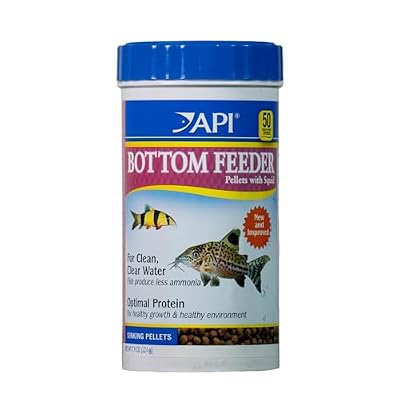
API BOTTOM FEEDER PELLETS WITH SQUID Fish Food 7.9-Ounce Container
Selected for "Best Food for Bottom Feeder Fish: Compared by the Numbers": this listing is fish food (API BOTTOM FEEDER PELLETS WITH SQUID Fish Food 7.9-Ounce Container), matching the equipment this article covers.
View on Amazon
Fluval Bug Bites Bottom Feeder Fish Food, 1.60 Oz.
Selected for "Best Food for Bottom Feeder Fish: Compared by the Numbers": this listing is fish food (Fluval Bug Bites Bottom Feeder Fish Food, 1.60 Oz.), matching the equipment this article covers.
View on Amazon
API BOTTOM FEEDER PELLETS WITH SQUID Fish Food 1.3-Ounce Container
Selected for "Best Food for Bottom Feeder Fish: Compared by the Numbers": this listing is fish food (API BOTTOM FEEDER PELLETS WITH SQUID Fish Food 1.3-Ounce Container), matching the equipment this article covers.
View on Amazon
API BOTTOM FEEDER PELLETS WITH SQUID Fish Food 4.0-Ounce Container
Selected for "Best Food for Bottom Feeder Fish: Compared by the Numbers": this listing is fish food (API BOTTOM FEEDER PELLETS WITH SQUID Fish Food 4.0-Ounce Container), matching the equipment this article covers.
View on AmazonBy David Nguyen
Diet Type Decides Before Anything Else
Choosing the best food for bottom feeder fish starts with an unhelpful truth: bottom feeder is a position in the tank, not a diet. Two species occupying the same substrate can need entirely different foods, and the wrong one starves them slowly.

The Deciding Numbers: Diet Type, Protein and Sink Rate
Diet type first. Grazing herbivores such as bristlenose plecos need algae and vegetable matter, with dedicated wafers typically running 28-38% protein. Corydoras, loaches and most catfish are opportunistic feeders needing 38-45% protein from animal sources.
Sink rate second. Food has to reach the substrate before mid-water fish intercept it, which means a product that sinks within a few seconds rather than drifting. Slow-sinking granules feed the fish above your bottom species, not the ones below.
Two More Criteria With Numbers Attached
Feeding time is a specification in its own right. Many bottom species are nocturnal, so food delivered under tank lights is found by everyone else first. Feeding 10-15 minutes after lights out changes what actually reaches them more than any product change does.
Particle durability matters at the substrate. A wafer that holds together for 20-30 minutes lets a slow grazer work at it, while a granule that disintegrates in two minutes disperses into the substrate and becomes waste rather than food.
Tank Size, Placement and Fit
Measure the open substrate area before buying wafers, since a heavily planted or rock-filled tank leaves little clear floor for a grazer to work on. A feeding dish placed on the substrate solves this and makes uneaten residue far easier to remove.
Substrate type decides how much is recoverable. Fine sand keeps food on the surface where it can be siphoned; coarse gravel swallows granules into gaps where nothing reaches them, which is one of the quieter contributors to nitrate in a community tank.
The Options by Species and Purpose
Four food types cover essentially every bottom-dwelling community. Each is matched below to a species group, because the best food for bottom feeder fish depends entirely on whether the animal grazes surfaces or hunts through the substrate.
Sinking Algae Wafer: For Plecos and Grazing Herbivores
Main numbers: 28-38% protein with algae or spirulina high in the ingredient list, holding form for 20-30 minutes on the substrate. One wafer per grazing fish, two or three times weekly, is the usual starting rate rather than daily feeding.
It suits bristlenose plecos, otocinclus and similar grazers in tanks without much natural algae. It does not suit corydoras as a staple, since the protein level is too low for them, and uneaten wafer breaks down into the substrate if left overnight.
Sinking Protein Pellet or Granule: For Corydoras and Loaches
Main numbers: 2-4 mm particle, 38-45% protein with whole fish or krill meal listed first, sinking within a few seconds. This is the correct staple for the majority of bottom-dwelling community fish, and the one most often missing from a feeding routine.
It suits corydoras, kuhli loaches, and most small catfish. It does not suit dedicated herbivores, whose digestive tracts handle high animal protein poorly, and it disappears into coarse gravel, so a feeding dish is worth using where the substrate is not sand.
Blanched Vegetables: For Herbivore Grazers at Almost No Cost
Main numbers: courgette, cucumber and deshelled peas, blanched briefly and weighted down, offered once or twice weekly and removed after two to four hours. Fibre content supports digestion in grazing species better than any dry product manages.
It suits plecos and other herbivores, and it costs effectively nothing. It does not suit carnivorous bottom species at all, and anything left beyond a few hours fouls the water quickly, so it needs removing rather than leaving overnight.
Frozen or Freeze-Dried Protein: For Conditioning and Variety
Main numbers: high protein once water content is discounted, fed once or twice weekly in place of a dry feed rather than in addition. Bloodworm and similar products draw a strong feeding response from corydoras and loaches specifically.
It suits conditioning fish and adding variety to a protein staple. It does not suit use as a sole diet, since the nutritional profile is narrow, and freeze-dried products should be soaked before feeding so they do not expand after being swallowed.
| Option | Protein | Sink behaviour | Feed rate | Best for |
|---|---|---|---|---|
| Sinking algae wafer | 28-38% | Sinks fast, holds 20-30 min | 2-3 times weekly | Plecos, otocinclus, grazers |
| Sinking protein pellet | 38-45% | Sinks in seconds | Daily or alternate days | Corydoras, loaches, catfish |
| Blanched vegetables | Low, high fibre | Weighted, remove after hours | 1-2 times weekly | Herbivore grazers, low cost |
| Frozen or freeze-dried | High, water discounted | Sinks slowly, soak first | 1-2 times weekly | Conditioning and variety |
| Floating flake alone | Varies | Rarely reaches substrate | Not applicable | Does not feed bottom species |
Head to Head, and When Not to Buy
Two of these get confused constantly, and there is a common case where no new product helps at all. Working out the best food for bottom feeder fish often means changing when and how you feed rather than what you feed.
Algae Wafer Versus Protein Pellet
The algae wafer wins for genuine grazers, holding form long enough for a slow-feeding pleco to work at it across half an hour. It loses badly as a corydoras staple, since 28-38% protein does not meet the needs of an opportunistic carnivore.
The protein pellet wins for the majority of bottom-dwelling community fish and disperses less into the substrate. It loses for herbivores, whose digestion handles high animal protein poorly, which is why most tanks holding both species need both products.
When New Food Is the Wrong Fix
Thin bottom fish in a well-fed tank usually means food never reaches them rather than that the food is wrong. Feed after lights out, use a feeding dish, and check condition again after two weeks before buying anything different.
The myth worth clearing here is that plecos live on tank algae alone. A mature tank rarely produces enough to sustain an adult, and a fish grazing visibly all day can still be losing condition, so supplementary feeding is required rather than optional.
The Cheaper Route That Works
Blanched courgette and deshelled peas cover the herbivore requirement for almost nothing, and most keepers already have them. Weight a slice down with a fork or a plant weight, leave it two to four hours, then remove whatever remains.
A shallow dish placed on the substrate is the other low-cost fix. It keeps granules out of gravel, makes residue removable in one movement, and lets you see exactly how much was actually eaten rather than guessing from the surface.
Feeding Routine, Waste and the 12-Month Cost
The best food for bottom feeder fish produces the residue most likely to be missed, since it lands where you are least likely to look. This section covers the routine that keeps it under control and what the whole arrangement costs across a year.
The Routine That Actually Reaches Them
Deliver sinking food 10-15 minutes after lights out for nocturnal species, into a dish where practical. Siphon any residue during the weekly water change, and check the substrate around decor, since uneaten food collects where flow does not reach.
Feed on alternate days rather than daily where the tank also feeds mid-water fish heavily, because bottom species pick up a share of what falls from above. The two-minute rule does not apply here; overnight clearance is the equivalent check.
Waste, Nitrate and Substrate Choice
Residue at the substrate is the largest hidden contributor to nitrate in a community tank, because it is out of sight and often out of reach. Coarse gravel makes this considerably worse than fine sand, which keeps food on the surface.
Test nitrate before the weekly change and treat a figure above 40 ppm as a feeding signal rather than a filtration one. Reducing bottom-feed portions and siphoning more thoroughly usually moves that reading faster than any equipment change would.
Storage, Cost and Timing
Wafers and pellets both lose vitamin content within roughly six months of opening, faster in a humid room, so buy container sizes the tank finishes inside that window. Store sealed and away from the hood where heat and moisture are highest.
On timing, food is not worth stockpiling in a sale because of that shelf life, though feeding dishes and equipment discount most deeply in late June and late November. Prices move constantly, so check at the moment of purchase rather than trusting older figures.
Best Food for Bottom Feeder Fish: Questions
These arrive once bottom species are in the tank but before condition problems appear. Every answer about the best food for bottom feeder fish stays with diet type, sink rate and timing, since those three decide almost every case.
Do plecos need more than algae?
Yes. A mature tank rarely grows enough algae to sustain an adult, so supplement with algae wafers two or three times weekly plus blanched vegetables. Some species also require driftwood in the tank as part of their normal diet.
Why are my corydoras thin?
Almost always because food is intercepted before it reaches them. Feed a fast-sinking 38-45% protein pellet after lights out, ideally into a dish on the substrate, and reassess condition after two weeks before changing the product itself.
Can bottom feeders live on leftovers?
No, and the idea causes real harm. Leftovers are unreliable in quantity and wrong in composition, and a tank clean enough to be healthy does not produce enough of them anyway. Bottom species need a feed sized, sunk and timed specifically for them.
How often should I feed them?
Daily or on alternate days for protein feeders, two or three times weekly for grazers plus vegetables. Judge by overnight clearance and by body condition rather than by the two-minute rule, which does not translate to substrate feeding.
See More:
Conclusion
The best food for bottom feeder fish is a fast-sinking 38-45% protein pellet for corydoras, loaches and catfish, and an algae wafer at 28-38% plus blanched vegetables for plecos and other grazers. Most mixed tanks need both rather than one.
Timing matters as much as the product. Deliver food 10-15 minutes after lights out, use a dish on the substrate where gravel would swallow granules, and siphon residue at the weekly change. Thin bottom fish are usually a delivery problem, not a food problem.
6 Best Vinyls For Aquarium Background 2026
Best Automatic Fish Feeder for Vacation: 4 Reliable Picks