Last Updated: October 4, 2026
A rainforest look in a small tank is an aesthetic, not a special substrate class. The best rainforest sand for nano tanks is a fine, earthy natural sand scaled to a small footprint, with predictable chemistry, chosen for its river-and-jungle tone rather than for imaginary tropical nutrients in the bag.
As an Amazon Associate we earn from qualifying purchases.
By David Nguyen
Quick answer: For most people in 2026, the best rainforest sand for nano tanks is the CaribSea Jungle River Sand — our #1 rated choice. See the full ranked comparison, alternatives and buying advice below.
How to Choose Rainforest Sand for Nano Tanks
Rainforest sand is really a search for fine, natural, warm-toned grains that suit a small aquascape. Grain scale for a nano, earthy river color, predictable chemistry, and a bag size matched to footprint are the four things that separate a good nano riverbed from a clumsy one.
Scale the Grain to a Nano
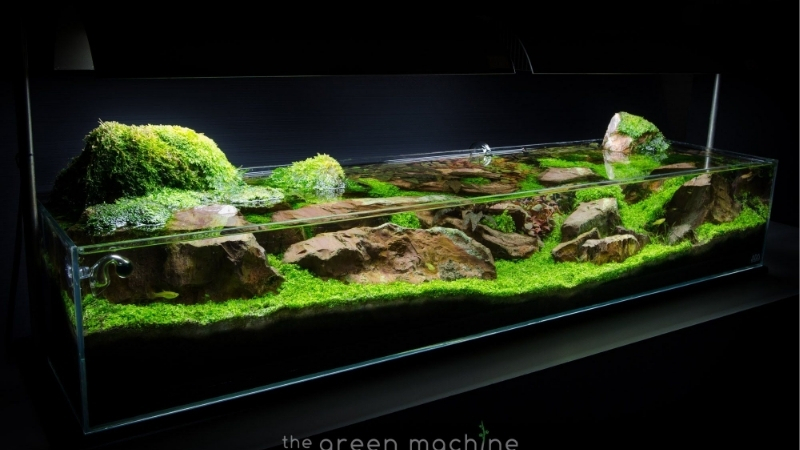
Small tanks reward fine grain, because a coarse bed looks oversized against short planting distances and low water volume. CaribSea offers Jungle River at 0.5-1.5 mm, Crystal River at 0.5-1.0 mm, Sunset Gold at 0.25-1.0 mm, and Peace River at 1.0-2.0 mm, so you can dial texture to the scale you want.
Finer grains read as sand and suit tiny scapes, while the 1.0-2.0 mm Peace River leans toward a bolder riverbed grit. Match the grain to your plants too, since very fine carpet stems anchor better in fine sand than in the coarser end of the range.
Earthy River Colors
The rainforest effect comes from warm, earthy tones that echo a tropical riverbed, not from any chemistry. Sunset Gold gives a warm golden look, Jungle River and Crystal River read as natural river tones, and the choice is aesthetic rather than functional.
Rainforest sand is a look, so do not expect special tropical nutrients from it, because these are natural sands, not fertilized soils. If you want plant feeding, treat it separately with root tabs rather than assuming the earthy color implies nutrient content.
Predictable Chemistry
Nano tanks swing faster than large ones, so predictable substrate chemistry matters more, not less. These CaribSea natural sands are chosen for aesthetics and grain rather than an intentional buffering claim, so verify the specific product’s behavior rather than assuming a category rule.
Do not treat rainforest sand as a standardized chemistry class, because it is an aesthetic category spanning several products. Test your parameters through the first week after adding any new substrate, especially in a small volume where changes concentrate quickly.
Nano-Friendly Bag Size
Buying the right amount matters in a nano, where a giant bag is wasteful and too little leaves a patchy bed. CaribSea offers these sands in 5, 10, 20, and 40 lb bags, so a small tank can start with a 5 or 10 lb bag rather than a full 20 lb one.
Size the bag by footprint and target depth, not by tank gallons alone, since a shallow wide nano and a tall narrow one of equal volume need different amounts. Estimate your base area and a modest depth, then pick the smallest bag that covers it with a little to spare.
Top Picks
Four natural sands cover the rainforest look from fine light riverbed to warm gold and a coarser grit. Prices are relative and current as of 09/2026, and because bags come in several masses, buy by the coverage your nano footprint actually needs.
| Product | Best For | Key Spec | Watch Out For |
|---|---|---|---|
| CaribSea Jungle River Sand | Best overall rainforest look | 0.5-1.5 mm; ~100 lb/ft3 | Coarser end; tiny plantlets can slip |
| CaribSea Crystal River | Best light riverbed | 0.5-1.0 mm; ~95 lb/ft3 | Fine sand needs gentle flow |
| CaribSea Sunset Gold | Best warm tropical look | 0.25-1.0 mm; ~94 lb/ft3 | Decorative and inert; add root tabs |
| CaribSea Peace River | Best coarser nano riverbed | 1.0-2.0 mm; ~93 lb/ft3 | Not ultrafine; bolder grit |
CaribSea Jungle River Sand – Best Overall
Jungle River is the closest match to the rainforest search, a 0.5-1.5 mm natural sand with a river-and-jungle tone and a density near 100 lb/ft3. It comes in 5, 10, 20, and 40 lb bags, with the 20 lb around $15 on sale or under $20 regular as of 09/2026, so a nano can start with a smaller bag.
At the coarser end of its range, tiny carpet plantlets can slip before they root, so plant in small weighted portions. It is a natural sand rather than a fertilized soil, so add root tabs for hungry plants instead of expecting nutrients from the bag.
CaribSea Crystal River – Best Light Riverbed
Crystal River is the lightest, finest option at 0.5-1.0 mm with density near 95 lb/ft3, giving a pale, smooth riverbed that brightens a small scape. It shares the multi-size bag range, with the 20 lb around $15 on sale or under $20 regular as of 09/2026.
Fine sand wants gentle circulation so it is not blown into drifts, which is easy to arrange in a low-flow nano. Its light tone shows detritus more than darker sands, so plan on light, regular surface vacuuming to keep it looking clean.
CaribSea Sunset Gold – Best Warm Tropical Look
Sunset Gold delivers the warmest tone, a golden 0.25-1.0 mm sand with density near 94 lb/ft3 that leans hardest into the tropical rainforest aesthetic. It sells across the same bag sizes, with the 20 lb around $20 as of 09/2026, so nano keepers can buy small.
Because it is decorative and inert, it will not feed plants on its own and pairs with root tabs where needed. The warm color also shifts how fish and shrimp read under white light, which matters more in a display nano than in a grow-out.
CaribSea Peace River – Best Coarser Nano Riverbed
Peace River is the boldest grit here at 1.0-2.0 mm with density near 93 lb/ft3, giving a coarser, more textured riverbed for keepers who dislike very fine sand. It comes in the same bag sizes, with the 20 lb around $20 as of 09/2026.
Because its verified range is 1.0-2.0 mm, do not describe it as ultrafine, since it is a fine gravel rather than a sand. Coarser grit lets mulm settle deeper, which vacuums out easily but is worth watching in a lightly stocked nano.
Frequently Asked Questions
Rainforest-sand questions focus on what the style actually means, using Jungle River in a nano, how much sand to buy, and pH behavior. Each answer leads with the direct call, then the practical exception that changes it for a small tank.
What Does Rainforest Style Actually Mean?
Rainforest style is an aesthetic goal, warm earthy river tones and fine natural grain, not a standardized substrate or chemistry class. Products like Jungle River and Sunset Gold hit that look, but they are ordinary natural sands rather than a special tropical formula with hidden nutrients built in.
Because it is a look rather than a category, do not expect special tropical nutrients from any rainforest sand you buy. If you want a planted rainforest scene, choose the tone and grain you like for the aesthetic, then handle plant feeding separately with root tabs or column dosing as the tank matures.
Is Jungle River Good in a Nano Tank?
Yes, Jungle River suits nano tanks well, since its 0.5-1.5 mm grain scales to small footprints and its river tone reads as a natural rainforest bed. Starting with a 5 or 10 lb bag avoids waste while covering a typical nano base with room to build a modest slope toward the back glass.
At the coarser end of its range, very fine carpet plantlets can slip before rooting, so plant them in small weighted clumps and give them time. For stems, rhizome plants, and rooted species it anchors well and delivers an authentic riverbed look that fits the scale of a small tank nicely.
How Much Sand Does a Nano Need?
Buy by footprint and target depth, not by tank gallons alone, since a wide shallow nano and a tall narrow one of equal volume need very different amounts. Estimate your base area and a modest depth, then choose the smallest CaribSea bag, often 5 or 10 lb, that covers it with a little to spare.
A gallon-only formula misleads because it ignores the shape of the tank and the depth you actually want across the base. It is better to have a small surplus for touch-ups and future rescapes than to run short mid-setup and mismatch a second bag bought weeks later at a different tone.
Does Rainforest Sand Change pH?
It depends on the specific product, because these are natural sands chosen for aesthetics rather than an intentional buffering claim. Treat rainforest sand as an aesthetic category, not a guaranteed inert or buffering class, and verify the individual product’s behavior before you rely on it in a stocked tank.
In a small water volume, any chemistry shift concentrates faster than it would in a large tank, so test your parameters through the first week after adding a new substrate. If you keep pH-sensitive nano species like some shrimp, confirm the sand’s behavior and monitor closely rather than assuming it is neutral.
Final Thoughts
The best rainforest sand for nano tanks is a fine, earthy natural sand scaled to a small footprint with predictable chemistry, which is why Jungle River leads as the closest match to the look while Crystal River, Sunset Gold, and Peace River win on tone and grain. Treat rainforest as an aesthetic rather than a nutrient promise, size the bag to your footprint and depth, and test a new substrate through its first week in a small volume.
As an Amazon Associate we earn from qualifying purchases at no extra cost to you. Prices and availability are accurate as of the date shown and are subject to change.
Ready to decide? Our #1 pick for 2026 is the CaribSea Jungle River Sand.
Live price & availability on Amazon.
Related Reviews & Guides

Best Aquarium Substrate Flattener: Proven Top Picks Guide
Aquarium Filter 20 Gallon: Top Picks Compared in 2026