Last Updated: September 25, 2026
Best filter for goldfish tank decisions come down to one figure: loaded turnover of 8-10 times the water volume per hour, not the flow rate printed on the box. Goldfish produce far more ammonia than community fish, so filtration is sized for waste first and then trimmed for current, because fancy varieties swim poorly against a strong outflow.
As an Amazon Associate we earn from qualifying purchases.
As an Amazon Associate we earn from qualifying purchases at no extra cost to you. Prices and availability are accurate as of the date shown and are subject to change.

Tetra Whisper 27 GPH Internal Power Filter For Aquariums
Selected for "Best Filter for Goldfish Tank: Top Picks by the Numbers": this listing is filtration (Tetra Whisper 27 GPH Internal Power Filter For Aquariums), matching the equipment this article covers.
View on Amazon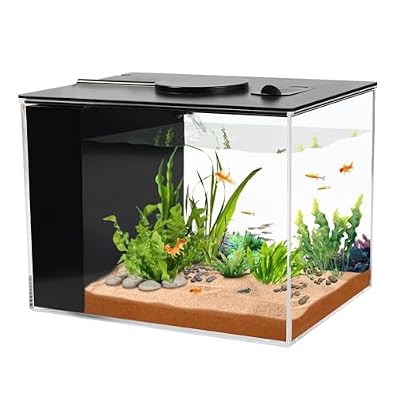
AQUANEAT Fish Tank, 1 Gallon Betta Fish Tank, Small Aquarium Kit with LED Light and Water Filter Pump
Selected for "Best Filter for Goldfish Tank: Top Picks by the Numbers": this listing is filtration (AQUANEAT Fish Tank, 1 Gallon Betta Fish Tank, Small Aquarium Kit with ), matching the equipment this article covers.
View on Amazon
Tetra Whisper IQ 130 GPH Power Filter for Aquariums
Selected for "Best Filter for Goldfish Tank: Top Picks by the Numbers": this listing is filtration (Tetra Whisper IQ 130 GPH Power Filter for Aquariums), matching the equipment this article covers.
View on Amazon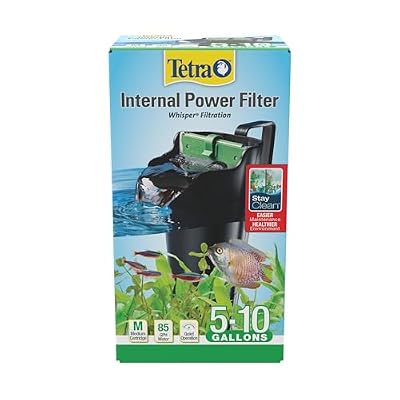
Tetra Whisper 85 GPH Internal Power Filter For Aquariums
Selected for "Best Filter for Goldfish Tank: Top Picks by the Numbers": this listing is filtration (Tetra Whisper 85 GPH Internal Power Filter For Aquariums), matching the equipment this article covers.
View on AmazonBy David Nguyen
Quick answer: For most people in 2026, the best filter for goldfish tank is the Canister — our #1 rated choice. See the full ranked comparison, alternatives and buying advice below.
Sizing Filtration to Goldfish Waste Output
Choosing the best filter for goldfish tank use is a sizing exercise before it is a shopping exercise. Four numbers do almost all the work, and once they are settled the field narrows to three or four filter classes that can realistically hold a goldfish tank stable.
The Deciding Number: Turnover, Loaded GPH and Media Volume
Community tanks run comfortably at 4-6x turnover per hour. Goldfish need 8-10x because of their waste output, so a 40 gallon (151 L) tank wants 320-400 GPH (1211-1514 LPH) of real flow arriving in the tank, rather than the figure printed on the packaging.
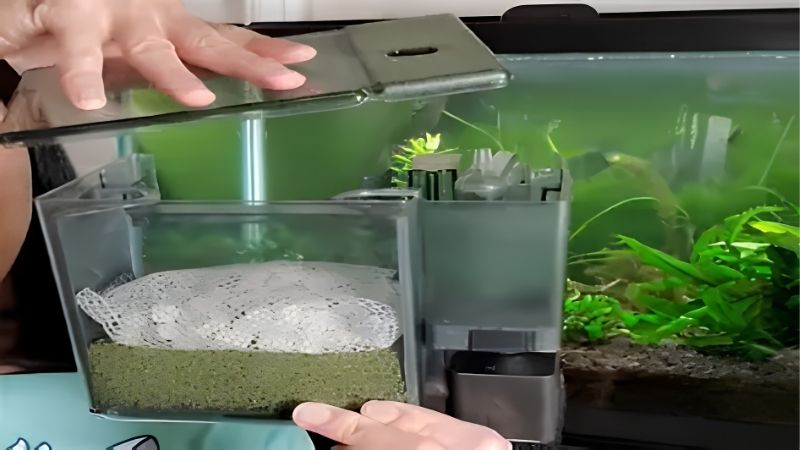
Rated GPH is measured with an empty housing and no plumbing, so expect a 30-50% drop once media, hoses and head height are added. Media volume matters as much: a filter housing 1 gallon (3.8 L) of media beats a higher-flow unit running a single thin cartridge.
Three More Criteria, Each With a Number
Media configuration comes first: mechanical, then biological, then chemical only when needed. A filter that forces one combined cartridge cannot be staged this way, which means replacing the biological surface every time the mechanical layer clogs, a recurring problem rather than a single annoyance.
Noise and service interval decide the rest. Air-driven and internal designs sit around 35-45 dB, canisters move noise into the cabinet, and hang-on-back units grow louder as the water level drops. Sponge and hang-on-back media want attention every two to four weeks, a canister every two to three months.
Tank Size, Placement and Fit
Measure the clearance behind the tank against the depth of a hang-on-back unit and the cabinet opening height against a canister before ordering, since a hang-on-back typically needs 4-6 in (10-15 cm) and a canister needs its full height plus room for hose bends underneath.
Canisters must sit below the water line, so a cabinet with 16 in (41 cm) of internal height rules out taller units entirely. Intake depth matters too: an intake stopping 2 in (5 cm) short of the bottom will draw air within a week in a dry room.
The Options by What the Tank Actually Needs
Four filter classes cover essentially every goldfish build. Each is matched below to a specific situation with its main number, because the best filter for goldfish tank duty depends entirely on volume, on the body shape of the fish, and on where the tank sits.
Canister Filter: For 40 Gallons and Up With Two or More Goldfish
Main number: 250-400 GPH (946-1514 LPH) loaded, with 1-2 gallons (3.8-7.6 L) of media across stacked baskets. This is the only class that comfortably delivers 8-10x turnover on a 55-75 gallon (208-284 L) tank while keeping all the hardware out of sight in a cabinet.
It suits keepers with a closed stand, three or more fancy goldfish, or a single-tail. It does not suit anyone unwilling to service it every two months, since a canister losing its seal leaks onto the floor rather than into the tank, and loses flow with no audible warning.
Hang-on-Back With Refillable Basket: For 20-40 Gallon Builds
Main number: 150-250 GPH (568-946 LPH) loaded on a unit rated 300-425 GPH (1136-1609 LPH). Choose a model with an open basket rather than a slot for a proprietary cartridge, so you can run coarse sponge, then ceramic media, then carbon only when it is genuinely required.
It suits a 20-40 gallon (76-151 L) tank with one or two fancy goldfish and anyone who wants to see the filter working. It does not suit tanks with under 4 in (10 cm) of wall clearance, or bedrooms, since outflow splash grows as the water level falls.
Internal Power Filter With Adjustable Outflow: For Fancy Goldfish
Main number: an outflow that throttles to roughly 40% while the pump still moves 150-200 GPH (568-757 LPH). Fancy goldfish with compressed bodies are poor swimmers, so a filter you can dial down solves the current problem without dropping below the turnover the tank needs.
It suits oranda, ryukin and similar varieties, and any tank where the fish parks in a corner away from the outflow. It does not suit heavily stocked tanks alone, because internal units trade media volume for a compact housing and consume swimming space inside the glass.
Dual Sponge Filter on an Air Pump: For Quarantine and Backup
Main number: an air pump rated for the tank volume driving two sponges, giving strong biological capacity with almost no directional current. Running cost is the lowest of any class here, since the sponges last years and only air stones and the pump diaphragm need replacing.
It suits quarantine, grow-out for juveniles, and running alongside a canister so seeded media is always available. It does not suit an adult goldfish tank as sole filtration, because mechanical clearance of solid waste is limited and the pump hum still carries at night.
| Option | Loaded flow | Tank range | Recurring cost | Best for |
|---|---|---|---|---|
| Canister | 250-400 GPH (946-1514 LPH) | 40-125 gallons (151-473 L) | Low, loose media refills | Heavier stocking, hidden hardware |
| Hang-on-back, refillable | 150-250 GPH (568-946 LPH) | 20-40 gallons (76-151 L) | Low if media is loose | Visible service, simple setup |
| Hang-on-back, cartridge | 150-250 GPH (568-946 LPH) | 20-40 gallons (76-151 L) | High, monthly cartridges | Avoid where an alternative exists |
| Internal, adjustable | 150-200 GPH (568-757 LPH) | 20-40 gallons (76-151 L) | Low | Fancy goldfish needing flow control |
| Dual sponge on air | Indirect, high biological | 10-30 gallons (38-114 L) | Very low | Quarantine, grow-out, backup |
Head to Head, and When Not to Buy
Two of these classes get compared constantly and the answer is not universal. This section also covers the case where new filtration is the wrong purchase entirely, which happens more often than the search volume for the best filter for goldfish tank builds would suggest.
Canister Versus Hang-on-Back
A canister wins on media volume and on keeping equipment out of the display, and it is the only realistic choice above 55 gallons (208 L). A hang-on-back wins on service time, on cost, and on the fact that you can see a developing problem rather than discovering it late.
The deciding factor is usually the cabinet. Without an enclosed space below the tank offering at least 18 in (46 cm) of internal height plus room for hoses, the canister ends up beside the stand in full view, and the hang-on-back becomes the better answer at that volume.
When a New Filter Is the Wrong Purchase
Falling flow is more often grit in the impeller housing or a clogged intake sponge than a failing pump. Strip and clean the impeller, check the intake, then measure again before replacing anything, because a filter correctly sized last year is still correctly sized this year.
Persistent ammonia alongside adequate turnover is a stocking or feeding problem rather than a filtration problem. Adding a second filter to a tank holding too many goldfish increases current without increasing the volume the fish actually need, and the readings will barely improve.
The Cheaper Route That Works
A coarse sponge pushed onto an existing intake adds mechanical prefiltering and biological surface for very little money, and it keeps solids out of the canister so services stretch further. It is the highest-value upgrade available to a goldfish tank that is otherwise adequately filtered already.
Adding one air-driven sponge filter beside an existing unit is the other budget move. It raises biological capacity, provides redundancy during a canister service, and leaves you with seeded media ready for a quarantine tank on the day a new fish actually arrives.
Running It, Breaking It and the 12-Month Cost
Filters run continuously, so the best filter for goldfish tank use is partly the one whose failure mode you can live with. This section covers what breaks first, what you keep buying afterwards, and the electrical safety points applying to every option listed above.
Failure Points by Class
Hang-on-back units lose prime after a power cut, which is the most common cause of a dead filter and a dying colony after a storm. Impellers pick up grit and rattle, and a warped lid can send the outflow behind the tank rather than back into it.
Canister seals are the serious one, since a failed gasket puts water on the floor. Hoses stiffen over years, quick-disconnect valves crack at the collar, and priming after a service grows harder as seals age. Sponge filters simply clog, and air pump diaphragms stiffen within one to two years.
Consumables and the Cartridge Trap
The largest 12-month cost difference between two similar filters is whether they take loose media or proprietary cartridges. Cartridges are bought monthly, can cost more across a year than the filter itself, and cannot be staged mechanically, biologically and chemically in the correct order.
The bigger issue is biological. Discarding a cartridge discards the nitrifying colony living on it, which is why established tanks sometimes show a small ammonia rise a few days after a filter change. Loose media lets you replace clogged floss while leaving the biological layer completely untouched.
Warranty, Spares and Electrical Safety
Warranties usually separate housing from moving parts, so a two-year term often covers the body while the impeller counts as a wear item. What matters more is whether impellers, gaskets and suction cups are sold separately, since a filter without available spares is effectively disposable.
Anything running beside water should carry a recognised safety certification such as UL or ETL, sit on a GFCI outlet, and have a drip loop formed in every cable so water runs to the floor rather than into the socket behind the stand.
On timing, large canisters see their deepest discounts in late June and late November, though a sale never shortens the three to eight weeks of cycling a new tank needs before fish go in. Prices move constantly, so check at the moment of purchase.
Best Filter for Goldfish Tank Questions
These questions arrive after the sizing is settled but before the order is placed. The best filter for goldfish tank answer stays with flow, media and failure behaviour rather than with rankings, because the right class depends on your own tank.
Can I use two filters instead of one large one?
Yes, and it is a good approach. Two units give redundancy during a service and let you keep seeded media running while one is cleaned. Add the loaded flow figures together and aim for the same 8-10x turnover you would target with a single larger filter.
Is a sponge filter enough for one goldfish?
For a juvenile under 3 in (7.6 cm) in a grow-out tank, often yes. For an adult fancy goldfish in 20 gallons (76 L), pair it with a mechanical filter, since sponges handle dissolved waste well but clear solid waste slowly at goldfish output levels.
How do I reduce flow for a fancy goldfish?
Use a spray bar, aim the outflow along the glass, or fit a flow valve on a canister return. Keep the filter sized at 8-10x turnover and diffuse the current instead of throttling the pump below the turnover the tank genuinely needs to stay stable.
Does a UV steriliser replace filtration?
No. A UV unit clears free-floating algae causing green water and some waterborne organisms, but it removes no ammonia and does nothing to algae on glass or decor. It is an addition to a correctly sized filter and never a substitute for one.
See More:
Conclusion
The best filter for goldfish tank use is the one delivering 8-10x loaded turnover with staged, refillable media and flow you can diffuse. For most tanks from 40 gallons (151 L) upward a canister is the default answer, with a refillable hang-on-back covering 20-40 gallon (76-151 L) builds.
On a tight budget, a refillable hang-on-back sized one class above the tank and paired with an air-driven sponge filter matches most of that for far less. Avoid proprietary cartridge systems either way, since across twelve months they cost more and repeatedly discard the bacteria you are paying to house.
Ready to decide? Our #1 pick for 2026 is the Canister.
Live price & availability on Amazon.
Related Reviews & Guides

Best Substrate for Shrimp Breeding Tank: Careful Buyer Guide
Best Vertical In Tank Pump For Aquaculture: Best Expert