Last Updated: October 21, 2026
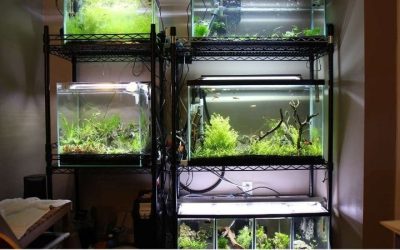
The best diy alternative to an aquarium stand is often no alternative at all, because a workbench must clear two hard gates: correct load and exact top footprint. A 3,000-pound rack still fails when its 48-inch top is shorter than a 48.25-inch 55-gallon tank sitting on it.
As an Amazon Associate we earn from qualifying purchases.
By David Nguyen
Four Safety Checks for a DIY Aquarium Stand
Before treating any table or rack as a stand, run four checks: the load metric, the exact top footprint, the aquarium warranty scope, and whether the piece is truly level and stable. If a warranty demands a purpose-built stand, the honest answer may be to skip the DIY route entirely.
The Load Metric Is Not Comparable
A headline weight rating is not the number that matters, because distributed shelf ratings and concentrated top loads are measured differently. A rack advertised at 3,000 pounds may spread that across a whole unit, which does not tell you whether its top can safely bear an aquarium’s concentrated, continuous weight.
Because distributed and top-load figures are non-comparable, a big rating can create false confidence. Treat any load claim as unverified for aquarium use unless the maker states a concentrated top capacity, since matching your loaded tank against the wrong kind of rating is exactly how a DIY base fails silently.
Exact Top Footprint Must Fit
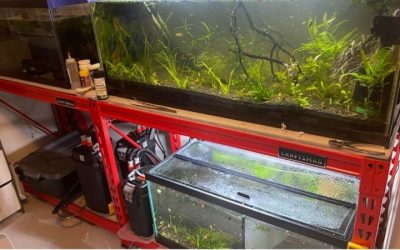
The top must fully support the tank’s base, and small gaps disqualify otherwise strong furniture. A Gladiator four-foot rack is shorter than an Aqueon 55 at 48.25 inches and a 75 at 48.5 inches, so despite a 3,000-pound rating it fails the footprint check before load is even relevant.
The same trap repeats at larger sizes: a six-foot rack at 72 inches is still short of an Aqueon 125 at 72.5 inches. Measure the tank’s actual base against the top’s real dimensions, because an overhang of even a fraction of an inch leaves the tank edge unsupported, which no weight rating can fix.
Aquarium Warranty Scope
Using a non-stand can void the tank’s warranty, which turns a clever DIY into an expensive gamble. None of these workbenches or racks are certified by their makers as aquarium stands, so a leak or crack on a DIY base may not be covered, shifting all of the financial risk squarely onto you.
This is the reframe worth taking seriously: if the warranty requires a suitable purpose-built stand, the correct answer can be not to use a DIY alternative at all. Weigh the money saved against the coverage lost, since a failed tank costs far more than the stand you were trying to avoid buying.
Margin, Level and Stability
Even a piece that passes load and footprint needs real margin and a level, stable base. A Seville 36-by-24 rack rated 500 pounds against an Aqueon 40BR near 455 pounds leaves only about a 9.9 percent numeric margin, and its 36-inch top is shorter than the roughly 36.375-inch tank, failing footprint too.
Thin margins and slight overhangs are exactly what turn a borderline DIY base into a slow failure. A stand must also sit level and not rack or wobble under load, so if a candidate barely clears the numbers or cannot be leveled reliably, treat that as a reason to choose a purpose-built stand instead.
Four Real Alternatives Assessed
These candidates show how the gates play out in practice rather than crowning a winner, since none is certified as an aquarium stand. Read each row as a pass-or-fail case against load and footprint, and treat the reframe seriously: for many tanks the right answer is a purpose-built stand.
| Product | Best For | Key Spec | Watch Out For |
|---|---|---|---|
| Gladiator 4 ft Rack | 55/75-gallon consideration | 3,000 lb; 48 in top | Shorter than 48.25 in tank |
| Gladiator 6 ft Rack | 125-gallon consideration | 72 in top | Short of 72.5 in tank |
| Seville 36×24 Rack | 40BR-size consideration | 500 lb; 36 in top | ~9.9% margin; 36 in too short |
| Purpose-Built Stand | When gates cannot be met | Rated for the exact tank | The safe default choice |
Gladiator 4 ft Rack
The Gladiator four-foot rack tempts buyers with a 3,000-pound rating for a 55 or 75-gallon tank, but it fails the footprint gate. Its roughly 48-inch top is shorter than an Aqueon 55 at 48.25 inches and a 75 at 48.5 inches, so the tank would overhang the support at both of its ends.
That distributed 3,000-pound figure is also non-comparable to a concentrated aquarium load, so it offers false reassurance. Because the top cannot fully support the tank base, this rack fails before load matters, which is a clear case where a purpose-built stand rated for the exact tank is the correct call.
Gladiator 6 ft Rack
Scaling up, the Gladiator six-foot rack at about 72 inches looks promising for a 125-gallon tank, yet it too falls short. An Aqueon 125 measures around 72.5 inches, so the tank base slightly overhangs the rack top, leaving the tank edge unsupported despite the unit’s substantial build.
A fraction-of-an-inch overhang is still a failure, since the unsupported edge concentrates stress no rating offsets. This repeats the four-foot lesson at a larger scale, so rather than trusting a near-miss footprint on a heavy tank, choose a stand the tank maker rates, where fit is documented rather than estimated.
Seville 36×24 Rack
The Seville 36-by-24 rack rated 500 pounds seems to clear an Aqueon 40BR near 455 pounds, but the margin is thin and the footprint fails. About 9.9 percent of headroom on load is slim for a continuous aquarium weight, and the 36-inch top is shorter than the roughly 36.375-inch tank base.
Thin margin plus a short top is the worst combination, since neither number gives you room for error. Even where a rack nearly passes, that near-miss is precisely the signal to step back, because a purpose-built stand removes both the marginal load and the overhang in one documented, tank-specific solution.
Purpose-Built Stand
When a candidate cannot clear both gates, the honest alternative is a purpose-built stand rated for your exact tank. It is engineered for a concentrated, continuous load and a matching footprint, and it keeps the tank warranty intact, which the DIY options in this list cannot promise.
It is not a DIY workaround, and that is the point of the reframe: the money a rack seems to save is dwarfed by the cost of a failed tank. For most aquariums that miss the load or footprint checks, the safe default is simply the correct purpose-built stand rather than a clever substitute.
Frequently Asked Questions
Buyers weighing a DIY base ask whether a big load rating is enough, how much overhang is acceptable, and whether wheels are safe. The answers below apply the load and footprint gates to each, and keep the reframe in view, since for many tanks a purpose-built stand is the right answer.
Is a High Load Rating Enough on Its Own?
No; a big number can mislead. Distributed shelf ratings and concentrated top loads are measured differently, so a 3,000-pound rack rating does not confirm its top can bear an aquarium’s continuous, concentrated weight. Treat any rating as unverified for aquarium use unless the maker states a concentrated top capacity.
Load is also only half the test, since footprint fails independently of weight. A rack can clear load on paper yet still be too short for the tank base, as several examples here show, so a high rating never substitutes for confirming the exact top dimensions against your own tank.
How Much Tank Overhang Is Safe?
None that you should design around. The top should fully support the tank base, and even a fraction of an inch, such as a 72-inch rack under a 72.5-inch tank, leaves the edge unsupported and concentrates stress. There is no verified universal overhang allowance to fall back on here.
Because a safe overhang figure is not something these makers publish, do not invent one. Measure the tank base against the real top dimensions and require full support, since treating any overhang as acceptable is exactly the assumption that turns a borderline DIY base into a slow, avoidable failure.
Can I Use a Rack With Wheels?
It is risky, and usually not worth it. Wheels raise the center of gravity and can allow movement or uneven loading under a heavy tank, which works against the stable, level base an aquarium needs. Any mobility feature adds variables that a purpose-built stand deliberately avoids for good reason.
If a wheeled rack still tempts you, it would have to clear the load and footprint gates and lock rigidly and level, which most do not document. Given the warranty and safety stakes, a fixed, purpose-built stand rated for the tank is the safer choice than adding wheels to the equation.
When Should I Skip the DIY Route Entirely?
Whenever a candidate misses either gate or your tank warranty requires a proper stand. If the top is short, the margin is thin, or the load rating is the wrong kind, the reframe applies: the correct answer is not to use a DIY alternative but to buy the stand the tank maker rates.
Weigh the savings against the coverage and safety you give up, since a failed tank costs far more than a stand. For most tanks that cannot cleanly pass load and footprint, skipping DIY is not a failure of ingenuity but simply the sensible, documented choice for a heavy, water-filled object.
Final Thoughts
The best diy alternative to an aquarium stand is viable only when a candidate clears both the load and footprint gates, and many do not: a 3,000-pound rack still fails under a tank that overhangs its top. Since none are certified as aquarium stands, take the reframe seriously and default to a purpose-built stand.

Best Aquarium Stand For A 120 Gallon Tank: Top Compared Guide
Best Stand For Reptile Terrarium And Large Tank: Top Compared