Last Updated: October 4, 2026
The best ceramic shrimp rocks with calcium is really two products in one search: a ceramic hide and a mineral supplement, and no reviewed item verifies both. This guide separates ceramic shelter from calcium release, compares four current products by their actual function, and points you to measured chemistry when shrimp need minerals.
As an Amazon Associate we earn from qualifying purchases.
As an Amazon Associate we earn from qualifying purchases at no extra cost to you. Prices and availability are accurate as of the date shown and are subject to change.
By David Nguyen
Quick answer: For most people in 2026, the best ceramic shrimp rocks with calcium is the SunGrow Shrimp Mineral Rocks — our #1 rated choice. See the full ranked comparison, alternatives and buying advice below.
How to Separate Mineral Rocks From Ceramic Hides
The keyword mixes two jobs, so the first skill is telling them apart: a ceramic hide gives shrimp shelter, a mineral rock or powder aims to add minerals, and ceramic does not automatically release useful calcium. Verify any mineral claim, and lean on measured water chemistry rather than assumptions.
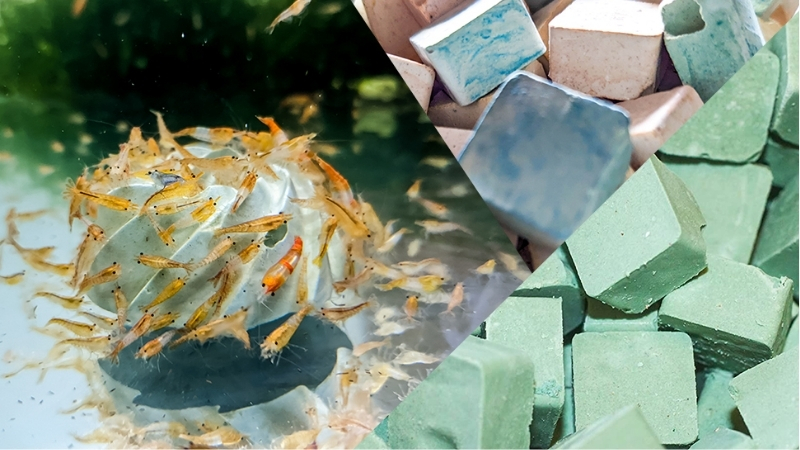
Ceramic shelter vs mineral supplement
Separate the two functions before buying, because they are different products. A ceramic dome shelters shrimp and grows biofilm, while a mineral rock or powder is meant to add minerals to the water. Searching for ceramic rocks with calcium blends these, but a single item rarely does both jobs well.
Ceramic does not naturally add useful calcium just because it is a rock, so do not assume a ceramic hide is also a supplement. Decide whether you need shelter, minerals, or both, and buy the right product for each, rather than expecting one ceramic ornament to quietly fix your water chemistry.
Verify the mineral claim
When a product claims to add minerals, verify what it actually is. SunGrow Shrimp Mineral Rocks are sold as mineral rocks plus powder with a calcium and mineral function, while Mironekuton is a natural mineral stone claiming over 66 trace minerals, so their compositions and claims differ substantially.
Others, like Shirakura, are montmorillonite rather than verified ceramic, and a plain ceramic dome makes no verified calcium claim at all. Read what each product is made of and what it promises, since the label mineral covers very different materials with very different effects on the water.
Use measured GH chemistry
Base any mineral supplementation on measured water chemistry, not guesswork. If your general hardness is low for the shrimp you keep, adjust it deliberately, ideally with a remineralizer dosed to a target, rather than dropping in stones and hoping they raise GH by some unknown amount.
Mineral stones vary widely in strength, so their effect on GH is hard to predict, and more calcium is not automatically better for molting. Test the water, set a target hardness for your species, and use a measured product to hit it, treating rocks as a supplement to chemistry you actually monitor.
Treat replacement time as product-specific
Treat replacement intervals as specific to each product, since usage guidance differs. SunGrow, Shirakura and Mironekuton all give different coverage figures, so there is no single schedule for how long a mineral stone lasts before its release tapers off and it needs replacing.
Follow the individual product’s guidance and confirm with water tests, replacing stones when your measured GH stops responding. A ceramic hide, by contrast, lasts indefinitely as shelter. Because these products age differently, do not assume one replacement rule fits the mineral rock and the ceramic dome alike.
Top Picks by Function
Because no product delivers verified ceramic shelter and calcium release together, these four are grouped by what they actually do, not ranked as one best ceramic shrimp rocks with calcium. Three target minerals with different formulations and one is a ceramic hide, so buy for the function you need.
| Product | Best For | Key Spec | Watch Out For |
|---|---|---|---|
| SunGrow Shrimp Mineral Rocks | Minerals + Powder | 50g pack; calcium/mineral claim | Dosing not universal; ~under $10 (Chewy, 09/2026) |
| Mironekuton | Trace Minerals | Natural stone; >66 trace minerals | Potency non-comparable; ~under $30 (09/2026) |
| Shirakura Mineral Stone | Mineral Stone | Montmorillonite, not ceramic | Often out of stock; ~under $20 (09/2026) |
| Imagitarium Ceramic Dome | Ceramic Hide | Ceramic shelter + grazing | Calcium release unverified; ~under $10 (Petco, 09/2026) |
SunGrow Mineral Rocks
SunGrow Shrimp Mineral Rocks come as a 50-gram pack of small rocks with powder, sold with a calcium and mineral function, at about $5. As a dedicated supplement they aim to add minerals to a shrimp tank, which is the calcium half of the search rather than the ceramic shelter half.
Seller coverage works out to roughly 3.57 grams per gallon by one derivation, but that is not a universal dose, so confirm against your water tests. It is an affordable way to target minerals, but treat the dosing as a starting point and verify the effect on your measured hardness.
Mironekuton
Mironekuton is a natural mineral stone claiming more than 66 trace minerals, at about $25, the priciest option here. It is aimed at keepers who want broad trace-mineral supplementation, with seller guidance around 100 to 150 grams per 10 liters, a far higher dose rate than some competitors.
That works out to roughly 10 to 15 grams per liter, versus about 2 grams per liter for Shirakura, so the formulations are not directly comparable on potency. Dose by the product’s own guidance and your water tests, and do not assume its higher rate simply means more minerals per dollar.
Shirakura
Shirakura Mineral Stone is montmorillonite rather than verified ceramic, at about $15, with usage guidance near 200 grams per 100 liters. It is a long-standing shrimp-keeping mineral product, but note it is often out of stock, so availability can be a limiting factor when you go to buy it.
Its roughly 2-grams-per-liter guidance is much lower than Mironekuton’s rate, reflecting a different formulation, so the two are not interchangeable by weight. As with any mineral stone, base use on measured GH, and treat the coverage figure as a rule of thumb to confirm against your own water.
Imagitarium Ceramic Dome
The Imagitarium Ceramic Dome is the actual ceramic product here, a shrimp hide at about $5. It gives shrimp shelter and a porous surface to graze, which is the ceramic half of the search, but its calcium release is unverified, so do not count on it to add minerals to the water.
Its price is close to SunGrow’s, but the two are not substitutes: one is shelter, the other a supplement. Buy the dome for hiding and grazing, and add a separate, measured mineral product if your chemistry needs it. Treating the dome as a calcium source is exactly the mix-up this category invites.
Frequently Asked Questions
These are the questions shrimp keepers ask most about minerals and ceramic, from whether shrimp need calcium to how often stones should be replaced. Each answer gives a direct response, then the chemistry caveat that keeps supplementation measured rather than guessed at.
Do shrimp need calcium?
Shrimp need adequate minerals, including calcium, to molt and build shells, which is why general hardness matters in a shrimp tank. Low mineral content can cause molting problems, so keeping GH in the right range for your species supports healthy, regular molts across the colony.
More calcium is not automatically better, though, and excess can cause its own problems. The goal is a target hardness for your species, reached and maintained deliberately, rather than piling in mineral products. Test the water and supplement to a range, not to a vague sense that more minerals help.
Does ceramic release calcium?
Not reliably. Plain ceramic, like a shrimp dome, is valued as shelter and grazing surface, and its calcium release is unverified, so you should not assume a ceramic ornament meaningfully raises calcium or hardness. Ceramic being a rock does not make it a mineral supplement.
If you need calcium or minerals, use a product designed and verified to provide them, dosed to your measured chemistry. Keep the ceramic hide for what it does well, sheltering shrimp, and handle mineral needs separately, so you are not relying on an ornament for chemistry it may not affect.
Can mineral stones raise GH?
Some mineral stones can raise general hardness, but not all do so equally, and their strength varies widely by formulation. Montmorillonite and multi-mineral stones differ in what and how much they release, so you cannot assume any mineral stone will lift GH by a predictable amount.
Because of that variability, measure GH before and after adding a stone, and adjust with a dosed remineralizer if you need a precise target. Treat stones as a supplement to monitored chemistry, not a guaranteed hardness fix, since more calcium always helping molting is a myth rather than a rule.
How often should stones be replaced?
It depends on the product, since coverage and lifespan differ between SunGrow, Shirakura and Mironekuton. There is no universal schedule, so follow each stone’s guidance and, more importantly, watch your water tests, replacing a stone when your measured hardness stops responding to it.
A ceramic hide, unlike a mineral stone, does not deplete and lasts indefinitely as shelter. Because the mineral rock and the ceramic dome age completely differently, do not apply one replacement rule to both. Let measured GH, not a fixed calendar, tell you when a mineral product is spent.
Final Thoughts
There is no verified best ceramic shrimp rocks with calcium, because ceramic shelter and calcium release are different functions no single product here delivers together. Use a ceramic dome for hiding, a verified mineral product for minerals, and measured GH to guide dosing. Match the product to the function, and confirm current prices before buying.
Ready to decide? Our #1 pick for 2026 is the SunGrow Shrimp Mineral Rocks.
Live price & availability on Amazon.
Related Reviews & Guides




Best Energy Efficient Aquarium Overflow Box: Smart Picks

Quick Picks: Best Quiet Aquarium Air Pumps