Last Updated: October 4, 2026
Deciding between artificial vs live plants for aquarium setups comes down to biology versus workload: live plants take up nutrients and add daytime oxygen, while artificial plants skip pruning, fertilizer and growth lighting but still need algae cleaning. Neither is universally better, so the right pick follows your goals and time.
As an Amazon Associate we earn from qualifying purchases.
By David Nguyen
How Artificial and Live Plants Work
The core difference is functional. Live plants participate in the tank’s chemistry and gas exchange, while artificial plants act as inert physical cover. Lighting is where the two diverge most in practice, and cleaning differs in kind rather than disappearing, so understanding each mechanism makes the trade-off between them clear.
Live plants and water chemistry
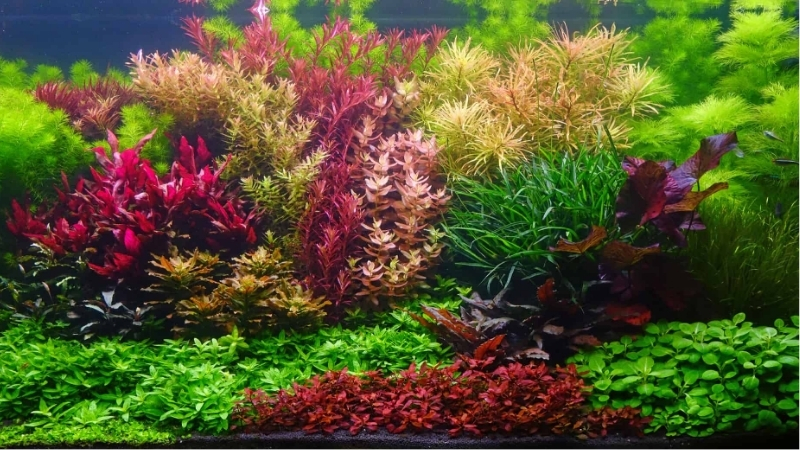
Live plants draw on nitrogen compounds as nutrients, so a well-planted tank can take up some of the nitrate that would otherwise accumulate between water changes. During daylight they also produce oxygen through photosynthesis, adding a small biological buffer that artificial plants simply cannot provide.
This uptake is a contribution, not a cure: it does not replace water changes or eliminate algae, and it depends on plant mass, light and stocking. A lightly planted tank helps modestly while a heavily planted one does more, but chemistry still needs testing and routine maintenance to stay stable.
Artificial plants as physical cover
Artificial plants deliver structure and hiding places without any horticultural demands. Fish use them the same way they use live cover, and a fish-safe non-toxic model such as Fluval’s Aqualife range stands about 6 to 8 inches tall, giving mid-water and background shape immediately after setup.
Because they do not grow, they hold their layout indefinitely and never compete for light. The trade is purely aesthetic and biological: you get instant, stable scenery, but none of the nutrient uptake or oxygen contribution that living plants bring to the water column throughout the day.
Lighting is the practical difference
Lighting separates the two choices more than anything else. Live plants need usable intensity, and easy species sit in a low-light reference of roughly 20 to 30 PAR. That is a category rather than a target for every plant, and it measures intensity, not color temperature.
A common spectrum reference is 6500 to 8000K, but Kelvin describes color and cannot substitute for measured PAR. Artificial plants remove this variable entirely, so if your fixture is weak or you would rather not manage light, they sidestep the most common cause of failed live plant setups.
Cleaning is different, not zero
Neither option is maintenance-free. Live plants need pruning, occasional fertilizer and light management, while artificial plants avoid all of that but still collect algae and detritus. The routine method is a rinse in warm water with a soft brush and no soap, done during normal tank cleaning.
For stubborn buildup, a bleach soak at about 1 to 10 for a maximum of 4 to 6 hours works, followed by thorough neutralizing and rinsing before the plant goes back. So the real question is which kind of upkeep you prefer, not whether you can avoid upkeep altogether.
What Each Choice Looks Like in Practice
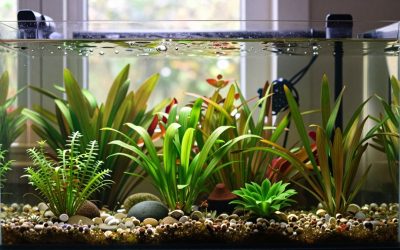
In the artificial vs live plants for aquarium decision, the right choice depends on your priorities and experience. Some keepers want the lowest plant workload, others want the biological benefits of living plants, and many combine both, so these scenarios map each option to where it fits.
| Factor | Normal Range | Watch-out Threshold | What to Do |
|---|---|---|---|
| Easy-plant light | ~20-30 PAR (low-light) | Below range: weak, leggy growth | Match fixture to low-light plants |
| Spectrum | 6500-8000K reference | Kelvin alone misleads | Judge by PAR, not color temp |
| CO2 for easy plants | Not required for most | Demanding species may stall | Pick low-tech plants or dose CO2 |
| Cleaning artificial plants | Warm water + soft brush | Stubborn algae film | Bleach 1:10, max 4-6 h, then rinse |
Choose artificial for simplicity
If your goal is stable scenery with minimal fuss, artificial plants are the practical answer. They need no special lighting, no fertilizer and no pruning, which removes the variables that trip up beginners. A fish-safe model around 6 to 8 inches gives instant structure that never changes shape.
The ongoing job is cleaning, not cultivation: rinse them in warm water during maintenance and reserve a diluted bleach soak for heavy algae. This route suits low-light tanks, high-traffic community setups, or anyone who wants the look of a planted tank without the horticulture behind it.
Choose live for biological function
When you want the tank itself to do some work, live plants earn their keep. Their nutrient uptake and daytime oxygen production add a modest biological buffer, and a densely planted tank can noticeably steady conditions between water changes compared with a bare or fully artificial layout.
The cost is care: usable light near the 20 to 30 PAR low-light range, occasional fertilizer, and pruning as they grow. Most easy species do not require injected CO2, so the barrier is lighting and patience rather than gear, which makes live plants realistic for committed beginners on a budget.
Use easy low-light plants
If you want live plants without a demanding setup, start with easy low-light species that tolerate the 20 to 30 PAR reference range. Anubias nana and Java Fern Narrow Leaf, both around $10 at Petco as of 09/2026, attach to hardscape and thrive without root feeding or bright light.
These plants forgive inconsistent care, which is why they anchor most beginner scapes. They grow slowly, so pruning is rare, and they seldom melt when moved. Pairing a few of them with an existing fixture is the lowest-risk way to test whether live plants suit your routine at all.
Mix artificial and live when useful
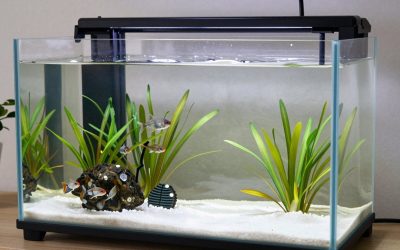
Mixing both is a legitimate strategy rather than a compromise. Artificial plants can fill tall background zones or spots where light does not reach, while a few live low-light species handle the biological role in the better-lit areas of the same aquarium at the same time.
This hybrid gives instant structure where growing plants would struggle and real nutrient uptake where they will thrive. It also lets a beginner add live plants gradually, replacing artificial pieces as confidence grows, without ever leaving the tank bare during the transition period.
Frequently Asked Questions
These are the questions beginners ask most when weighing plant options, from whether live plants really lower nitrate to how fake plants should be cleaned. Each answer opens with a direct response, then adds the practical exception or tip that decides how it applies to your tank.
Do live plants reduce nitrates?
They can, to a degree. Live plants use nitrogen compounds as nutrients, so a planted tank takes up some nitrate that would otherwise build up. The effect scales with plant mass, light and stocking, so a heavily planted tank helps more than a few stems tucked into a corner.
It is a supplement, not a replacement for water changes, and it will not offset heavy overstocking or overfeeding. Treat plant uptake as one tool among several, and keep testing nitrate so you know whether your planting is actually keeping pace with the waste your fish produce.
Are fake plants safer for beginners?
Often, yes, because they remove the lighting and fertilizer variables that cause most beginner plant failures. A fish-safe, non-toxic artificial plant gives instant cover with no risk of melting or dying off, which keeps the tank looking established while you learn the basics of water care.
The caveat is that fake plants add no biological function and still need cleaning. If you want easy live plants instead, low-light species like Anubias tolerate beginner conditions well, so safety is less about fake versus live and more about matching plant demands to your setup.
Do live plants need CO2?
Most easy plants do not. Injected CO2 boosts demanding, high-light species, but low-light staples grow without it under a modest fixture. General guidance is that supplemental CO2 is not required for most beginner plants, so you can start without a pressurized system entirely.
Where CO2 helps is with carpeting and fast-growing stems under strong light, where it becomes the limiting factor. For a low-tech tank of Anubias, Java Fern and similar species, consistent lighting and light fertilization matter far more than adding a CO2 setup to the equation.
How should fake plants be cleaned?
Rinse them in warm water with a soft brush and no soap during routine maintenance, which handles most algae and detritus. Soap residue is harmful to fish, so mechanical cleaning is the safe default for artificial plants that have picked up a light film over time.
For stubborn algae, soak in a roughly 1-to-10 bleach solution for no more than 4 to 6 hours, then neutralize and rinse thoroughly before returning the plant. Always confirm there is no bleach smell left, since incomplete rinsing is the main risk with this deep-clean method.
Final Thoughts
There is no single winner in artificial vs live plants for aquarium setups: live plants add nutrient uptake and daytime oxygen at the cost of lighting and care, while artificial plants offer stable, low-effort cover that still needs cleaning. Match the choice to your fixture, your time, and how much you want the plants to do.
As an Amazon Associate we earn from qualifying purchases at no extra cost to you. Prices and availability are accurate as of the date shown and are subject to change.
5 Best Silk Aquarium Plants (2026)

Aquarium Magnetic Mount