Last Updated: September 27, 2026
On a nano reef, the best calcium reactor for a nano reef tank is usually none at all, because current bodies start well above nano volumes and a small tank rarely draws enough alkalinity to justify the CO2 gear, cost and tuning a reactor brings.
As an Amazon Associate we earn from qualifying purchases.
By David Nguyen
How to Choose a Calcium Reactor for a Nano Reef
Nano reefs sit below where current reactors are designed to run, so the first job is deciding whether one belongs on the tank at all. If demand somehow justifies it, these criteria judge low-output control, verified lower range and footprint, but for most nanos simpler supplementation is the honest recommendation.
First, Ask Whether a Reactor Makes Sense
Most nano reefs never generate enough alkalinity demand to warrant a reactor, so the honest starting point is whether one is appropriate at all. On a small water volume with a few corals, two-part dosing or kalkwasser is cheaper, simpler and safer, and it avoids piling CO2 handling onto a compact setup.
A reactor only starts to make sense on an unusually demanding nano, such as one packed with fast-growing SPS. Even then the size mismatch is real, so measure daily consumption first and treat a reactor as the exception for a nano, not the default upgrade a small reef is expected to grow into.
Check the Lower Size Boundary
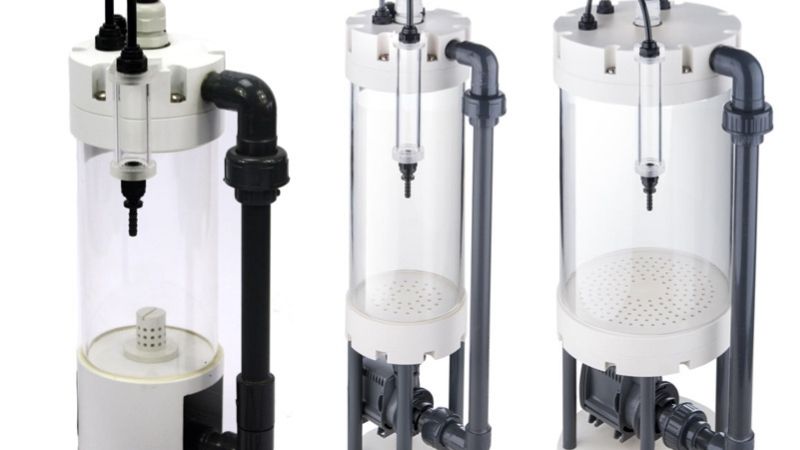
Read published ranges before assuming any reactor fits a nano. The Reef Octopus CR-100 lists 69 to 120 gallons and the AquaReady cTech T-1 starts at 75, so both begin far above nano volumes, and the AquaMaxx T-Nano is rated up to 75 but is a legacy unit whose current availability is uncertain.
Because no current body is verified for typical nano sizes, there is no outright best-overall reactor for a nano reef. Any option means running a unit well below its intended range or choosing hardware because you plan to leave the nano behind, so let the published low end, not hope, set your expectations.
Compare Simpler Supplementation
For nearly every nano, dosing beats a reactor on cost, simplicity and safety. Two-part lets you add measured alkalinity and calcium by hand or a small doser, while kalkwasser supplements through top-off, and both suit the modest, easily met demand that a small reef volume typically produces day to day.
These methods also match a nano’s scale, where a reactor’s CO2 system is bulky and easy to over-drive. Unless testing shows genuinely high demand, simpler supplementation is not a compromise but the correct tool, so reserve a reactor for the rare nano whose measured draw clearly outpaces what dosing can supply.
Consider Equipment Footprint
Nano setups have little room to spare, and a reactor is not a small addition once you count the feed pump, regulator and a CO2 cylinder. That hardware can dwarf the display it serves, so the physical footprint alone often rules a reactor out on a tank whose whole appeal is a compact, tidy build.
If you still want automation on a nano, weigh how much space the full system consumes against the modest demand it would meet. In most cases a small doser handling two-part occupies a fraction of the room, which is another reason simpler supplementation, not a reactor, fits the nano reef format best.
Options to Consider
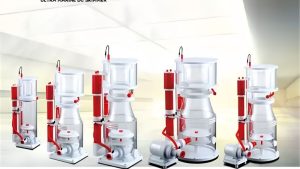
There is no verified best-overall reactor for a typical nano, so treat this as a list of the closest options with their caveats, including the dosing routes that suit most nanos better. Each reactor here either runs below its range or expects you to outgrow the nano, which is why demand comes first.
| Option | Best For | Key Spec | Watch Out For |
|---|---|---|---|
| Two-part / kalkwasser | Best for most nano reefs | Measured dosing; tiny footprint | Manual or doser; test to set amounts |
| AquaMaxx cTech T-Nano | Smallest body (if available) | Up to 75 gal; 0.8 L chamber | Legacy; availability uncertain |
| Reef Octopus CR-100 | Closest current body | 69-120 gal; 1.5 L chamber | Range far above nano volumes |
| AquaReady cTech T-1 | Only if leaving nano behind | 75-300 gal; 2.9 L; ~$235 (Sep 2026) | Not verified for nano sizes |
Two-Part or Kalkwasser — Best for Most Nano Reefs
For the great majority of nano reefs, measured dosing is the right answer. Two-part supplies alkalinity and calcium separately in amounts you set from testing, and kalkwasser adds both through top-off water, and either meets a small reef’s modest demand at low cost with a footprint a reactor cannot approach.
This is a genuine recommendation, not a placeholder, because it matches a nano’s scale and avoids CO2 handling on a tank with little room. Dose to your measured numbers, adjust gradually, and treat this as the default for a nano reef rather than a stopgap on the way to a reactor you probably do not need.
AquaMaxx cTech T-Nano — Smallest Body, If You Can Find One
The AquaMaxx cTech T-Nano is the only body designed near small-tank scale, rated up to 75 gallons on a compact 0.8-liter chamber. On an unusually demanding nano it is the neatest reactor match on paper, and its small chamber makes a slow, steady effluent easier to hold than a big body would.
The catch is that it is a legacy model with uncertain current availability, so confirm you can buy it and get spares before planning around it. Even then it is rated to 75 gallons, far above a true nano, so treat it as a maybe for a high-demand small reef rather than a nano recommendation.
Reef Octopus CR-100 — Closest Current Body
The Reef Octopus CR-100 is the most credible in-production small reactor, on a 1.5-liter chamber with a 69 to 120 gallon range. It is not nano-rated, and that range sits far above nano volumes, so it appears here only as the closest current body for a small reef that is really pushing high demand.
On an actual nano it would run well below its intended window, which makes gentle, stable tuning harder and the purchase hard to justify. Confirm current pricing if you consider it, but for a genuine nano it is the wrong tier, and dosing will almost always serve the tank better at far lower cost.
AquaReady cTech T-1 — Only If Leaving the Nano Behind
The AquaReady cTech T-1 belongs on this list only as a grow-into purchase, since its range starts at 75 gallons and nothing in its published data supports running it on a 20-gallon nano. If you plan to replace the nano with a much larger reef soon, it is a capable body to buy ahead of that move.
For the nano itself it is heavily oversized, adding cost, CO2 use and tuning difficulty with no benefit at this scale. Do not read its broad range as evidence it suits a small tank; treat it purely as hardware for the bigger reef you intend to run, and stick to dosing while the tank is still a nano.
Frequently Asked Questions
Nano reef questions about reactors nearly always come back to whether a small tank should use one and what to run instead. These answers keep the focus on verified ranges and simple supplementation, since nano volumes fall below where current reactors are built to operate cleanly and safely.
Does a 20-Gallon Nano Need a Calcium Reactor?
Almost never. A 20-gallon nano’s alkalinity demand is small enough that two-part dosing or kalkwasser handles it easily and cheaply, so a reactor adds CO2 gear, cost and tuning without solving a real problem. No current reactor is verified for a tank this small, which reinforces that dosing is the right tool.
The rare exception is a nano packed with fast-growing SPS whose measured draw is unusually high, and even then the size mismatch is significant. Measure your daily consumption before assuming the tank needs automation, and in the vast majority of nano cases the answer remains a confident no.
Can I Run a Reactor on a Nano SPS Tank?
You can attempt it, but current bodies are not designed for nano volumes, so you would run a reactor far below its intended range where gentle, stable tuning is hard. Even a demanding nano SPS tank usually sits below where these reactors operate cleanly, so the fit is a compromise rather than a solution.
If demand is genuinely high, a small doser running two-part often controls parameters more precisely at nano scale than an oversized reactor pinned at its low end. Reserve a reactor for a larger SPS system, and let measured demand, not the presence of SPS alone, decide how you supplement a nano.
Is Two-Part Dosing Enough for a Nano Reef?
For most nanos, yes. Two-part supplies alkalinity and calcium in measured doses that comfortably meet a small reef’s demand, and it scales down neatly to nano volumes where a reactor would be bulky and easy to over-drive. Dosed to your test results, it keeps parameters stable at a fraction of a reactor’s cost.
It also teaches you how your nano consumes buffer, which is useful if you later move to a larger reef. Adjust amounts gradually from testing rather than fixed recipes, and treat two-part as a complete, long-term method for a nano, not merely a temporary measure before some inevitable reactor purchase.
What About Kalkwasser on a Nano?
Kalkwasser is a strong fit for many nanos, since it supplements both alkalinity and calcium through the top-off water a small tank needs anyway. Dosed carefully it holds parameters steady and adds almost no equipment, which suits a nano’s compact format better than a reactor and its CO2 system ever could.
Its main limits are that it must be dosed slowly to avoid pH swings and that very high demand can outrun it, though few nanos reach that point. Watch pH as you introduce it, pair it with testing, and treat kalkwasser as another sound, low-footprint option that keeps a reactor unnecessary on most nano reefs.
Final Thoughts
For the best calcium reactor for a nano reef tank, the honest answer is that most nanos should not use one, since current bodies start well above nano volumes and dosing suits the scale better. If a rare high-demand nano justifies hardware, treat every reactor here as a below-range compromise, not a true fit.

5 Best Coral Decoration Fish Tanks 2026
6 Best Wavemakers For Saltwater Aquarium 2026