Last Updated: October 4, 2026
The strips-versus-liquid debate is usually framed as accuracy, but the verified specs tell a different story. Choosing between the best aquarium test strips vs liquid test kit really comes down to which parameters you need and how you like to work, because each format covers things the other does not, and neither wins outright.
As an Amazon Associate we earn from qualifying purchases.
By David Nguyen
Quick answer: For most people in 2026, the best aquarium test strips vs liquid test kit is the Parameters — our #1 rated choice. See the full ranked comparison, alternatives and buying advice below.
How Test Strips and Liquid Kits Differ
The real differences are coverage, ammonia capability, workflow, and the honest limits of accuracy claims. A popular strip kit and a popular liquid kit each leave gaps the other fills, so understanding those four dimensions matters far more than chasing a single supposed winner between the formats.
Parameter Coverage
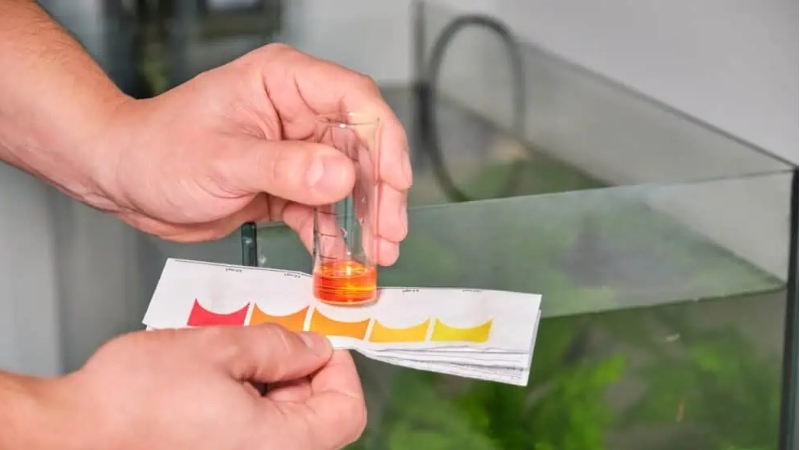
Coverage is where the two formats diverge most, and it is not simply that liquid does more. Tetra EasyStrips Complete reads six parameters plus ammonia, covering NH3, chlorine, nitrate, nitrite, GH, KH, and pH, while the API Freshwater Master reagent kit covers pH, high-range pH, ammonia, nitrite, and nitrate.
That means the strips include GH, KH, and chlorine that the API Master kit does not, while the liquid kit adds a dedicated high-range pH test. Neither covers everything, so match the format to the parameters you actually monitor rather than assuming one is simply more complete than the other.
Ammonia Capability
Both formats can test ammonia, contrary to the myth that strips never do. Tetra’s kit includes a dedicated ammonia strip that reads in about ten seconds, and the API Master kit measures ammonia through its liquid reagents, so ammonia is available in either format you choose.
The difference is workflow rather than capability: the strip is a quick dip and read, while the liquid ammonia test involves adding reagents and comparing to a chart. For routine ammonia screening the strip is faster, while the liquid test suits closer reading during a cycle or a problem.
Workflow and Speed
Workflow is the strips’ clear advantage, since a single dip reads six parameters in about 60 seconds. The API Master kit trades that speed for a multi-step reagent process, adding drops to test tubes and waiting before comparing colors, which takes longer but gives a deliberate, tube-by-tube reading.
So strips win on quick routine screening, while liquid suits sit-down sessions where you are actively troubleshooting. Consider how often you test and how much time each session deserves, because the faster format is the one you are more likely to actually use on a regular schedule.
The Accuracy Question
Accuracy is where marketing overreaches, and the verified specs do not settle it. There was no independent, controlled head-to-head accuracy study locked for this comparison, so it is not honest to claim liquid is universally or scientifically more accurate than strips based on specs alone.
Both formats are approximate colorimetric tests read against a chart, and technique affects both. Rather than trusting a blanket accuracy claim, choose by coverage and workflow, and if you need precision on a specific parameter, verify it deliberately rather than assuming one format is always right.
Test Strips vs Liquid: Head to Head
Because this is a two-format comparison rather than a product roundup, there is no single overall winner, only situations where each fits better. Prices are relative and current as of 09/2026, with Tetra around $25 and API around $40, so Tetra sits roughly 37.6% below the liquid kit on price.
| Factor | Test Strips (Tetra EasyStrips) | Liquid Kit (API Master) |
|---|---|---|
| Parameters | NH3, Cl, NO3, NO2, GH, KH, pH | pH, high pH, NH3/NH4, NO2, NO3 |
| Ammonia test | Yes; dedicated strip, ~10s | Yes; via liquid reagents |
| Workflow | 6-in-1 dip, read ~60s | Multi-step reagent, tube by tube |
| Approx price | ~under $30 | ~under $40 |
Tetra EasyStrips Complete – Best for Fast Routine Screening
The Tetra strips are the pick for quick, regular monitoring, reading six parameters plus ammonia in about a minute for around $25 as of 09/2026. Their coverage of GH, KH, and chlorine makes them genuinely useful for hardness and tap-water checks the API Master kit leaves out entirely.
The trade-off is that strips are a broad screen rather than a deliberate reagent test, so for a tricky cycling problem you may still want liquid confirmation. As a fast, wide-coverage routine tool, though, they are the format most keepers will actually use often, which is their real strength.
API Freshwater Master – Best for Cycling and Troubleshooting
The API Master kit is the pick for the nitrogen cycle, with dedicated liquid reagents for ammonia, nitrite, nitrate, pH, and high-range pH at around $40 as of 09/2026. Its focused reagent tests suit close reading while cycling a tank or diagnosing a specific water-quality problem.
It does not test GH, KH, or chlorine, so it is not a complete picture on its own for hardness or tap water. Treat it as the core nitrogen-cycle toolkit rather than an all-parameter kit, and pair it with a hardness test if you keep species sensitive to GH and KH.
Choose Strips When
Reach for strips when speed and broad coverage matter most, such as a weekly routine check across many parameters including hardness and chlorine. Their one-dip workflow makes frequent testing painless, which is the whole point, since the test you run consistently is worth more than a precise one you skip.
They also suit keepers who want a single tool for tap-water and hardness checks alongside the nitrogen basics. If your goal is to keep a regular eye on the tank rather than run a lab session, the strips’ speed and coverage make them the practical default for routine monitoring.
Choose Liquid When
Reach for the liquid kit when you are cycling a new tank or chasing down a specific problem, where dedicated reagent tests for ammonia, nitrite, and nitrate reward careful reading. The deliberate, tube-by-tube process fits situations that call for close attention rather than a quick screen.
It is the better companion for the nitrogen cycle specifically, provided you add a separate hardness test for GH and KH. Choose it when precision on the core nitrogen parameters matters more than speed or breadth, and accept that you will spend more time per testing session in return.
Frequently Asked Questions
Common questions cover whether strips test ammonia, whether the API Master kit includes hardness, the accuracy debate, and which format suits cycling. Each answer leads with the direct call, then the specific detail from the verified specs that settles it honestly.
Do Test Strips Test Ammonia?
Yes, some do, so the claim that strips never test ammonia is false. The Tetra EasyStrips Complete kit includes a dedicated ammonia strip that reads in about ten seconds, alongside its six-in-one strip for the other parameters, so ammonia screening is available in strip form.
The difference from liquid is workflow, not capability, since the strip is a quick dip while the reagent test involves adding drops. For fast routine ammonia checks the strip is convenient, though a reagent test may suit closer reading during a cycle or a specific problem.
Does the API Master Kit Test GH and KH?
No, the API Freshwater Master kit does not include GH or KH, covering pH, high-range pH, ammonia, nitrite, and nitrate only. So it is inaccurate to say the API Master tests hardness, and keepers who need GH and KH must add API’s separate hardness kit or another source.
This is an important gap for shrimp and hardness-sensitive fish, where GH and KH matter as much as the nitrogen cycle. If hardness is on your list, either pair the Master kit with a dedicated GH and KH test or use strips like Tetra’s, which include both.
Which Is More Accurate?
There is no verified basis to call one format universally more accurate, because no independent, controlled head-to-head accuracy study was locked for this comparison. Both are approximate colorimetric tests read against a color chart, and technique affects the result in either format you choose.
So avoid blanket claims that liquid is scientifically proven more accurate. If you need precision on a particular parameter, verify it deliberately, use fresh reagents or unexpired strips, and read under consistent lighting, rather than assuming the format alone guarantees a correct number.
Which Should I Use for Cycling?
For cycling, the liquid API Master kit is the common choice because its dedicated ammonia, nitrite, and nitrate reagents suit the close, repeated reading a cycle demands. Watching those three parameters change over days is exactly what its focused reagent tests are built for.
Strips can track the same nitrogen parameters quickly and add hardness and chlorine, so they are fine for routine follow-up once cycled. Many keepers use liquid for the precision of cycling and strips for fast maintenance checks afterward, rather than treating it as one format for everything, since that two-tool habit gives close cycle readings and quick routine screening without overpaying for either.
Final Thoughts
Comparing the best aquarium test strips vs liquid test kit shows no universal winner: Tetra EasyStrips win on speed and broad coverage including GH, KH, and chlorine, while the API Master kit wins on dedicated nitrogen-cycle reagents for cycling. Neither covers everything and accuracy was not independently settled, so choose strips for fast routine screening, liquid for close cycle work, and pair the liquid kit with a hardness test.
As an Amazon Associate we earn from qualifying purchases at no extra cost to you. Prices and availability are accurate as of the date shown and are subject to change.
Ready to decide? Our #1 pick for 2026 is the Parameters.
Live price & availability on Amazon.
Related Reviews & Guides

Best Aquarium Controller Power Bar: Smart Power Picks
Quietest Aquarium Filter Types: Where the Noise Comes From