Last Updated: October 4, 2026
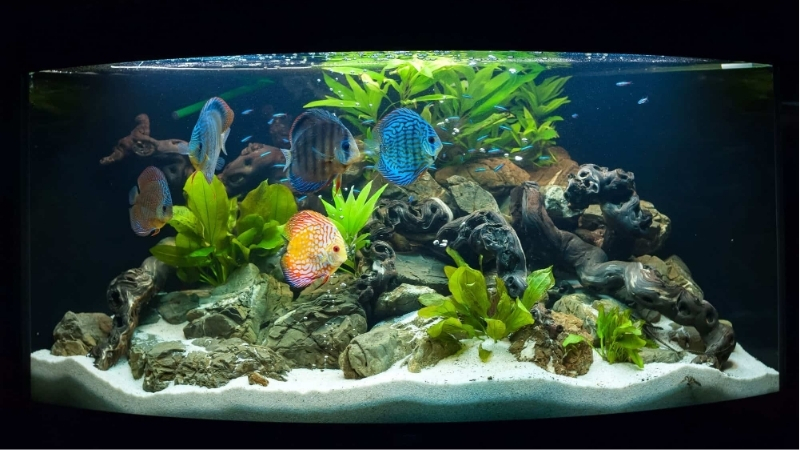
A classroom tank needs to be stable, safe and easy to see, which points away from tiny tanks. The best aquarium setup for a classroom is built around a stable 20-gallon tank on proper support, with a secure lid and a clear equipment list, since larger tanks hold conditions steadier for beginners.
As an Amazon Associate we earn from qualifying purchases.
By David Nguyen
The Best Classroom Tank Starts Around 20 Gallons
Aqueon considers 20 to 55 gallons ideal for first-time keepers because larger tanks are more stable (Aqueon, 2026), and a classroom needs stability, visibility and safety above all. The table compares three common sizes on water load, floor area and best use, so you can weigh support needs against room and budget.
| Tank | Full Weight | Floor Area | Best For |
|---|---|---|---|
| Aqueon 10 | ~111 lb | ~213 in² | Space-limited compromise |
| Aqueon 20 Long | ~225 lb | ~378 in² | Strongest classroom baseline |
| Aqueon 40 Breeder | ~455 lb | ~664 in² | Larger science display |
Why Tiny Tanks Are Harder
Small tanks are not easier for children; they are harder, because a small volume swings temperature and chemistry quickly. A larger tank dilutes waste and buffers change, which is why Aqueon points beginners toward 20 to 55 gallons rather than the smallest option, despite the intuition that small means simple.
In a classroom, where care may be intermittent and shared, that stability matters even more. A 10-gallon can work as a space-limited compromise, but do not choose it believing it is more forgiving. The larger, steadier tank is the one that survives a school schedule and inconsistent attention.
A 20 Long Gives More Viewing and Swimming Length
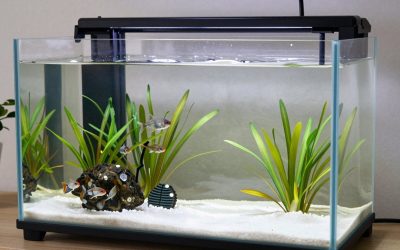
The 20-gallon long is a strong classroom baseline, offering about 378 square inches of floor, nearly 78% more than a 10-gallon, in a long shape ideal for viewing (Aqueon, 2026). That length gives students a clear side view and fish room to swim, which suits observation better than a tall, narrow tank.
Its 20-gallon volume aligns with the beginner-friendly 20-to-55-gallon range and holds conditions steadier than a nano. Confirm you want the long form specifically, since a 20 high has the same volume in a different footprint. For a classroom, the long’s viewing length and stability make it the sensible default.
Plan for the Full 225-Pound Weight
A 20-gallon long weighs about 225 pounds filled (Aqueon, 2026), so it needs a proper aquarium stand or a piece of furniture rated for that load, not a classroom table or cart. Structural safety is a real concern where children are present, so the support must be stable, level and load-rated.
Place the tank where it cannot be bumped or climbed on, over a load-bearing point, and keep cords managed with a GFCI outlet. Never underestimate the weight; water alone is heavy before substrate and decor, and a collapse in a classroom would be dangerous, so the stand is as important as the tank.
Secure Cover and Controlled Access
A secure lid keeps fish in and hands out, which matters in a room full of curious students. Pair it with a teacher-controlled routine so feeding and maintenance happen on a schedule rather than at random, protecting both the animals and the water quality from over-enthusiastic helpers.
Controlled access also means deciding who can touch the tank and when, keeping equipment and treatments out of reach. A covered tank on a stable stand with a clear care routine turns a classroom aquarium into a safe, manageable feature rather than a hazard or a source of constant problems.
Classroom Setup Options and Equipment
These options range from the recommended baseline to a larger display and a space-limited compromise, followed by the equipment every classroom tank needs. Remember tank-only prices exclude the stand, hood, filter, heater, substrate and tools. Confirm current pricing and support before buying.
Aqueon 20 Long — Strongest Baseline
The Aqueon 20 Long is the recommended classroom baseline, a 30.25 by 12.5 by 12.75-inch tank at around $70 at Petco as of 09/2026 (Aqueon, 2026). It aligns with the beginner-friendly 20-to-55-gallon range, offers strong viewing length, and has a verified footprint and full weight for planning support.
Its balance of stability, visibility and manageable size makes it the best fit for most classrooms. It needs a stand rated for about 225 pounds and a secure lid. For a first classroom aquarium that will hold conditions steadily through a school year, the 20 long is the dependable choice.
Aqueon 40 Breeder — Larger Display
The Aqueon 40 Breeder is the larger science or community display, a 36.375 by 18.25 by 16.94-inch tank at around $150 at Petco as of 09/2026 (Aqueon, 2026). Its wide footprint and greater volume give even more stability and room for a richer community or observation project.
The trade-off is weight and cost: about 455 pounds filled means a serious stand and a firm floor. For a school with the space, budget and support for it, the breeder offers the most stable, engaging display, though the 20 long remains sufficient for most classroom needs.
Aqueon 10 — Space-Limited Compromise
The Aqueon Standard 10 is the space-limited compromise, a 20.25 by 10.5 by 12.125-inch tank at around $35 at Petco as of 09/2026 (Aqueon, 2026). At about 111 pounds filled it is easier to place, but its small volume swings faster and is less forgiving of inconsistent care.
Choose it only when space or budget rules out a 20 long, and understock it to ease the load. It is a workable fallback rather than the ideal, so treat it as a compromise on stability. Where possible, the steadier 20-gallon is the better educational tool despite needing more support.
Classroom Equipment Checklist
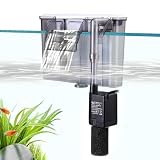
Beyond the tank, a classroom setup needs a lid, light, filter, heater, test kit, water conditioner and a siphon for water changes (Aqueon, 2026). These are the tools that keep the tank stable and maintainable, and tank-only prices do not include them, so budget for the whole list from the start.
Add a stand rated for the filled weight and, ideally, a thermometer to monitor temperature. Assembling this equipment upfront prevents scrambling later and lets you establish a proper care routine. The tank is only part of the cost; the supporting gear is what makes a classroom aquarium actually work.
Frequently Asked Questions
Teachers ask the same things: why not a small tank, how heavy a 20-gallon is, what equipment is needed, and whether the tank is cycled after running the filter briefly. Short answers first, then the caveats.
Why not a small tank for a classroom?
Because small tanks are harder, not easier. A small volume swings temperature and chemistry quickly, so it is less forgiving of the intermittent, shared care a classroom provides. Aqueon steers beginners toward 20 to 55 gallons precisely because larger tanks are more stable and more forgiving of mistakes.
A 10-gallon can serve as a compromise where space is tight, but it demands more consistent attention. Do not pick the smallest tank believing it is simpler; the steadier 20-gallon is the more reliable educational tool and less likely to crash during a busy school schedule.
How heavy is a 20-gallon classroom tank?
About 225 pounds filled (Aqueon, 2026), before substrate and decor add more. That weight rules out a standard table or cart and requires a proper aquarium stand or furniture rated for the load, placed on a solid floor where it cannot be bumped or climbed.
Plan the support before buying the tank, since structural safety is critical in a room full of children. Position it over a load-bearing point, keep cords managed with a GFCI outlet, and never underestimate the weight, as water is heavy well before the rest of the setup goes in.
What equipment does a classroom tank need?
A lid, light, filter, heater, test kit, water conditioner and a siphon for water changes (Aqueon, 2026), plus a stand rated for the filled weight. These keep the tank stable and maintainable, and tank-only prices exclude them, so budget for the full list rather than just the aquarium.
A thermometer is worth adding to monitor temperature. Assembling everything upfront lets you set up a proper care routine from day one, which matters in a classroom where consistency is harder. The supporting equipment, not the tank alone, is what makes the setup function through a school year.
Is the tank cycled after running the filter a day?
No. Running a filter for 24 to 48 hours does not cycle a tank; cycling requires the nitrogen cycle to establish, with ammonia and nitrite stabilizing to zero over weeks. Adding fish before that is complete exposes them to toxic conditions, a common and avoidable classroom mistake.
Cycle the tank fully before stocking, testing the water to confirm ammonia and nitrite have dropped to zero with nitrate present. This takes patience, but it is the foundation of a healthy tank, and treating a day of filter runtime as cycled sets the setup up to fail early.
Final Thoughts
The best aquarium setup for a classroom is built around a stable 20-gallon long on a stand rated for its 225-pound filled weight, with a secure lid, a full equipment list and a proper cycle before stocking. The 20 long is the baseline, the 40 breeder a larger display, and the 10-gallon a space-limited compromise. Prioritize stability, structural safety and a real care routine over the smallest, cheapest option.
As an Amazon Associate we earn from qualifying purchases at no extra cost to you. Prices and availability are accurate as of the date shown and are subject to change.

Aquarium Magnetic Mount
Artificial vs Live Plants for Aquarium: Expert Trusted Guide