Last Updated: October 4, 2026
Both fish are social, so a shared tank has to house a full school and a guppy group at once. The best aquarium for tetras and guppies provides real swimming length and enough volume for both groups, because a proper tetra school of six or more plus a few guppies quickly fills a small tank.
As an Amazon Associate we earn from qualifying purchases.
By David Nguyen
Why a Mixed School Needs More Than the Bare Minimum
Combining two social species stacks their group needs, so the tank must satisfy both at once. What matters is that tetras need a school of six or more, guppies want a social group, their temperature and pH overlap, and both need swimming length. These four explain why a mixed community outgrows a nano.
Tetras Need a School of Six or More
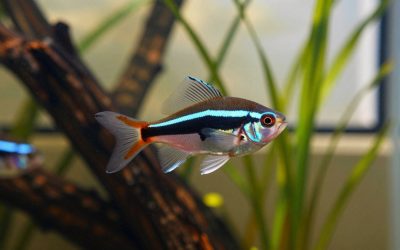
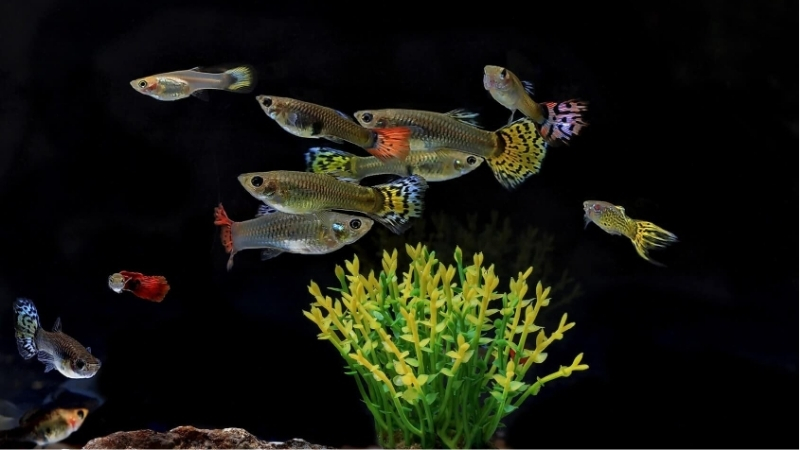
Most tetras are schooling fish that need groups of six or more to feel secure, and suit tanks of about 10 to 20-plus gallons depending on species (Aqueon, 2026). A school kept too small tends to be stressed and skittish, so the group size is a welfare requirement, not a preference.
That minimum school already uses a meaningful share of a small tank’s capacity before any other fish. So when planning a mixed community, count the full tetra school first, then add the guppies, rather than assuming a couple of each species will do. The social minimums drive the volume.
Guppies Want a Social Group
Guppies are social livebearers best kept in groups, with guidance suggesting three or more and roughly 9 gallons for three under a common formula (PetMD). Adding a guppy group on top of a tetra school raises the total fish count, and guppies also breed readily, which can increase numbers over time.
So a mixed tank starts with at least six tetras and three guppies, nine fish before anything else, and potentially more as guppies reproduce. Plan for that combined social load from the outset, since underestimating it leads to an overcrowded tank that is hard to keep stable and healthy.
Temperature and pH Overlap
The two species are compatible on water conditions, which makes them a natural pairing. Tetras suit about 75 to 80°F and pH 6.8 to 7.8, while guppies suit 72 to 82°F and the same pH 6.8 to 7.8 (Aqueon, 2026; PetMD), so a tank around 75 to 80°F and neutral pH suits both.
That overlap means you can keep both comfortably without compromise, targeting the shared middle of their ranges. Confirm your specific species fit, but for common tetras and guppies the conditions align well, leaving tank size and swimming space as the real variables rather than water chemistry.
Swimming Length
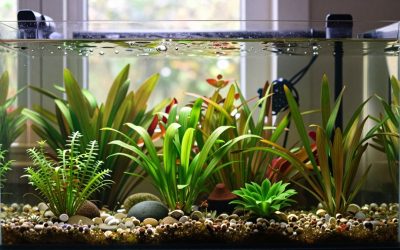
Active, social fish need horizontal room to swim, so length matters more than height. A longer tank gives tetras space to school and guppies room to cruise, which is why a 20 long, with more swimming length than a 10-gallon, suits a combined community better than a tall, short tank.
Prioritize floor length when choosing between similar volumes, since that is the dimension these fish use. More swimming length reduces stress and lets both groups establish comfortable space, making it a key factor once you have accounted for the combined social numbers of the two species.
Best Tank Sizes for Tetras and Guppies
These three tanks are separated by swimming length and how well they house both social groups. The 20 long is the strongest synthesis of their combined needs, a reasoned recommendation rather than a manufacturer minimum. Confirm current pricing and stand rating before buying, since larger tanks are heavy.
| Product | Best For | Key Spec | Watch Out For |
|---|---|---|---|
| Aqueon 20 Long | Strongest mixed baseline | 30.25×12.5 in; 20 gal | ~225 lb; needs stand |
| Aqueon 40 Breeder | Larger community | 36.375×18.25 in; 40 gal | Heavy; ~455 lb filled |
| Aqueon Standard 10 | Single small group only | 20.25×10.5 in; 10 gal | Tight for both groups |
Aqueon 20 Long
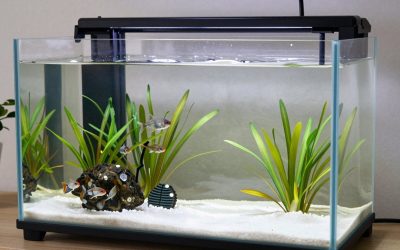
The Aqueon 20 Long is the strongest baseline for a mixed community, a 30.25 by 12.5 by 12.75-inch tank at around $70 at Petco as of 09/2026 (Aqueon, 2026). Its 20-gallon volume and swimming length comfortably house a tetra school of six or more plus a guppy group with room to spare.
This recommendation is a synthesis of both species’ social needs rather than a manufacturer-stated minimum, which is why it lands above a bare 10-gallon. It gives the combined groups swimming length and stable water. For most keepers wanting tetras and guppies together, the 20 long is the sensible target.
Aqueon 40 Breeder
The Aqueon 40 Breeder is the larger community option, a 36.375 by 18.25 by 16.94-inch tank at around $150 at Petco as of 09/2026 (Aqueon, 2026). Its extra volume and wide footprint suit a bigger mixed community, more tetras, more guppies and additional compatible species with room to grow.
The added space is welcome given guppies breed and populations expand, providing a buffer as numbers rise. It is heavy at about 455 pounds filled and needs a solid stand. For keepers planning a fuller community or wanting headroom for guppy fry, the breeder’s size is a strong, forgiving choice.
Aqueon Standard 10
The Aqueon Standard 10 is the boundary case, a 20.25 by 10.5 by 12.125-inch tank at around $35 at Petco as of 09/2026 (Aqueon, 2026). Each species can appear in 10-gallon guidance individually, but that does not mean a full tetra school plus a guppy group fits comfortably together.
A 10-gallon may suit a single small group of one species, but combining both social groups strains it, since their minimums stack. Do not read separate 10-gallon mentions as license to mix them there. For one small group it works; for a true tetra-and-guppy community, size up to the 20 long.
Frequently Asked Questions
Community keepers ask the same things: whether tetras and guppies can live together, how big a tank they need, whether a 10-gallon suits both, what temperature works, and how many of each to keep. Short answers first, then the caveats.
Can tetras and guppies live together?
Yes, they are generally compatible, sharing similar temperature and pH ranges and peaceful temperaments. Common tetras suit about 75 to 80°F and guppies 72 to 82°F, both at pH 6.8 to 7.8, so a tank in the shared middle suits both, making them a popular community pairing.
The main consideration is not compatibility but space, since both are social and their group needs add up. Provide a proper tetra school and a guppy group in a tank with enough swimming length, and the two species coexist well in a peaceful community setup.
How big a tank for tetras and guppies?
A 20-gallon long is a strong baseline, comfortably housing a tetra school of six or more plus a guppy group with swimming length to spare. This reflects the combined social needs of both species rather than either one’s individual minimum, which is why it sits above a 10-gallon.
Larger is better if you want more fish or expect guppy fry, so a 40 breeder suits a fuller community. Size to the combined group counts and desired swimming space, treating the 20 long as the practical starting point for a genuine tetra-and-guppy community.
Is a 10-gallon enough for both?
Usually not for a full community. While each species can appear in 10-gallon guidance on its own, a proper tetra school of six or more plus a guppy group stacks their social minimums and crowds a 10-gallon, so it suits at most a single small group rather than both together.
Do not treat separate 10-gallon mentions as permission to combine the two there, since social requirements consume capacity even when the fish are small. For both groups with room to swim and stable water, step up to a 20 long rather than squeezing them into a 10-gallon.
What temperature suits both?
Around 75 to 80°F works for both, sitting within the tetra range of about 75 to 80°F and the guppy range of 72 to 82°F (Aqueon, 2026; PetMD). Targeting that shared band keeps both species comfortable without compromise, which is part of why they pair so well.
Keep the temperature stable within that range rather than chasing an exact number, and confirm your specific species fit. Pair the temperature with a neutral pH around 6.8 to 7.8, and the water conditions suit a mixed tetra-and-guppy community across the board.
How many of each should I keep?
Start with at least six tetras for a secure school and three or more guppies for a social group, nine fish before any other livestock. Keep the tetra school together as one species rather than mixing several in small numbers, since a larger single-species school is calmer.
Remember guppies breed readily, so numbers can climb, and factor that into stocking and tank size. Plan the combined count against the tank’s capacity, understock rather than crowd, and let the social minimums, not the smallest possible numbers, guide how many of each you keep.
Final Thoughts
The best aquarium for tetras and guppies houses a full tetra school plus a guppy group with real swimming length, since both are social fish whose minimums add up. The 20 long is the strongest baseline, the 40 breeder suits a larger community, and a 10-gallon fits only a single small group. Plan for the combined social load and give both groups length to swim.
As an Amazon Associate we earn from qualifying purchases at no extra cost to you. Prices and availability are accurate as of the date shown and are subject to change.

Best pH and ORP Monitor for a Fish Room: Top Expert Guide
10 Best Betta Fish Foods: Top Picks for a Healthy Betta 2026