Last Updated: October 4, 2026
An aquarium controller and a monitoring system are not the same thing: one switches your equipment on and off, the other only watches and alerts. Choosing the best aquarium controller and monitoring system means separating monitoring from active power control, checking parameters, outlet count and load, and the expansion path, then comparing bundles that are rarely equivalent.
As an Amazon Associate we earn from qualifying purchases.
By David Nguyen
Quick answer: For most people in 2026, the best aquarium controller and monitoring system is the Neptune A3 Apex Jr — our #1 rated choice. See the full ranked comparison, alternatives and buying advice below.
How to Choose a Controller or Monitor
Four things separate these systems: whether a unit only monitors or actively controls power, which parameters it measures out of the box, how many loads it can switch and at what electrical rating, and its expansion, app, and network path. Bundles differ, so compare what each actually includes.
Monitoring vs Active Power Control
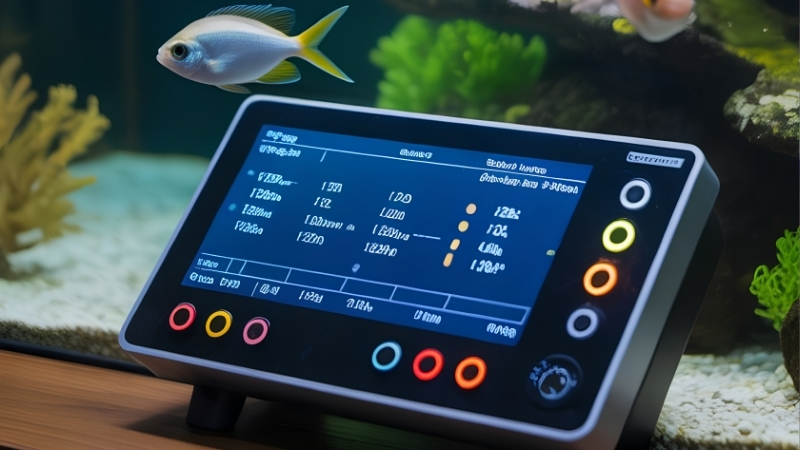
The first split is monitoring versus active control. A Neptune A3 Apex Jr at about $325 is monitoring-first, tracking temperature, pH, water level, and leaks and alerting you, but it does not include a power bar to switch equipment.
An active-control system, by contrast, turns pumps, heaters, and lights on and off through controlled outlets. Decide whether you need alerts or actual automation, because a monitor and a controller are not interchangeable. Many keepers start with monitoring and add control later, so an upgrade path is worth checking.
Parameters Included
What a system measures out of the box varies by bundle. The Apex Jr and standard Apex cover temperature, pH, water level, and leak, while a GHL ProfiLux 4 Mega-Set adds ORP and conductivity probes on top.
More probes are only better if you need those parameters, so match the sensor set to your tank. A reef needing ORP and conductivity benefits from the GHL’s probes, while a simpler tank may not. Each extra probe also means more calibration and upkeep, which is a real ongoing commitment.
Outlet Count and Load
Controlled-outlet count and electrical rating decide how much you can automate. A HYDROS Launch has four built-in AC outlets plus eight Wi-Fi devices, a standard Apex controls eight AC outlets via its EB832, and a GHL Powerbar 6E offers six switched sockets.
The GHL Powerbar 6E-PAB for the USA and Canada is rated 15A total and 15A per socket, a figure specific to that bar. Do not assume other systems share that rating, and size your controlled load to each bar’s own published spec. Adding up the wattage of everything you plan to switch keeps you safely within a bar’s limit.
Expansion, App, and Network
Expansion, app, and network support determine how the system grows. The Launch offers salinity expansion and Wi-Fi device control, while Apex and GHL each have their own module ecosystems and apps for remote access.
Choose an ecosystem you can extend as your tank evolves, since mixing brands is limited. Judge the app and network on your own needs rather than on unverified claims of superior reliability. A local fallback that keeps critical gear running if the network drops is worth more than marketing claims.
Top Picks
These four range from a monitoring-only unit to a multi-parameter control bundle, at very different scopes and prices. Prices are 09/2026 snapshots. Because a monitor and a controller do different jobs and bundles are not equivalent, compare what each includes rather than price alone.
| Product | Best For | Key Spec | Watch Out For |
|---|---|---|---|
| Neptune A3 Apex Jr | Best monitoring-only | Temp+pH+level+leak; Wi-Fi; ~under $350 | No power bar; does not switch loads |
| HYDROS Launch | Best value controller | 4 built-in AC + 8 Wi-Fi devices; ~under $700 | Bundle differs from Apex |
| Neptune A3 Apex | Best control ecosystem | 8 controlled AC via EB832; ~under $700 | Price is bundle-specific |
| GHL ProfiLux 4 Mega-Set 6E | Best multi-parameter | +ORP+conductivity; Powerbar 6E, 6 sockets; ~under $1,000 | Most expensive; more probes |
Neptune A3 Apex Jr
The Neptune A3 Apex Jr is the monitoring-only pick at about $325, tracking temperature, pH, water level, and leaks over Wi-Fi with Fusion. It is the affordable way to watch key parameters and get alerts.
It is monitoring-first and does not include an eight-outlet power bar, so it does not switch equipment on its own. Choose it for alerts, not automation, and step up to a control bundle if you need to run gear. As a first step into the Neptune ecosystem, it can often be expanded later.
HYDROS Launch
The HYDROS Launch is the value-controller pick at about $600, with four built-in AC outlets plus eight Wi-Fi devices and pH and temperature sensing, and salinity expansion. That price is about 9.2% below the standard Apex’s under $700, though the bundles are not equivalent.
Its four built-in outlets are fewer than the Apex’s eight via the EB832, so heavy automation may need expansion. Compare the bundles on outlet count and sensors, not on the headline price gap alone. Its built-in AC outlets plus Wi-Fi device support still cover a typical tank’s core equipment.
Neptune A3 Apex
The Neptune A3 Apex is the control-ecosystem pick at about $700, controlling eight AC outlets through its EB832 while monitoring temperature, pH, water, and leaks. It is roughly 10.2% above the HYDROS Launch, reflecting a different, larger bundle.
Its price is specific to this bundle and its eight controlled outlets, not directly comparable to a monitoring-only unit. Its strength is the mature module ecosystem for expansion over time. That ecosystem breadth is a large part of why many established reefers stay with the platform.
GHL ProfiLux 4 Mega-Set 6E
The GHL ProfiLux 4 Mega-Set 6E is the multi-parameter pick at about $1,000, adding ORP and conductivity to temperature and pH, with a Powerbar 6E offering six switched sockets. Its Powerbar 6E-PAB for the USA and Canada is rated 15A total and 15A per socket.
It is about 42.6% above the standard Apex by price, but that gap reflects the extra ORP and conductivity probes and a different powerbar ecosystem, not markup alone. Choose it if you need those parameters, since more probes suit only tanks that use them.
Frequently Asked Questions
Buyers ask how a controller differs from a monitor, how many outlets they need, what the GHL 15A rating means, and whether more probes make a better fit. System type and your parameters drive the answers.
What’s the Difference Between a Controller and a Monitor?
A monitor watches parameters and alerts you, while a controller also switches equipment on and off. The A3 Apex Jr is monitoring-first, whereas the Launch, Apex, and GHL bundles actively control powered outlets.
Choose a monitor if you only need alerts, and a controller if you want automation. The two are not interchangeable, so match the type to what you actually need.
How Many Controlled Outlets Do You Need?
It depends on how much gear you automate, and counts differ by system. The Launch has four built-in AC outlets, the Apex controls eight via the EB832, and the GHL Powerbar 6E has six switched sockets.
Count your pumps, heaters, and lights, then leave room to grow. Pick a system whose outlet count and expansion path cover your equipment list.
What Does the GHL 15A Rating Mean?
It is the electrical limit of the GHL Powerbar 6E-PAB for the USA and Canada, rated 15A total and 15A per socket. That figure defines how much current the bar can handle across its six sockets.
It applies to that GHL bar specifically, so do not assume other brands’ bars share it. Keep your connected load within each bar’s own published rating.
Do More Probes Make a Better System?
Only if you need the parameters they measure, so more is not automatically better. The GHL’s added ORP and conductivity probes suit tanks that use those readings, while a simpler tank may never need them.
Match the probe set to your tank’s requirements rather than maximizing the count. Paying for sensors you will not use adds cost without benefit. A focused sensor set is also simpler to keep calibrated over the long run.
Final Thoughts
The best aquarium controller and monitoring system starts with whether you need monitoring or active control, then the parameters, outlet count and load, and expansion path. The A3 Apex Jr suits monitoring at about $325, the HYDROS Launch and Neptune Apex offer control at about $600 and under $700, and the GHL Mega-Set adds ORP and conductivity at about $1,000, all as of 09/2026. Remember a monitor is not a controller, the GHL Powerbar’s 15A rating applies only to that bar, and more probes help only if you use those parameters.
As an Amazon Associate we earn from qualifying purchases at no extra cost to you. Prices and availability are accurate as of the date shown and are subject to change.
Ready to decide? Our #1 pick for 2026 is the Neptune A3 Apex Jr.
Live price & availability on Amazon.
Related Reviews & Guides

Best Aquarium Stand: Load Rating, Footprint and Material
Best Magnet Cleaner With Ceramic Blade: Top Compared Setups