Last Updated: October 4, 2026
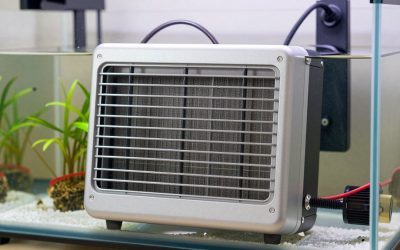
- Top Pick: hygger Ceramic Submersible Aquarium Heater, New Explosion-Proof Fish Tank Water Heater with External Temp Controller Auto Thermostat Heater for Saltwater Freshwater (200W for 10~40 Gallon)
- Best Value: HiTauing Aquarium Heater 25W/50W/100W/200W/300W, Adjustable Knob Fish Tank Heater with Digital Thermometer, Submersible Betta/Turtle Tank Heater for Freshwater and Saltwater Tanks
- Premium Choice: SEAOURA Small Aquarium Heater, 50W Fish Tank Heater 5-10 Gallon, Temp Probe
The Short Answer
For a standard ten-gallon aquarium, choose a fully submersible heater that is about 6 to 9 inches (15 to 23 cm) long. A compact heater near 6 inches is easiest to position in a small rectangular tank, while an 8- to 9-inch model may offer a larger heating element and more visible temperature controls. The best length is the one that fits below the minimum water line, clears the gravel and decorations, and can be installed according to the manufacturer’s required orientation.
Length and wattage are separate measurements. A heater can be short and powerful or relatively long with modest wattage. For most ten-gallon freshwater aquariums, 50 watts is a common starting point. In a warm room, a 25-watt heater may be adequate; in a cool room, a 75-watt model may provide more reserve. A 100-watt heater can work in some setups, but it requires a reliable thermostat and careful temperature monitoring to avoid overheating a small volume of water.
As an Amazon Associate we earn from qualifying purchases at no extra cost to you.


As a practical buying range for 2026, expect compact aquarium heaters for a ten-gallon tank to cost about $14 to $26. For example, small adjustable models may sell near under $20, a 50-watt compact heater may cost about $20, and a mini 75-watt heater with a digital controller may be around $20. Larger 200-watt models can be about $25, but their wattage is generally intended for a broader tank range and may be excessive for a ten-gallon aquarium.
Standard Sizes
The following measurements represent common heater body lengths and practical wattage categories. Dimensions vary by brand, and the stated length usually refers to the heater body rather than the suction cups, external temperature probe, cord, or controller.
| Heater category | Typical body length | Length in centimeters | Common wattage | Typical tank use |
|---|---|---|---|---|
| Mini compact | 5.5–6.5 inches | 14–16.5 cm | 25–50W | Small tanks and tight layouts |
| Standard compact | 6.5–8 inches | 16.5–20.3 cm | 50–75W | Most ten-gallon aquariums |
| Long compact | 8–9.5 inches | 20.3–24.1 cm | 75–100W | Cool rooms or tanks needing extra capacity |
| Large submersible | 10–12 inches | 25.4–30.5 cm | 150–200W | Usually better suited to larger aquariums |
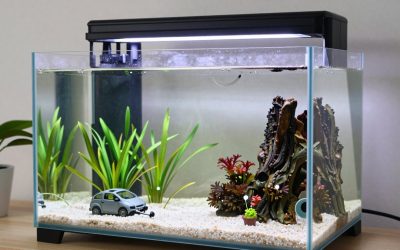
A typical ten-gallon tank measures about 20 inches long by 10 inches wide by 12 inches high, although rimmed, rimless, breeder, and specialty aquariums differ. The heater does not need to span the tank. It only needs enough submerged surface area to transfer heat and enough clearance for water circulation. A 6- to 8-inch heater generally leaves room above and below in a ten-gallon aquarium when the water line is maintained near the top.
Check the heater’s minimum water-depth requirement before buying. Some models must be completely submerged, while others have a marked minimum line. If your aquarium has a low water level, a tall 9-inch heater may not be suitable even if its wattage is appropriate.
How to Measure Your Space
- Measure the usable water depth. Measure from the normal water line to the top of the gravel or substrate. Do not measure the aquarium’s outside height alone. A tank advertised as 12 inches high may have only 10 to 11 inches of usable water depth after the rim, substrate, and normal fill level are considered.
- Reserve clearance at the top. Keep the heater’s electrical connection and any non-submersible control components above the water. If the instructions require the whole heating tube to be underwater, the heater must fit below the water line with no part of the heating body exposed.
- Measure the open side-to-side space. Identify a clear section along the back or side wall. Allow room for the heater body, suction cups, cord bend, and nearby filter equipment. A heater that is 8 inches long may need roughly 9 inches of uninterrupted vertical space once its mounting hardware is attached.
- Account for substrate and décor. Gravel, sand, rocks, driftwood, and plants can block circulation or force the heater into an awkward angle. Leave approximately 1 to 2 inches of open space around the heating surface when possible, following the product instructions.
- Confirm orientation requirements. Some heaters can be installed vertically or horizontally, while others work best vertically. Horizontal placement can solve a height problem, but it should be used only when the manufacturer permits it.
- Compare wattage after checking length. Once you know the heater will physically fit, select wattage based on room temperature, desired water temperature, tank lid, and the manufacturer’s tank-size range. A properly sized 50-watt heater is usually more useful than an oversized heater chosen only because it is available.
By Room or Use Case
Open living room aquarium
A ten-gallon tank in a consistently heated living room usually works well with a 50-watt heater measuring about 6.5 to 8 inches (16.5 to 20.3 cm). Place it near the filter outflow or another area with steady movement so warmed water circulates throughout the aquarium. Keep the heater away from direct sunlight, which can raise water temperature independently of the thermostat.
Cool bedroom, office, or basement
If the room regularly falls below about 68°F, consider a 50- to 75-watt adjustable heater, commonly 6.5 to 9 inches long. The exact wattage depends on the desired temperature and the tank’s lid and insulation. A 75-watt mini model may be suitable when its instructions specifically include ten-gallon tanks. Use a separate thermometer to verify the water rather than relying solely on the dial or display.
Betta or other low-flow setup
For a betta tank or similarly gentle setup, a compact 25- to 50-watt heater around 5.5 to 7 inches long is easier to conceal and less likely to dominate the aquarium. Avoid burying the heater in gravel or placing it directly against a plant, decoration, or acrylic wall. Gentle circulation is still important, even in a low-flow aquarium.
Saltwater nano aquarium
Saltwater can be heated with a compatible submersible model, but the heater must be rated for marine use. A 50- to 75-watt heater in the 6.5- to 9-inch range is a common physical fit for a ten-gallon marine tank. Leave sufficient space around the body for circulation and inspect suction cups regularly, since salt buildup can affect mounting hardware.
Tank with a rear filter or crowded equipment
When the back wall is occupied by a hang-on-back filter, internal filter, or tubing, measure the unobstructed side panel first. A short 5.5- to 6.5-inch heater may fit vertically, while an approved horizontal installation can make better use of the lower rear area. Keep the temperature probe, if included, away from the heater itself so it measures general tank water rather than a localized warm spot.
Common Sizing Mistakes
- Choosing by wattage alone: A 200-watt heater may be marketed for a range that includes larger tanks, but it is not automatically a good choice for ten gallons. More power can create faster temperature changes if the thermostat fails or is poorly calibrated.
- Ignoring total length: Product listings may show the glass or ceramic body but omit suction cups, brackets, controllers, or probes. Check the complete installation diagram before ordering.
- Using a heater that is too tall: If the top of the heating element must remain submerged, a heater that barely fits can become exposed during evaporation or water changes.
- Hiding it under décor: Covering the heater restricts water movement and can create hot spots. The heating surface needs open water around it.
- Skipping a thermometer: Built-in displays and adjustment dials are useful, but a separate aquarium thermometer provides an independent temperature check.
- Forgetting replacement water: New water added during a water change may be colder or warmer than the tank. Match replacement water reasonably closely and allow the heater to stabilize the aquarium gradually.
FAQ
How long should a heater be for a ten-gallon aquarium?
Most ten-gallon aquariums can accommodate a heater body between 6 and 9 inches (15 to 23 cm) long. Measure usable water depth first, then confirm the model’s minimum-submersion and orientation requirements.
Is a 50-watt heater enough for ten gallons?
In many indoor freshwater setups, 50 watts is a practical starting point. A 25-watt heater may suit a warm room, while a 75-watt heater can be useful in a cooler room. Follow the manufacturer’s tank-size range and verify the result with a thermometer.
Can I use a 100-watt heater in a ten-gallon tank?
It can be possible when the manufacturer permits that tank size and the heater has dependable temperature control, but it is not always necessary. A 100-watt model may also be longer than a compact ten-gallon heater, so check both wattage and physical dimensions.
Where should the heater go in a ten-gallon tank?
Install it in an area with steady water movement, commonly near the filter outflow, while keeping it clear of substrate and decorations. Mount it securely, keep required components above water, and follow the manufacturer’s instructions for vertical or horizontal placement.
Ready to decide? Our #1 pick for 2026 is the Mini compact.
Live price & availability on Amazon.
Related Reviews & Guides
Best 32 Gallon Aquarium Kit: Best Proven Well-Researched Guide
How to Replace Aquarium Filter Media (2026): Step-by-Step