Last Updated: October 4, 2026
- Top Pick: hygger Small Aquarium Betta Heater, Submersible Fish Tank Heater 10W/25W/50W/100W with LED Digital Display, Suitable for Marine Saltwater and Freshwater up to 5/10/16/26 Gallon
- Best Value: DaToo Mini Aquarium Heater 25W Small Fish Tank Heater 25 Watt with Free Thermometer Sticker
- Premium Choice: hygger Mini Fish Tank Submersible Heater 20W for 1-5 Gallons Desktop Betta Aquarium Heater with Digital Display Controller Adjustable Temperature
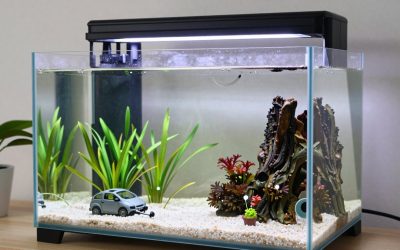
Choosing a heater for a nano aquarium is not only a question of wattage. The heater must also fit the tank’s footprint, water depth, cover, filter, substrate, and décor without creating a crowded or unsafe layout. For most desktop aquariums, the best heater is short, fully submersible, adjustable, and narrow enough to sit vertically or horizontally with adequate clearance.
The Short Answer
For a 1- to 5-gallon nano tank, look for a heater measuring approximately 4.5 to 6.5 inches long (11.4 to 16.5 cm) and 0.75 to 1.25 inches wide (1.9 to 3.2 cm). A 20W or 25W model is usually the practical range for a small betta tank, shrimp aquarium, or desktop freshwater setup.
As an Amazon Associate we earn from qualifying purchases at no extra cost to you.

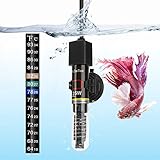


For a 3- to 8-gallon tank, a 25W to 30W heater is more suitable. Expect a body approximately 5.5 to 7 inches long (14 to 17.8 cm), although the controller, cord, suction cups, and temperature display may increase the total installation space. A 10W heater can work in a very small, stable room, but it may struggle when the room is cool or the tank has a lid that allows substantial heat loss.
As a general rule, allow at least 1 inch (2.5 cm) of open space around the heater body. Keep it away from gravel, plants, acrylic walls, and plastic equipment that could be damaged by concentrated heat. Always follow the manufacturer’s minimum water level and submersion instructions.
Standard Sizes
The dimensions below represent common nano-heater sizes and useful planning measurements. The heating tube is listed separately from the total clearance needed for installation. Product dimensions can vary between revisions, so compare the listed body size with your actual tank before buying.
| Heater class | Typical wattage | Recommended tank size | Approximate heater body dimensions | Minimum practical water depth | Typical price range |
|---|---|---|---|---|---|
| Ultra-compact | 10W | 1–3 gallons | 4.5–5.25 in long × 0.75–1 in wide (11.4–13.3 × 1.9–2.5 cm) |
5–6 in (12.7–15.2 cm) |
$12–$20 |
| Small nano | 20W–25W | 1–5 gallons | 5–6.5 in long × 0.875–1.25 in wide (12.7–16.5 × 2.2–3.2 cm) |
6–7 in (15.2–17.8 cm) |
$7–$20 |
| Large nano | 25W–30W | 3–8 gallons | 5.5–7 in long × 1–1.25 in wide (14–17.8 × 2.5–3.2 cm) |
6.5–8 in (16.5–20.3 cm) |
$15–$25 |
| Small aquarium | 50W | 5–16 gallons | 7–8.5 in long × 1.25–1.5 in wide (17.8–21.6 × 3.2–3.8 cm) |
8–10 in (20.3–25.4 cm) |
$18–$30 |
A short heater can be easier to hide, but length is not the only dimension that matters. Measure the distance between the tank floor and waterline, especially if you use a shallow rimless aquarium. A heater with a 6.5-inch body may fit the gallon capacity on paper but fail to remain fully submerged in a tank with only 5.5 inches of water.
Common compact options include a 20W hygger mini heater designed for 1- to 5-gallon tanks, a 25W DaToo mini heater, and small hygger digital models in 10W, 25W, and 30W versions. Compact units in this category commonly cost about $7 to $20, while a 50W digital model is often around $17 to $30. Prices change by retailer, size, display, and controller features.
How to Measure Your Space
- Measure the usable water depth. Measure from the normal waterline to the top of the substrate, not from the outside bottom of the tank. Subtract the depth occupied by gravel, sand, or soil. The heater’s required submersion length must fit inside this measurement.
- Measure the open wall area. Choose the tank wall where the heater will sit. Record the available height and width after accounting for the filter intake, return nozzle, thermometer, plants, and decorations.
- Check the heater’s body length. Do not measure only the glass or plastic heating tube. Include the end caps and any attached temperature sensor. If the heater is installed vertically, its full body must fit below the waterline.
- Add clearance. Leave roughly 1 inch (2.5 cm) around the heater when possible. Avoid pressing it directly against acrylic, silicone seams, décor, or the tank floor. Horizontal installation can save vertical space, but only when the manual allows it.
- Plan the cord route. Measure from the heater location to the rim and outlet. Leave a downward drip loop in the cord before it reaches the outlet. A controller or display may need another 2 to 4 inches (5 to 10 cm) of accessible wall or cabinet space.
- Confirm the water volume. A tank labeled 5 gallons may hold less after substrate, wood, rocks, and equipment are installed. Select wattage for the actual water volume and room temperature rather than the empty tank rating.
By Room or Use Case
Bedroom or home office desktop tank
Choose a quiet, compact 20W to 25W heater for a 2- to 5-gallon aquarium. A digital display can make temperature checks easier, but it adds a controller and more cord management. Prioritize a heater shorter than the tank’s water depth so it can be positioned vertically without touching the substrate.
Betta bowl replacement or shallow aquarium
A proper 3- to 5-gallon aquarium is preferable to an unfiltered bowl, but these setups often have limited depth. Look for a body around 5 to 6 inches (12.7 to 15.2 cm) long and verify the minimum waterline. A 20W or 25W adjustable heater is generally easier to manage than an oversized unit that cycles aggressively in a small volume.
Shrimp or planted nano tank
Shrimp tanks often contain dense plants, rocks, and wood that reduce the available wall area. A narrow 10W to 20W heater can be easier to conceal. Place it near gentle water movement so heat distributes evenly, but keep it away from delicate leaves and ensure shrimp cannot become trapped between the heater and décor.
Cool room, basement, or drafty location
If the room regularly falls below about 68°F, consider a 25W to 30W heater for a 3- to 8-gallon tank, provided the unit is rated for that volume. Insulating the back and sides of the aquarium can reduce heat loss, but never cover the top ventilation openings or the heater itself. A temperature controller or reliable thermometer is especially useful in a cool room.
Common Sizing Mistakes
- Choosing by gallon label alone: Two tanks with the same capacity can have very different heights and footprints. Body length and minimum water depth matter.
- Using a 50W heater in a tiny tank: Higher wattage is not automatically safer. An oversized heater can raise temperature quickly if its thermostat fails or cycles inaccurately.
- Ignoring actual water volume: Substrate and décor reduce the water being heated. Use the filled volume as a planning estimate.
- Leaving the heater partly exposed: Heating elements generally need to remain fully submerged. Exposing part of the unit can cause damage or create a burn hazard.
- Forgetting the display and cord: The heater body may fit while the controller blocks the lid, filter, or rear clearance.
- Placing it directly in gravel: Buried heaters can develop hot spots and become difficult to inspect. Use the supplied suction cups and maintain circulation.
FAQ
What heater dimensions fit a 5-gallon nano tank?
Most 5-gallon tanks can accommodate a heater about 5 to 6.5 inches long (12.7 to 16.5 cm) and 0.75 to 1.25 inches wide (1.9 to 3.2 cm). Confirm that the heater remains fully submerged and does not interfere with the filter or lid. A 20W to 25W unit is a common starting range.
Is a 25W heater too powerful for a nano aquarium?
Not necessarily. A 25W heater is commonly rated for approximately 1 to 5 gallons, depending on the model and room conditions. Use an adjustable thermostat, monitor the water with a separate thermometer, and avoid placing the unit where it can contact glass, plastic, or décor.
Can a nano heater be installed horizontally?
Some models permit horizontal placement, while others specify vertical installation. Horizontal positioning can help in a shallow aquarium, but the heater must remain fully submerged and receive steady water movement. Check the instructions before changing the orientation.
How much clearance should be left around an aquarium heater?
About 1 inch (2.5 cm) of clearance on all sides is a useful planning target. More space is beneficial around the end caps and temperature sensor. Keep the heater away from the substrate, silicone seams, acrylic panels, and flammable or heat-sensitive decorations.
Ready to decide? Our #1 pick for 2026 is the Ultra-compact.
Live price & availability on Amazon.
Related Reviews & Guides

Best Aquarium Planting Tweezers in 2026: Compared and Ranked
What to Look for Aquarium Substrate Grain Size in 2026: What Actually Matters