Last Updated: October 4, 2026
- Decide These 3 Things First
- Size: Match Media Volume to the Filter Chamber
- Material: Understand What Each Media Type Does
- Construction: Inspect the Media and the Media Bag
- Performance: Prioritize Flow, Contact, and Maintenance
- Price Tiers: Compare Cost per Usable Liter
- Warranty and Product Support
- Delivery and Assembly: Prevent Fit Problems
- Spec Checklist
- Red Flags
- FAQ
- Top Pick: Fluval BioMax Biological Material Remover, 500 g
- Best Value: Seachem Matrix, 4 L / 1 gal.
- Premium Choice: Sukh Ceramic Rings for Aquarium Filter – 15oz Bio Filter Media with 3 Bags
Buying filter media by package size alone is one of the easiest ways to waste money. A large bag does not automatically mean more usable biological capacity, and a thick pad may reduce flow so much that the filter performs worse. Another common mistake is treating every media type as interchangeable: ceramic rings, porous sintered media, foam, floss, and chemical resins do different jobs. Buyers also often compare advertised aquarium volume with the filter’s actual media chamber, overlook replacement costs, or pack a basket so tightly that water bypasses the media.
This aquarium filter buying guide media capacity overview focuses on what actually matters when choosing media for a freshwater or marine setup. The goal is not to select the largest container. It is to match media volume, pore structure, flow, maintenance needs, and total cost to the tank and filter you already own.
As an Amazon Associate we earn from qualifying purchases at no extra cost to you.


Decide These 3 Things First
- Confirm the tank and filter size. Record the aquarium’s actual water volume, not just its nominal label. A 20-gallon tank may hold only 16 to 18 gallons after gravel, décor, and a partial fill. Then check the filter’s media-basket dimensions in inches and its rated flow in gallons per hour (GPH).
- Choose the media’s job. Mechanical media catches debris, biological media provides surface area for beneficial bacteria, and chemical media targets substances such as odors, medications, or discoloration. Most tanks need mechanical and biological stages; chemical media is usually situational.
- Plan for usable capacity and maintenance. Leave room for water to pass through the media. A filter stuffed with an extra 1 liter of material is not better if the pump loses flow or water spills around the basket. Buy enough media for a complete stage, plus a replacement schedule you can afford.
Size: Match Media Volume to the Filter Chamber
Media capacity is limited by the basket, tray, or internal compartment—not by the tank’s gallon rating. Measure the usable interior length, width, and height, then multiply those dimensions to estimate volume. For example, a chamber measuring 8 by 4 by 4 inches has a theoretical volume of about 128 cubic inches, or approximately 2.1 liters. In practice, usable capacity may be closer to 1.5 to 1.8 liters after accounting for bags, dividers, foam, and water clearance.
For a small 5- to 20-gallon aquarium, 0.25 to 1 liter of biological media is often a practical starting range, depending on fish load and the filter design. A 29- to 55-gallon aquarium commonly accommodates about 1 to 3 liters across one or more biological stages. Larger tanks, heavily stocked systems, and sumps can use 3 to 8 liters or more, but extra volume should be added only when the filter can maintain adequate flow.
Do not use a manufacturer’s “aquarium capacity” claim as proof that the filter has enough media space. A filter rated for 75 gallons may contain less biological media than a larger canister rated for 40 gallons. Compare chamber volume, media volume, and flow rate separately.
Material: Understand What Each Media Type Does
Foam and sponge are reusable mechanical media. Coarse foam, often around 20 to 30 pores per inch, catches larger particles while preserving flow. Fine foam, commonly around 40 to 60 pores per inch, provides more polishing but clogs sooner. Rinse foam in removed aquarium water rather than untreated tap water if you want to preserve its bacterial population.
Filter floss and pads are best for fine particles and short-term water polishing. A cut-to-size pad such as an 8-layer, 0.6-inch-thick floss product can fit many compartments, but thickness is not the same as performance. Replace or rinse it as soon as it visibly restricts flow. A under-$10 pad may be inexpensive per purchase but costly if it must be replaced weekly.
Ceramic rings are generally affordable biological media with open channels that encourage water contact. A 15-ounce, three-bag ceramic-ring product priced around $5 is a budget-friendly way to fill a small compartment or supplement an existing setup. Rings vary widely in porosity and size, so compare the package weight and the amount that physically fits rather than assuming all rings offer the same capacity.
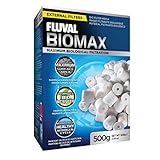
Highly porous sintered media is designed to provide more internal surface area in a smaller volume. Fluval BioMax, for example, is sold in a 500-gram package at about $20, while Seachem Matrix is available in a 4-liter container priced around $40. These prices are useful reference points, but they are not direct performance rankings. The right product is the one that fits the chamber, receives steady flow, and can be maintained without crumbling or clogging.
Chemical media, including activated carbon and specialty resins, should not permanently displace all biological media unless there is a specific reason. Follow the product’s replacement interval and remove carbon when treating with medication if the treatment instructions require it.
Construction: Inspect the Media and the Media Bag
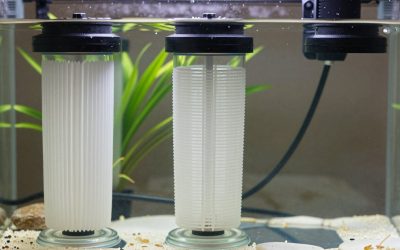
Good construction allows water to move through the media instead of around it. Ceramic pieces should be reasonably consistent in size, without excessive dust or sharp fragments that can tear a media bag. Rinse new ceramic or sintered media until the water is mostly clear, but do not scrub it aggressively.
Media bags should have a secure zipper, drawstring, or heat-sealed edge. A bag with openings too small for the media can restrict flow; one with loose stitching may release pieces into the impeller. For fine media, choose a tighter mesh. For large ceramic rings, a mesh opening around 1 to 3 millimeters is often practical, though the exact choice depends on particle size.
Flat pads should be easy to cut without unraveling. Buy sheets at least 0.25 inch larger than the compartment on each side when possible, then trim them for a snug fit. Do not compress a pad until it becomes rigid. Water should pass through the material, not be forced over its edges.
Performance: Prioritize Flow, Contact, and Maintenance
Filter turnover is commonly expressed in GPH. A basic community aquarium may target roughly 4 to 6 times its actual water volume per hour, while messy, heavily stocked, or marine systems may need more circulation. A 30-gallon tank with 20 gallons of actual water might therefore start with approximately 80 to 120 GPH of effective flow, adjusted for head height, clogged media, and the fish’s tolerance for current.
Advertised pump flow is usually measured under ideal conditions. A filter rated at 200 GPH may deliver less once water travels through tubing, baskets, foam, and biological media. If replacing media causes a noticeable drop in output, the media is too fine, too tightly packed, or overdue for cleaning.
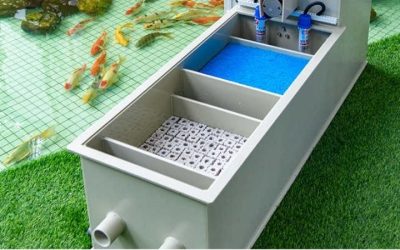
Arrange media from coarse to fine in the direction of water flow: coarse sponge first, fine sponge or floss second, biological media after mechanical filtration, and chemical media last when needed. This arrangement keeps biological media from becoming buried in debris. Biological media does not need to be replaced on a calendar if it remains intact and can be rinsed gently in aquarium water.
Price Tiers: Compare Cost per Usable Liter
Budget ceramic rings and basic foam typically cost about $5 to $15 per package. They are suitable for small tanks, extra prefiltration, or replacing a damaged section. Mid-range biological media generally costs $15 to $35 for roughly 0.5 to 2 liters, depending on the brand and material. Premium or high-volume porous media commonly runs $35 to $60 or more for 2 to 4 liters.
Use cost per usable liter—not package weight alone. A 500-gram product may fill a different volume than 500 grams of rings because density varies. Also include mechanical replacements: a under-$10 cut-to-size floss pad may require more frequent replacement than a $12 reusable sponge. For a medium aquarium, spending $20 to $45 on a sensible combination of coarse sponge, fine mechanical media, and biological media is often more useful than spending the entire budget on one type.
Warranty and Product Support
Biological media itself rarely has a meaningful performance warranty because results depend on tank stocking, flow, maintenance, and water chemistry. Look instead for clear packaging, an intact seal, stated dimensions or volume, and a return policy for damaged or incorrectly sized goods.
Warranty coverage matters more for the filter, pump, trays, and impeller than for ceramic material. If a media basket cracks or a bag’s seam fails, document the problem and check the seller’s return window. Keep the receipt, product packaging, and model number, particularly when buying a full media kit priced above $40.
Delivery and Assembly: Prevent Fit Problems
Before ordering, compare the product dimensions with the filter’s compartment, including the lid clearance. A 4-liter container may be economical but unnecessary if your filter holds only 1 liter. For custom-cut pads, order a sheet larger than the basket and trim it at home. For loose media, buy a bag that can be lifted out without spilling pieces into the pump chamber.
After installation, rinse dusty media, place it in the correct flow order, and leave a small gap—often about 0.25 to 0.5 inch—where the manufacturer’s basket design requires water movement. Run the filter and check output after 15 to 30 minutes. If the flow is weak, remove the finest layer first and inspect the intake, impeller, and media bag.
Spec Checklist
| Spec | Budget | Mid | Premium |
|---|---|---|---|
| Typical media budget | $5–$15 | $15–$35 | $35–$60+ |
| Useful biological-media volume | 0.25–1 L | 0.5–2 L | 2–4 L |
| Best use | Small tanks, supplemental media | Most community aquariums | Large, heavily stocked, or multi-stage systems |
| Mechanical media | Coarse sponge or basic floss | Coarse sponge plus fine pad | Multiple reusable grades plus polishing pad |
| Replacement focus | Low upfront cost | Balance of reuse and replacement | High capacity and longer service life |
| Flow target | About 4–6 times actual tank volume per hour | About 4–8 times, adjusted for stock | Higher capacity with flow control or multiple outlets |
Red Flags
- Package claims that focus only on an enormous “surface area” number without stating media volume, dimensions, or how the figure was calculated.
- Media that arrives coated in heavy dust, breaks apart during a gentle rinse, or has sharp pieces that can damage a mesh bag.
- Very dense pads marketed for maximum filtration without a stated thickness, pore grade, or replacement guidance.
- A media kit that fills the entire basket with no room for mechanical filtration or water clearance.
- Unclear instructions about whether chemical media should be removed during medication.
- Prices that look low until shipping, replacement pads, or separate media bags are added.
FAQ
How much biological media does my aquarium filter need?
Start with the filter’s available chamber space rather than a universal gallon formula. About 0.25 to 1 liter is a practical range for many small aquariums, while 1 to 3 liters may suit a larger community setup. Increase capacity gradually and monitor flow and water parameters.
Can I fill the whole filter with ceramic media?
Usually, no. Mechanical media should come first so debris does not clog the biological material. Reserve space for coarse foam and, when useful, a finer polishing layer. Biological media works best when water reaches it consistently.
Is heavier filter media better?
Not necessarily. Weight reflects density, moisture, and material composition; it does not directly tell you how much usable surface or water contact the media provides. Compare physical volume, construction, fit, and maintenance requirements.
When should filter media be replaced?
Replace disposable floss when it clogs or cannot be rinsed clean. Replace foam when it no longer holds its shape or restricts flow after cleaning. Biological media can often remain in service for years if it is intact and gently rinsed in removed aquarium water.
Ready to decide? Our #1 pick for 2026 is the Typical media budget.
Live price & availability on Amazon.
Related Reviews & Guides

How to Choose Aquarium LED Lighting: What Actually Matters
6 Best Water Quality Test Kit Aquariums 2026